
 by
by
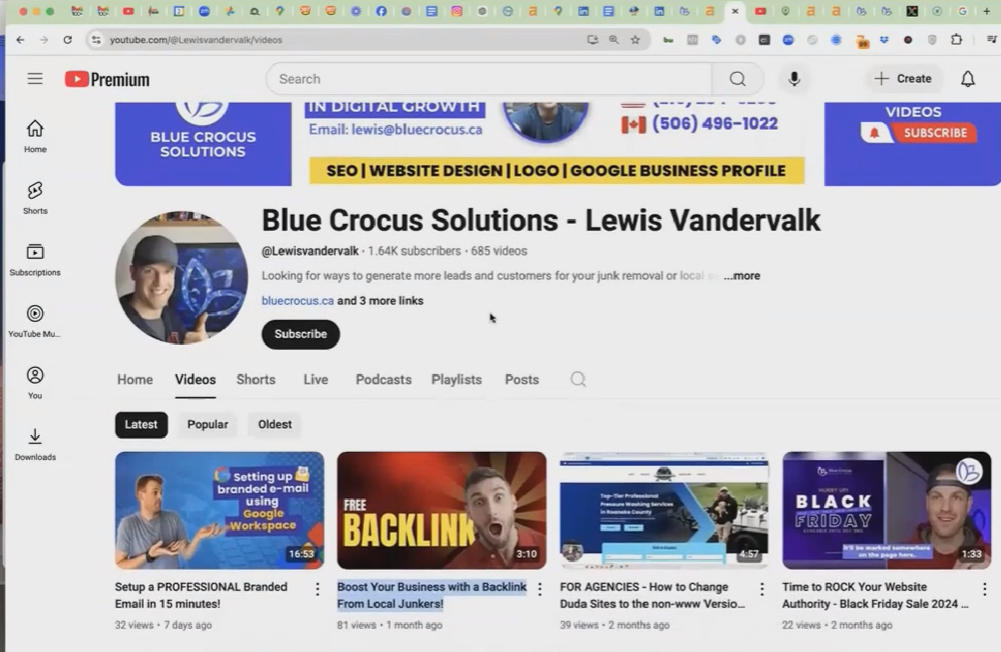
I recently sat down with Lewis Vandervalk, the founder of Blue Crocus, a digital marketing agency specializing in home services. Lewis has built an impressive operation with 685 YouTube videos and a strong backlink profile driven by client sites and podcast guest appearances. What stood out most was his approach to getting high-authority backlinks from government and university websites without spending a dime.

The .gov and .edu backlink strategy
Lewis shared a strategy his team uses to land backlinks from .gov and .edu domains, some with domain ratings as high as DR80.
The process is straightforward. His team uses a specific search operator to find government websites, universities, and local organizations that list employee discounts, senior discounts, or student discounts. These sites often feature local businesses, including home service companies.
Once they find these pages, they reach out by email, offering a simple 5% or 10% discount for that organization’s employees or alumni. In exchange, the business gets listed on a high-authority page with a backlink. Lewis mentioned they landed a .gov backlink in Indiana for a dumpster rental client this way.
He has a dedicated VA handling this outreach across all their home service clients. Email tends to work better than cold calling as a first touch, and the whole process is free beyond the time investment.
Using AI at scale (and where it falls short)
We spent a good chunk of time talking about how we both use AI tools across our agencies. My team uses ChatGPT, Claude, NotebookLM, and others. They keep leapfrogging each other. NotebookLM has the advantage of injecting content via Google search with a 1.5 million token context window, but it hallucinates after about 2,000 words. ChatGPT has the same problem even with its 300,000 token window.
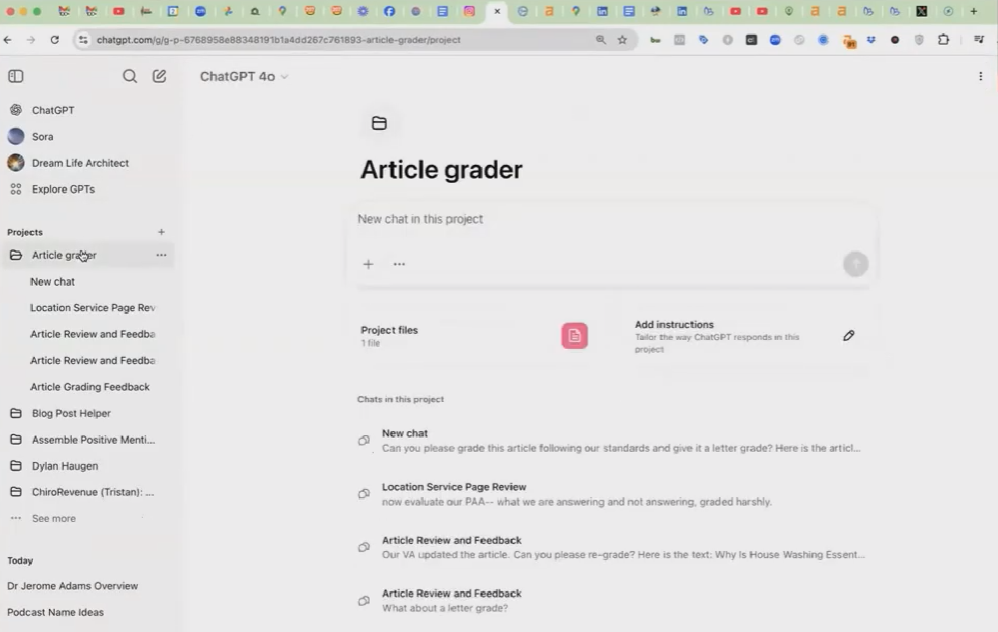
The memory issues across all models are frustrating, especially at scale. We are building custom GPTs for each client, uploading SOPs and training materials the same way we would train a human VA. The system learns more over time, but the recall is not reliable for multi-stage reasoning yet.
Lewis shared that he has been using ChatGPT for his parents’ grass-fed beef website, ingesting entire PDFs so the AI can help write content without him having to read every page. It works for recall but breaks down for complex reasoning tasks.
Content repurposing: the real competitive edge
Lewis has 685 videos sitting on YouTube. I pointed out that this is a goldmine waiting to be repurposed into blog posts, guest articles, and other content formats. The key is not trying to get more views but using the content that already exists to build legitimate links.
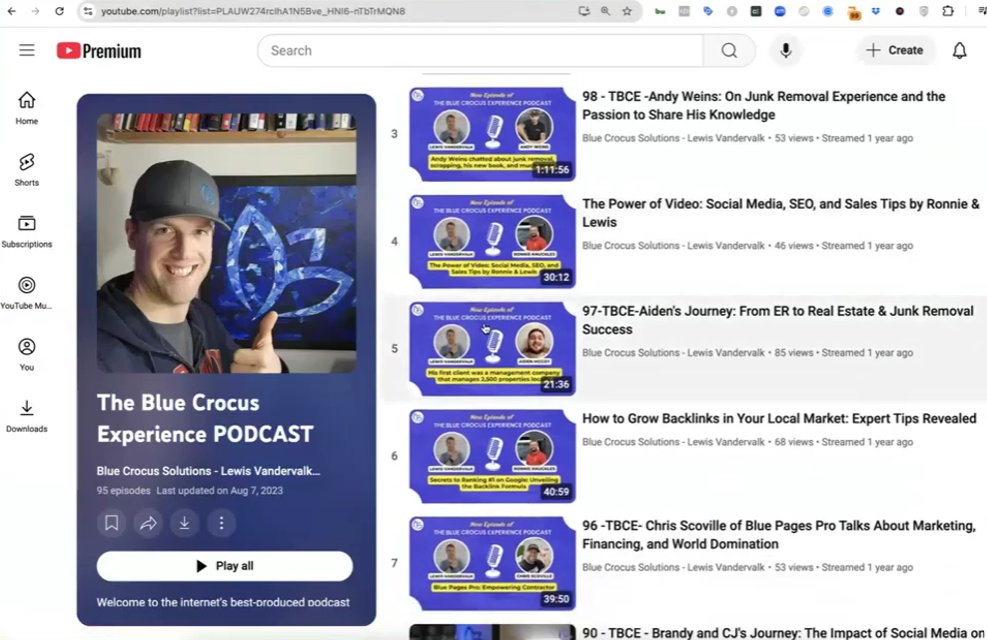
The approach we discussed is organizing content by category and city. If you have businesses in Austin that are already creating content, they can cross-interview each other, link to each other naturally, and create real content that nobody can call auto-generated or link trading. Five-minute Zoom calls between business owners in the same city produce real conversations that turn into guest blog posts, podcast episodes, and legitimate in-body links.
We also talked about asynchronous content collection. I cannot interview everybody, but why can’t anybody contribute their expertise? Instead of roundup articles where everyone submits a couple of ChatGPT-generated sentences, people can contribute short videos. That produces real audio, video, and content that competitors will not have.
Breaking the fourth wall with clients
One of the biggest challenges in content marketing for home services is getting clients comfortable on camera. My approach is simple: do not point the camera at them. Interview them with the camera off to the side, just like a Zoom call. They forget the camera is there and just talk naturally.

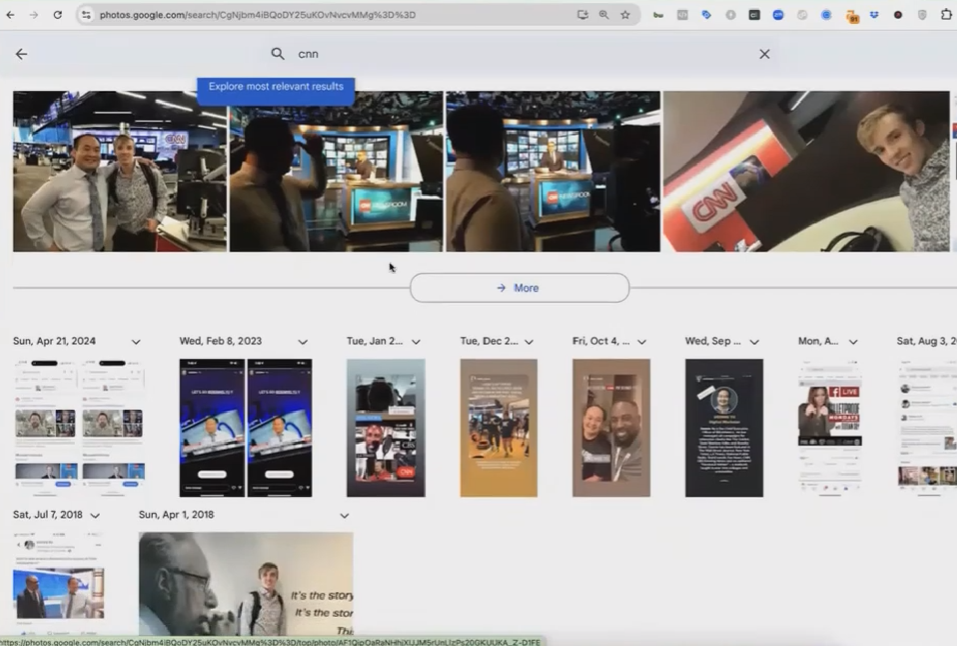
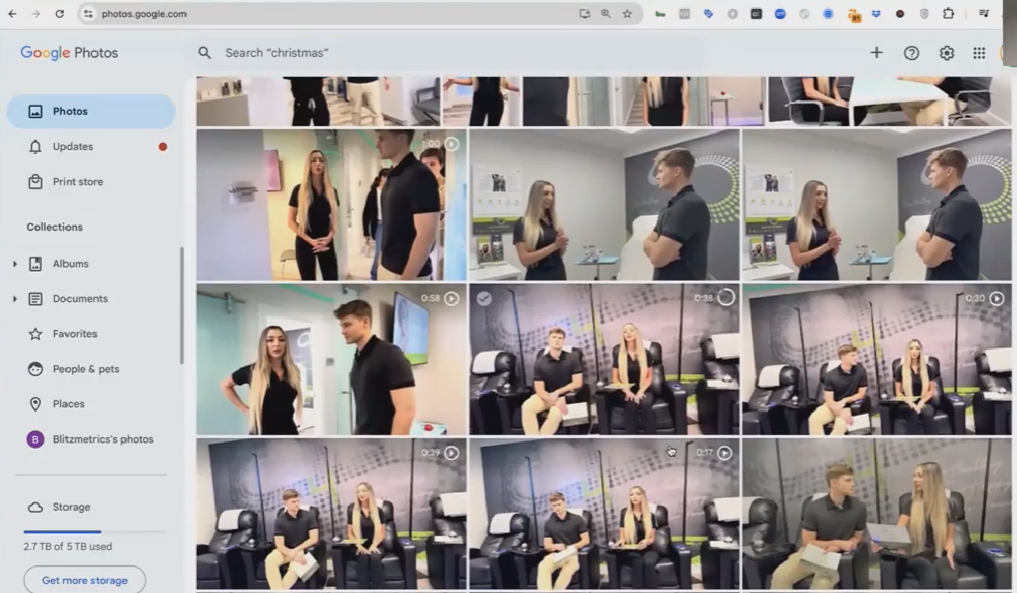
I showed Lewis behind-the-scenes footage from CNN, ABC, GetResponse events, and other appearances where my team captures content from multiple angles while I am having real conversations. The key is documenting, not performing. When you show the camera in the frame, when you show the behind-the-scenes reality, it actually becomes more authoritative, not less.
For franchise clients like Forever Young with their 100 locations, we create template content at the flagship location. The front desk person gives a walkthrough, the medical officer explains the process, and the aestheticians talk about their specialties. Then every other franchisee can follow the same general approach for their location.
Backlinking is just digital networking
Lewis said something at the end that perfectly summarized our conversation: backlinking is just digital networking. It is where real-life networking goes online. You can buy links until you are blue in the face, but it will never have the same impact as making real ones, and it will cost you a lot more anyway.
The businesses that win are the ones telling their real stories, using their real ingredients, and connecting with other real businesses in their space. AI is an incredible multiplier, but if you are feeding it nothing, it just amplifies nothing.
Originally published .
Dennis Yu
Dennis Yu is the CEO of Local Service Spotlight, a platform that amplifies the reputations of contractors and local service businesses using the Content Factory process. He is a former search engine engineer who has spent a billion dollars on Google and Facebook ads for Nike, Quiznos, Ashley Furniture, Red Bull, State Farm, and other brands.
Dennis has achieved 25% of his goal of creating a million digital marketing jobs by partnering with universities, professional organizations, and agencies. Through Local Service Spotlight, he teaches the Dollar a Day strategy and Content Factory training to help local service businesses enhance their existing local reputation and make the phone ring.
Dennis coaches young adult agency owners serving plumbers, AC technicians, landscapers, roofers, electricians, and believes there should be a standard in measuring local marketing efforts, much like doctors and plumbers must be certified. He has appeared on 353 podcasts with 619 credited episodes — see the full list of his podcast appearances.