
 by
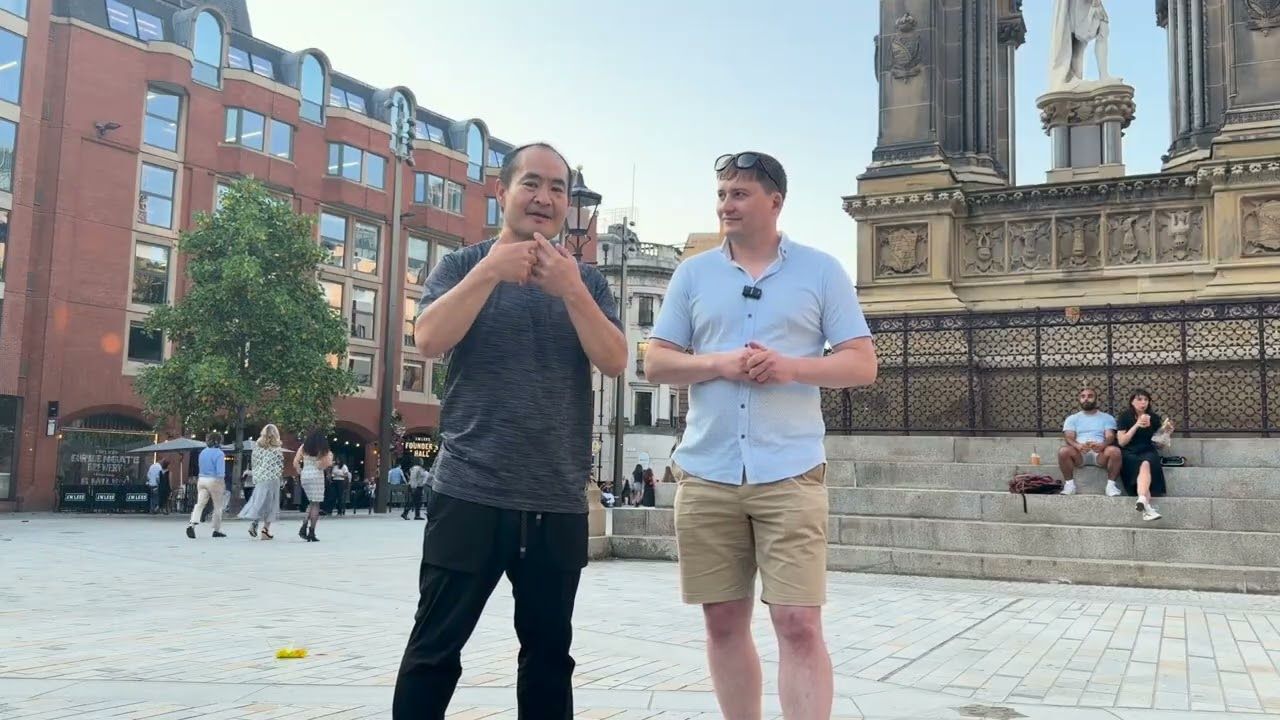
A two-minute clip from Dennis Yu and Paul Ryazanov’s conversation in Manchester, England. The full conversation is linked below.
Let AI interview you. That’s the first AI conversation Dennis Yu recommends to anyone whose career started before AI did. It means asking a tool like ChatGPT or Claude to question you, one question at a time, about your experience, goals and blind spots, instead of you trying to write the perfect prompt.
The recommendation came from a direct question by Paul Ryazanov, co-founder and CEO of MageCloud Agency and founder of Ecommerce Camp UK. Paul has run ecommerce businesses and spoken at conferences like PubCon and BrightonSEO for over a decade. He asked what a lot of experienced professionals are wondering.
“How would you start, like, if I’m 60 years old, my whole life, it’s pre-AI… I don’t have anything on my, you know, emails.”
It’s a real problem. The usual advice is to feed AI your documents, your inbox or your writing. Someone whose best work happened in meetings, on job sites or in conversations has none of that to upload.
Dennis’s answer: make the AI ask the questions
Dennis’s answer flips the direction of the conversation. If you don’t have a digital trail, the AI has to draw it out of you. So you tell it that, and you ask it to interview you. Here’s how he said it, spoken out loud, in one take:
“Look, most of my life was before there was a cell phone that could take pictures and videos. I want you to interview me to be able to extract what you think my core mission is. What should I be doing with my life at this point? Help me clarify what my fears are, where my hidden strengths are, what I should be doing, what I should be learning, what are my blind spots. I want you to be direct and honest with me. Don’t be afraid to offend me. Give it to me straight. I want you to think hard.”
He finished with an open invitation: ask me the questions you think will help me move in the right direction. Then he pointed out that you don’t even need to write your own version. You can grab the transcript of what he said from YouTube, paste it into Gemini, ChatGPT, Claude or Grok, and let the AI start interviewing you.
Why the interview works better than a prompt
There are three reasons this approach suits people with long careers.
It removes the blank page. Most people freeze when they have to tell an AI what they want. Answering questions is easier than writing instructions, and you’ve been answering questions in interviews, client meetings and performance reviews your whole life.
It surfaces what you take for granted. In the full conversation on why experience is an AI advantage, Dennis explains that chatbots are obedient. They only answer what you ask. Asking the AI to probe your strengths and relationships gets it to find the things that feel obvious to you but carry real market value.
It asks for honesty. Dennis’s wording tells the AI to be direct, not to worry about offending him and to think hard. Without that instruction, most tools default to encouragement. With it, you get a sharper read on your blind spots.
How to let AI interview you, step by step
The video description gives a shorter starting prompt you can say in your own words:
“Interview me about my experience, strengths, blind spots and what I want to do next. Ask questions one at a time. Help me turn what I know into a clear next step.”
A few practical habits make it go further:
- Speak your answers instead of typing them. Dennis recommends the free Wispr Flow dictation app. Long, rambling, spoken answers give the AI far more to work with than short typed ones.
- Insist on one question at a time. If it fires off ten questions at once, tell it to slow down. The follow-up questions are where the useful insight shows up.
- Let it push back. If an answer feels uncomfortable, that’s often the blind spot you asked it to find.
- End with a next step. Ask it to sum up your core mission, your strengths and one concrete action for the week.
Take your context with you when you switch tools
The second half of Dennis’s answer solves a problem a lot of people have once they get going. You’ve had dozens of good conversations with ChatGPT, and now everyone in business is talking about Claude. Dennis jokes that leaving feels like a breakup.
“I’ve been dating ChatGPT for such a long time, I don’t want to leave, right?”
His fix is simple. Ask the tool you’ve been using to write it all down.
“Hey, you and I have had a lot of conversations. I want you to write a detailed file of everything that would be helpful if I want to have the same level of conversation with another agent.”
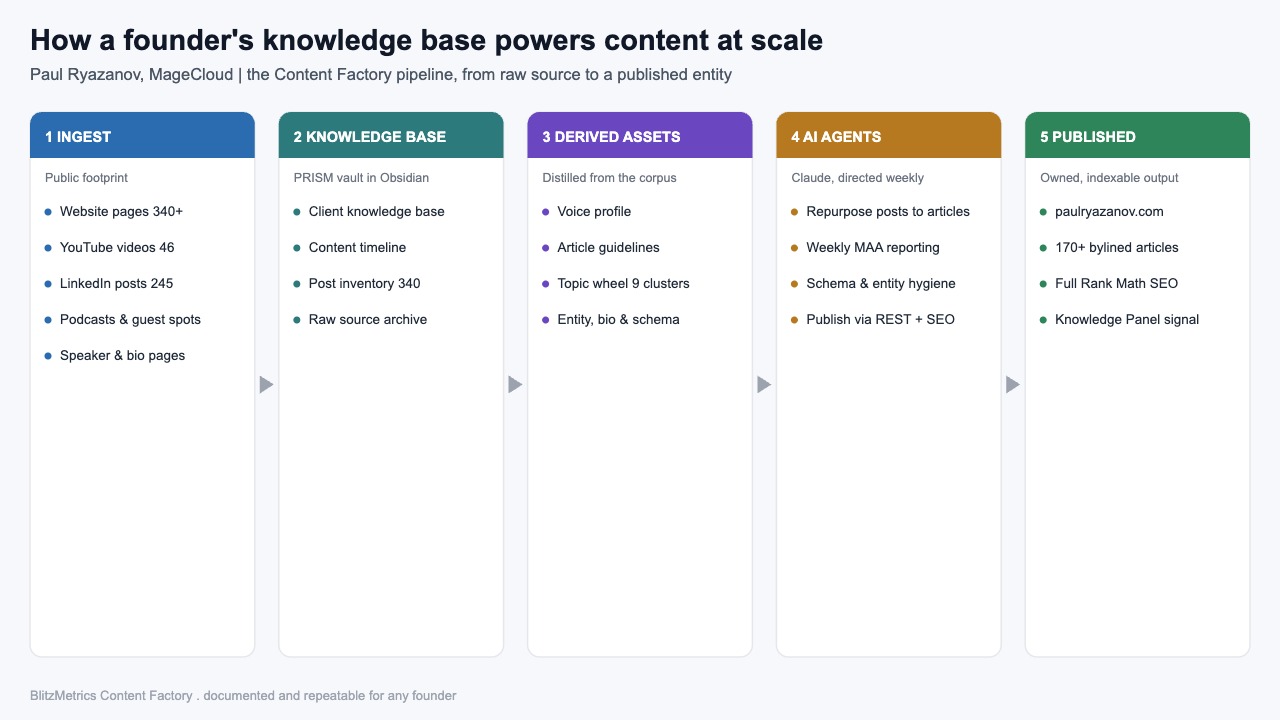
Take that file to any other AI and you pick up where you left off. The same principle, collecting what someone knows into one structured place an agent can read, is what the BlitzMetrics team did at a much larger scale with Paul Ryazanov’s ecommerce knowledge base.
A lifetime of experience is the advantage
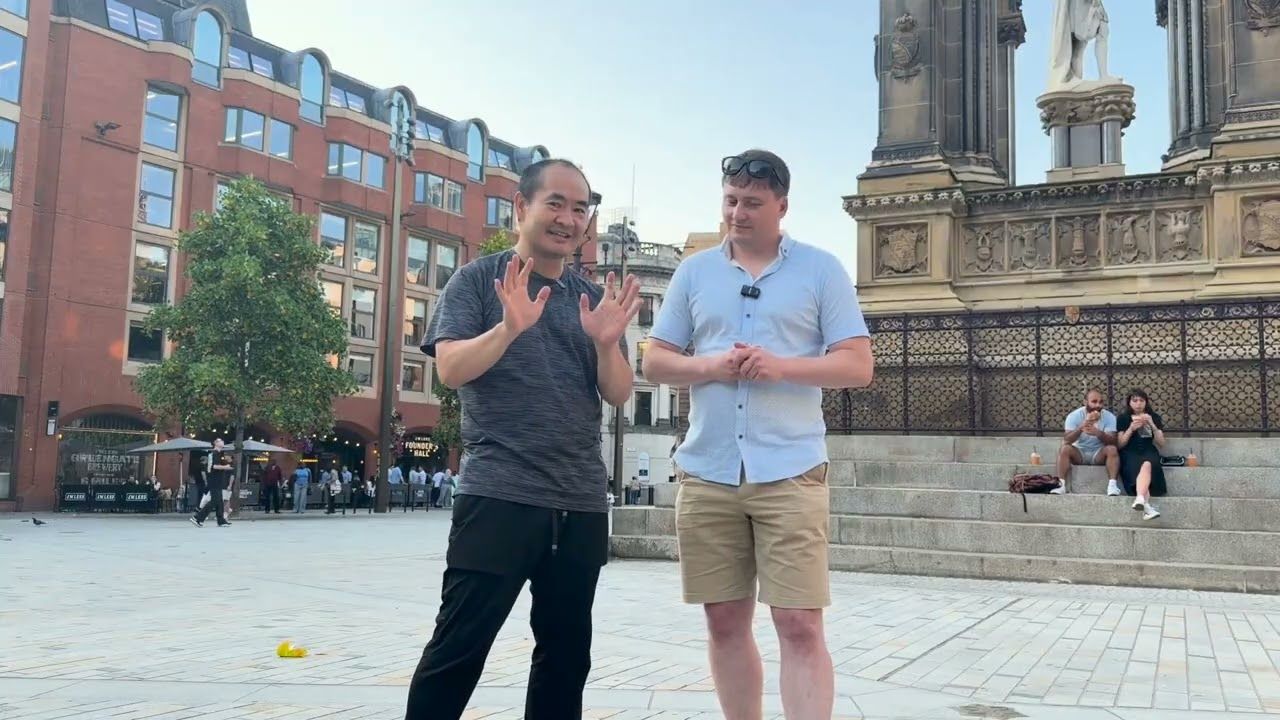
Dennis ends the clip by bringing it back to age. He’s 51, and he says people in their 60s and 70s have more to draw from than anyone.
“We have so much life experience that we can pull from. That’s our advantage. It’s our relationships.”
The interview is just the way in. Once the AI knows your mission, your strengths and your network, it can help you decide what to build next, whether that’s a consulting offer, a book or a knowledge base other people can learn from. Dennis walks through that bigger picture, including the story of a 74-year-old photographer who built five agents over breakfast, in the full ten-minute conversation.
Dennis asks viewers to try the conversation and share what they found. You can follow Paul on his YouTube channel, and see how BlitzMetrics turns a single recording like this one into articles, clips and posts in the Content Factory.
Originally published .
Dylan Haugen
Dylan Haugen is a professional dunker, content creator, and editor at the Content Factory, where he transforms podcasts and interviews into strategic brand assets. He collaborates with Dennis Yu to support young entrepreneurs and business owners in building their personal brands through education, transparency, and effective content marketing. As the host of the Dunk Talk podcast and a dedicated advocate for establishing dunking as a recognized sport, Dylan combines athletic expertise, storytelling, and digital strategy to help elevate the next generation of creators.