

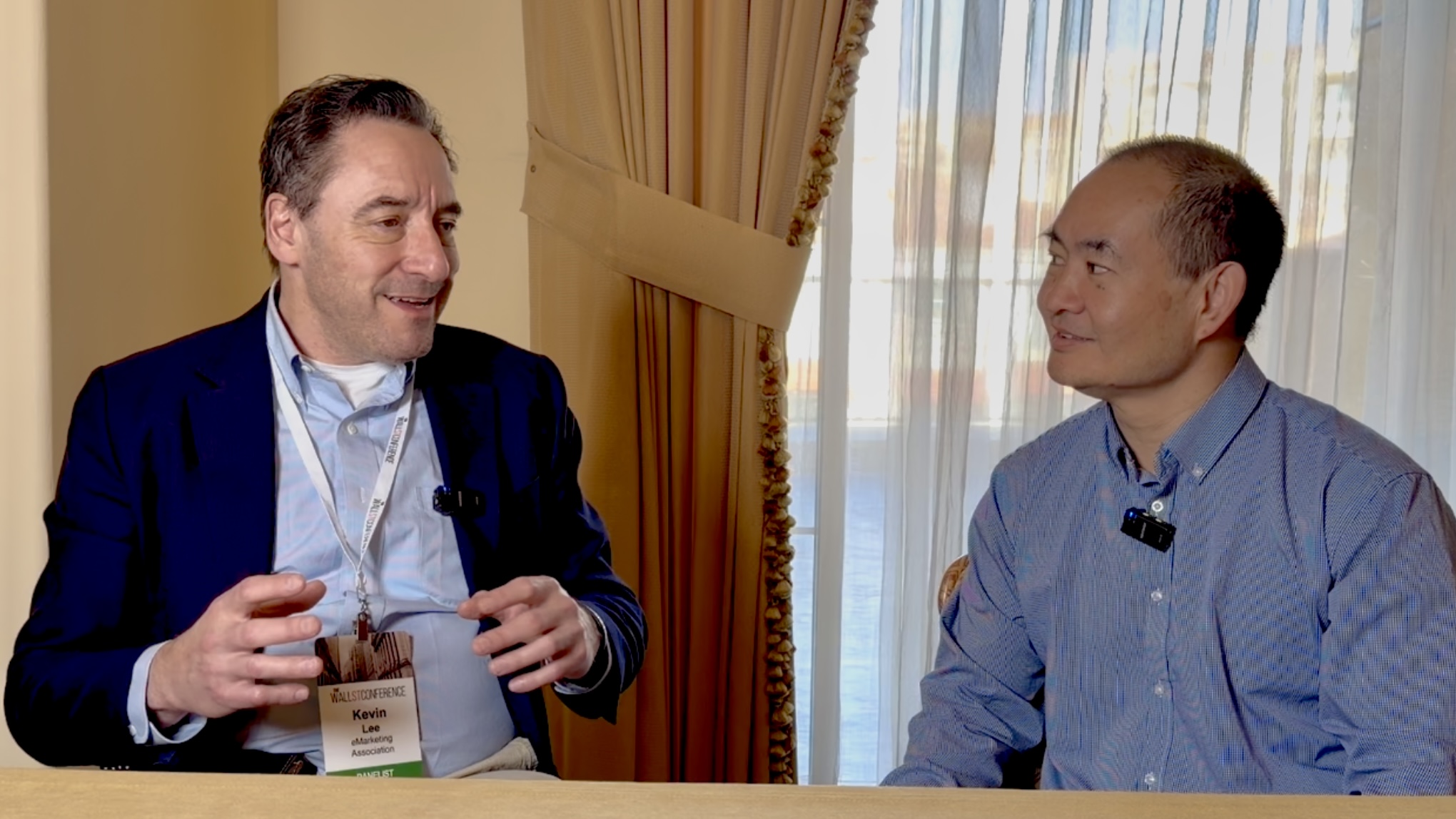
If you’re spending money on PPC, there is no other person I’d rather listen to than Kevin Lee. I first met Kevin about 22 years ago at Pubcon — back when it was still called Webmaster World — and he was already the go-to authority on paid search. He ran Didit, one of the original search marketing agencies, and has been at the forefront of PPC for three decades now.
I sat down with Kevin in Las Vegas at the Wall Street conference, where he had just been on a panel about the power of content and content syndication. What came out of our conversation on the Coach Yu Show is a masterclass in how to think about PPC, GEO (generative engine optimization), AI agents, and a massive Google ad spend recovery opportunity that every advertiser needs to know about.
GEO Is the New SEO — And Content Is Still King
Kevin and I have both been in digital marketing since the mid-90s, and content has been king the entire time. But the game has completely morphed. Digital PR, social media, branded content, and influencer marketing all now feed into the LLMs. If you’re not doing it right, you’re invisible — and invisible is not good.
Kevin pointed out something fascinating at Digimarcon, one of the conferences we both speak at. If you ask any major LLM — Gemini, ChatGPT, Claude — what the world’s number one digital marketing conference series is, they all say Digimarcon. It’s clearly not the largest, but it has the most consensus across content, citations, and mentions. That’s GEO in action.
The key insight is that LLMs learn faster on topics where more people are interacting with them. Kevin used the example of Claude Code — tens of thousands of programmers interacting with it made it exponentially better, much faster than asking it about niche topics like coffee cup manufacturers. The LLM will still get better at niche topics, but at a different rate.
How to Get the LLMs to Recommend Your Business
For local service businesses — landscapers, plumbers, HVAC companies — the strategy is about creating consensus in your community. Kevin explained that if it’s just you on your website saying how great you are, that’s one vote and it’s you voting for yourself. That’s not going to influence an LLM.
The real power comes from co-creating content with your customers, your community partners, and local influencers. Have customers give testimonials. Co-create content with people who have websites and social media presences. Work with your local house of worship, your little league, your neighborhood organizations. Every piece of co-created content not only creates old-school link juice from an SEO perspective but also gets ingested by the LLMs.
The more consensus within your community that you’re a great landscaper or a great plumber, the more likely ChatGPT, Claude, Gemini, or Perplexity will agree with that consensus. And it works in the opposite direction too — if a lot of people think you’re bad, the LLMs may surface your negative reviews. You do not want that to happen.
Niche Content Wins in the Age of AI
Kevin made an important point about content strategy for local businesses. A lot of home service companies aren’t that different from each other except for geography. So the content strategy needs to align with what makes the business different in its specific market.
There might be specific types of crab grass unique to your geography, or particular tree species, or local soil conditions. Those lawn care companies need to talk about their specific local challenges. The LLMs are getting smart enough to know that a person searching from Maine should get different results than someone in Florida or Virginia.
Repurpose Everything — Content Reusability Is the Multiplier
One of the biggest things Kevin sees people missing is content reusability. Too many businesses create a piece of content for one specific channel and never think about where else it can live. A YouTube video can become a blog post, a Google Business Profile update, a Twitter post, a Facebook post, an Instagram reel, a Spotify audio feed, an iTunes podcast episode.
This matters for GEO because each repurposed piece creates additional citations. Even if there’s no link juice being passed, even if it’s video content that got transcribed somewhere, that transcription creates a ripple effect. Somebody might synopsize it or abstract it, and that creates new content reinforcing your signal to the LLMs.
Kevin also raised an important point about platform exclusivity. Google is starting to lock out other crawlers from YouTube transcriptions. Gemini can see your YouTube content, but ChatGPT and Claude may not be able to. So if you only put your content on YouTube, you’re only visible to one LLM. Repurposing to other platforms ensures you show up everywhere.
The $100B Google Ad Spend Recovery
This is the part of the conversation that every PPC advertiser needs to pay attention to. Google was found to be a monopoly in two separate cases — in search and in display. A law firm called Keller Postman, which was involved in the original antitrust work, has started a mass arbitration for ad spend recovery.
Kevin estimates that over $100 billion worth of ad spend is already represented in the arbitration. He’s personally put over a billion dollars of his own clients’ spend into the process. The theory is straightforward: during the period Google was proven to be a monopoly, they likely overcharged advertisers. Historical precedent in monopoly cases suggests overcharges typically fall in the 10 to 25% range.
Here’s why this is a mass arbitration and not a class action: Google changed their terms of service in 2016 to require arbitration instead of allowing class actions. So Keller Postman is acting on behalf of a group of advertisers, but it’s not technically a class. The interesting thing about binding arbitration is that you can’t appeal it — each case is decided independently by an arbitrator.
For advertisers spending over $5 million in the last 10 years, Kevin can concierge them into the group directly. For smaller advertisers, there’s a self-service link to submit. It takes about 10 minutes to fill out the form and maybe an hour to pull your spend reports from Google Ads. It’s contingency-based, meaning there’s no cost to the advertiser — Keller Postman only gets paid if there’s a recovery.
As for the concern about angering Google — Kevin doesn’t see it as a real risk. The legal team and the ad platform team at Google operate independently. Retaliating against advertisers who participate would put Google in an even worse legal position. And they still want your ad dollars regardless.
AI Agents Are Powerful but Dangerous at Version 0.9
We talked about the rise of AI agents and whether they’ll replace digital marketing agencies. Kevin’s take is nuanced. He believes agencies need to future-proof themselves every six months and watch carefully where the tools and technology are headed. Meta and Google would love to eliminate the agency layer entirely and get direct access to every advertiser’s credit card, but Kevin doesn’t think that’s happening as quickly as they’d like.
Right now, AI agents are at version 0.9. They’re incredibly powerful as tools, but giving them too much autonomy can lead to reputation problems, overspamming, or other issues. The human strategy and guidance is still critical — translating what makes a specific business special, understanding why their ideal customer looks different from their competitors’, and ensuring authenticity in content creation.
Kevin used PPC as a perfect example: PMAX and AIMAX campaigns are okay at certain things and really bad at others. A sophisticated marketer still needs manual campaigns running in parallel because the AI hasn’t figured out nuances like bigger lawns meaning bigger contracts, or that wealthy homeowners have longer conversion cycles. A human looking at a properly constructed analytics dashboard can connect dots that Google’s regression algorithms haven’t imputed yet.
Kevin Lee Is Still Hands-On After 30 Years
What I admire most about Kevin is that after 30 years of running Didit, he’s still in the trenches. He calls himself a marketing mad scientist — solving problems is what feeds his energy. He’ll spend 30 to 40 hours a week on client strategy, especially with newer or more complex accounts. He’s like the Dr. House of digital marketing, except he’s actually nice about it.
Beyond Didit, Kevin runs Various Ventures, an incubator with nine different technologies including AI-powered platforms. One of them is Visible Lime, which helps marketers identify where their content should live for GEO — because for each industry and set of competitors, the optimal citation sources are different. In some cases Reddit matters most, in others it’s G2 and Capterra and industry trade publications.
The Blue-Collar Opportunity for Young Entrepreneurs
Kevin had a fascinating take on where young adults should focus if they want to start a business. He believes the blue-collar trades represent the biggest transformation opportunity for a new generation. Think about who’s running HVAC companies, landscaping businesses, and roofing companies right now — many are technology-resistant owners who’ve been doing things the same way for decades.
A digital native coming into one of these businesses could make it 30% more efficient just through route optimization using linear programming. The old-school crew won’t know what hit them. And unlike white-collar jobs, HR departments in blue-collar industries don’t care if you went to college — they care if you can get the work done.
Kevin and I both see a massive succession planning opportunity. About 75% of retiring blue-collar business owners will close their businesses without selling them. A young adult who partners with one of these owners, earns their way into equity over five years, and eventually takes over the company creates a win-win that’s far friendlier than the private equity approach.
What to Do with This
Build community consensus for GEO. Co-create content with your customers, local organizations, and community influencers. Every testimonial, collaboration, and mention builds the consensus signal that LLMs use to recommend businesses. If it’s just you saying you’re great, the LLMs won’t care.
Repurpose every piece of content across multiple platforms. Don’t create a video for YouTube and leave it there. Turn it into a blog post, social media content, podcast audio, and Google Business Profile updates. Each instance creates another citation for the LLMs and increases your visibility across all of them — not just Gemini.
Look into the Google ad spend recovery. If you’ve spent meaningful money on Google Ads over the last decade, the mass arbitration through Keller Postman is a no-brainer to investigate. It takes 10 minutes to fill out the form, it’s contingency-based so there’s no cost to you, and historical precedent suggests meaningful recoveries in monopoly cases.
Keep humans at the controls of your PPC. AI tools like PMAX and AIMAX are useful but limited. Run manual campaigns in parallel, especially if you’re a sophisticated marketer trying to optimize for lifetime value rather than base-level conversion rates. The AI hasn’t caught up to the nuances of your specific business yet.
Think about content through a reusability lens from day one. Every piece of content you create should be designed for multiple channels and formats. This isn’t just efficient — it’s the foundation of GEO visibility. Being a good marketer — doing all the things that make a business visible and trustworthy — is what predicts success in the age of AI.
Kevin Lee has spent 30 years at the intersection of paid search, technology, and business strategy. His insight that being a good marketer is what predicts GEO visibility should be the north star for every business owner reading this. The technical stuff is increasingly handled by AI and automation. The deeper strategy — knowing your community, creating authentic content, building consensus, and staying curious — is what separates the businesses that thrive from the ones that become invisible.
Dennis Yu
Dennis Yu is the CEO of Local Service Spotlight, a platform that amplifies the reputations of contractors and local service businesses using the Content Factory process. He is a former search engine engineer who has spent a billion dollars on Google and Facebook ads for Nike, Quiznos, Ashley Furniture, Red Bull, State Farm, and other brands.
Dennis has achieved 25% of his goal of creating a million digital marketing jobs by partnering with universities, professional organizations, and agencies. Through Local Service Spotlight, he teaches the Dollar a Day strategy and Content Factory training to help local service businesses enhance their existing local reputation and make the phone ring.
Dennis coaches young adult agency owners serving plumbers, AC technicians, landscapers, roofers, electricians, and believes there should be a standard in measuring local marketing efforts, much like doctors and plumbers must be certified.