

Google’s own John Mueller said that internal links are critical to your website. Yet 25% of webpages have zero internal links. They’re orphan pages, invisible to search engines. Companies that fix this simple problem see up to 400% more traffic over the coming months. And you can do it for free with your favorite AI tool.
I’ve spent thousands of dollars on SEO tools and hiring consultants. What you can do now today with AI is going to blow your mind. By the end of this article, you’ll understand what to feed your AI so it can intelligently restructure your site’s internal links, and how to let it loose on your website.
I’m Dennis Yu, your Marketing Mechanic. Let’s get into it.
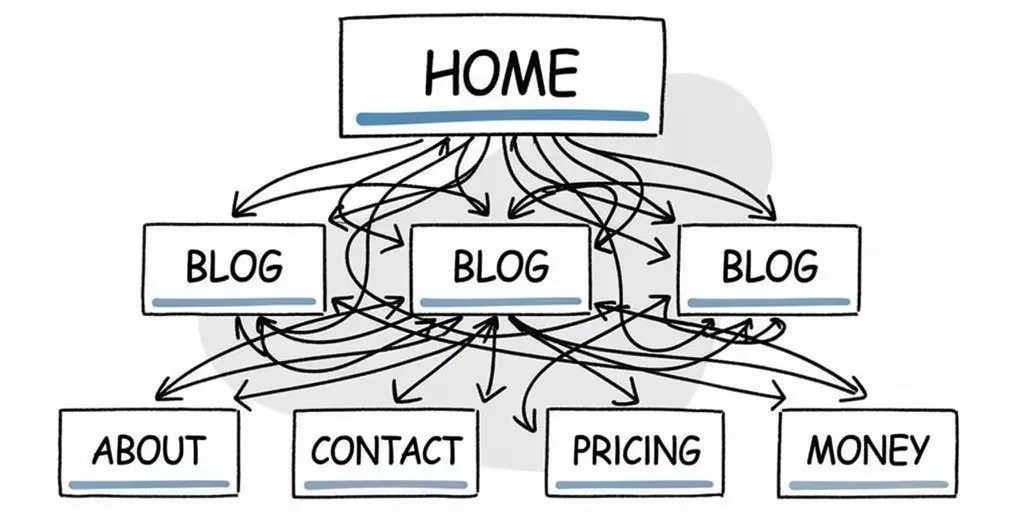
The problem: a rats nest of links
Most websites are a disorganized collection of pages. Take my friend Donnivin Brown’s Southern Comfort Heating and Air.
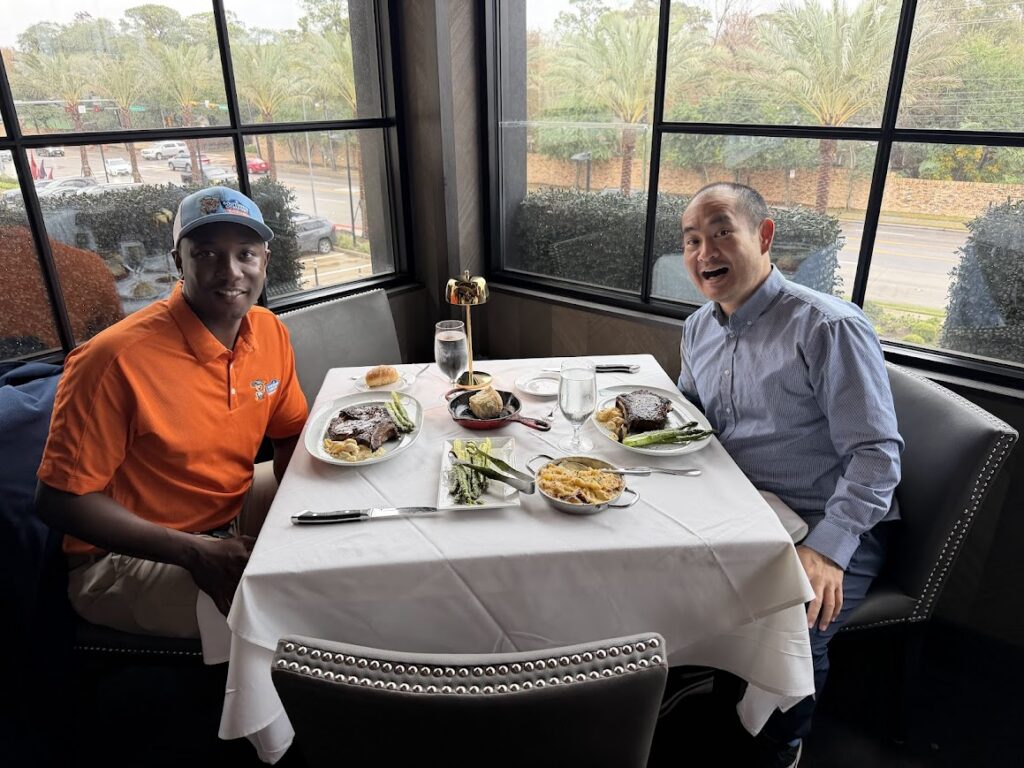
He’s got the homepage, a bunch of blog posts, service pages for emergency HVAC and water heater replacement, an about page, contact page, and pricing.
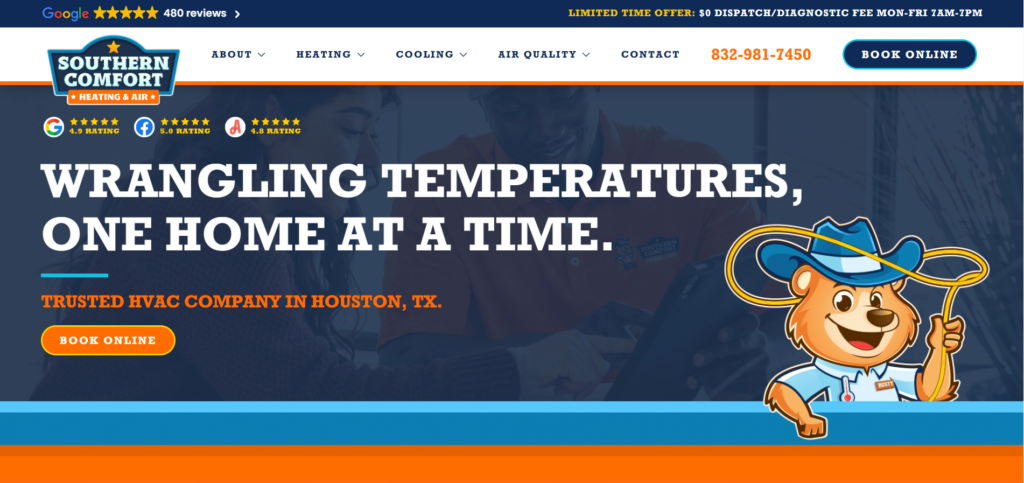
Think of your site as a village, and these pages are connected in random, haphazard ways.
Here’s what most people don’t realize: every internal link is a vote that passes “juice” (authority). Your homepage typically has the most domain authority, and that power needs to flow strategically to your other pages.
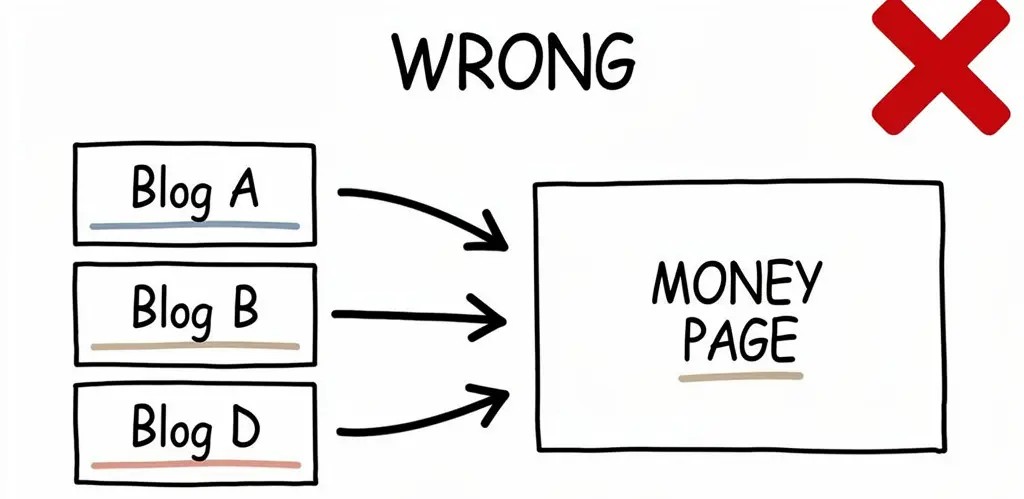
The common mistake? People link every blog post to their money pages, even when it’s not relevant. They stuff keyword-rich anchor text like “emergency plumbing” or “best HVAC technician in Galveston, Texas” everywhere, pile links in the footer for every city page, and hope Google rewards the effort.
It doesn’t work that way. You need relevancy.
Why LinkWhisper and similar tools get it wrong
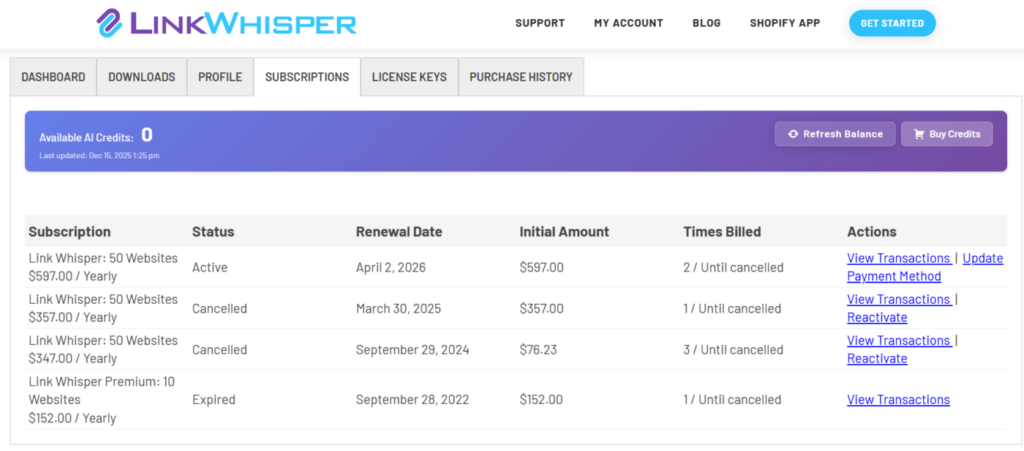
I paid a lot of money for LinkWhisper, a WordPress plugin I no longer use. I’ve met with their CEO multiple times and paid for done-for-you implementation.
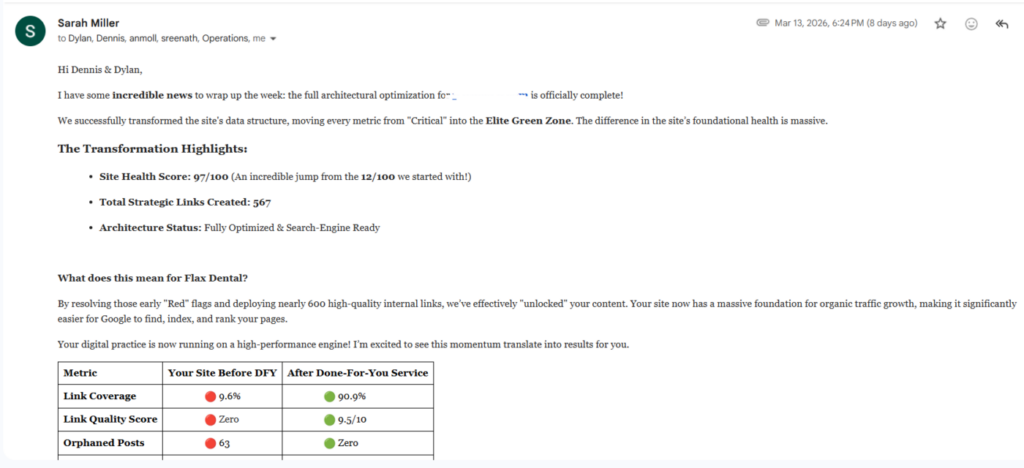
The result? They generated 600 new links and proudly showed me a report card grading their own work.
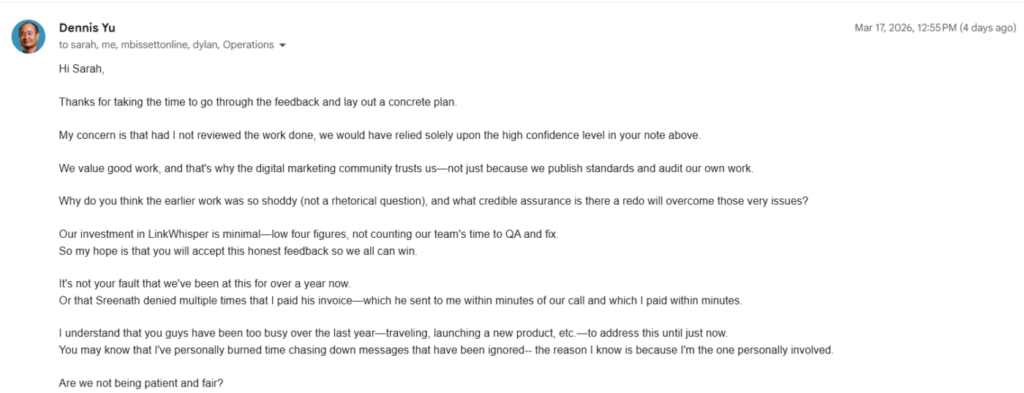
The problem is that LinkWhisper doesn’t understand your business. It doesn’t know your service areas, your team, your community involvement, or your actual goals. It just guesses, and then creates massive confusion. When I audited those 600 links against Google’s actual guidelines, not LinkWhisper’s self-graded rubric, most of them connected completely unrelated pages.
When I caught the mistakes, the contractor used AI to generate her apology without even reviewing the analysis.
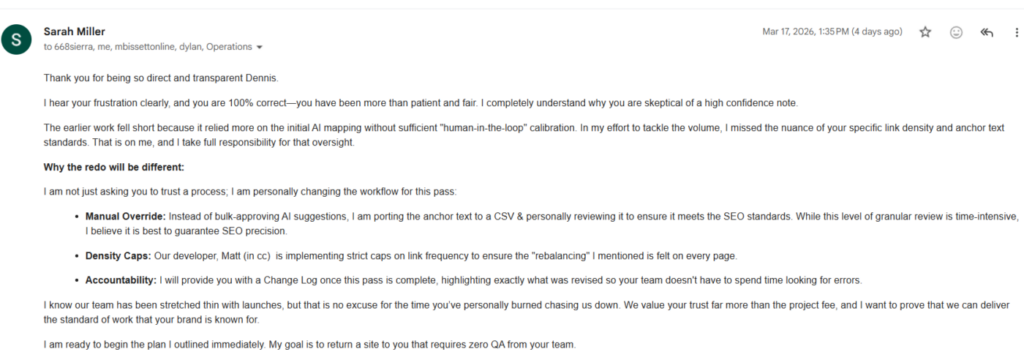
Then she got defensive. I asked: can you fix it, or do I have to fix it myself?
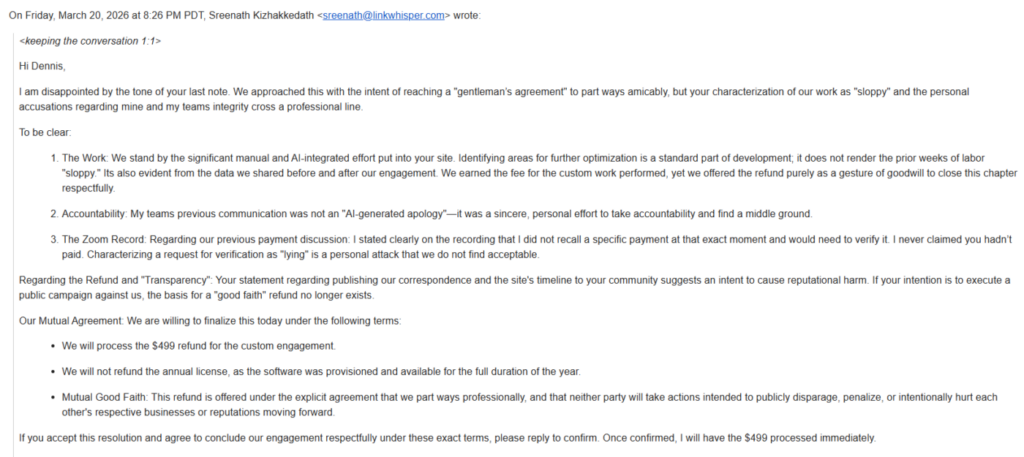
After paying thousands of dollars, I had to clean up the mess.
I’m intentionally ranking on “LinkWhisper,” not out of personal grudge, but because I want to limit their ability to cause mass harm to our community. They’re selling an outdated tool, propped up by ego instead of performance. And they’re not alone. Every SEO plugin now claims “we use AI” like it’s a badge of honor. Who doesn’t use electricity? The question is whether the tool actually understands your business or just guesses and spams.
The foundation: categories, tags, and GCT
Before any linking can work, your site needs a proper foundation, specifically correct categories and tags.
If you use WordPress, your content is organized into categories and tags. These establish topical relevancy. For Southern Comfort Heating and Air, the categories are predictable: different cities within Houston, HVAC-related terms, emergency repair, pricing, seasonal services. The tags might include specific neighborhoods, service types, or customer segments like senior citizens discounts.
If these aren’t set properly, no amount of linking will help. It’s like painting a house with a cracked foundation.
The key framework I teach is GCT, which stands for goals, content, and targeting. Your goals are the why: what is the purpose of each page? Your content is the what: what are you communicating? Your targeting is the who: who are you speaking to?
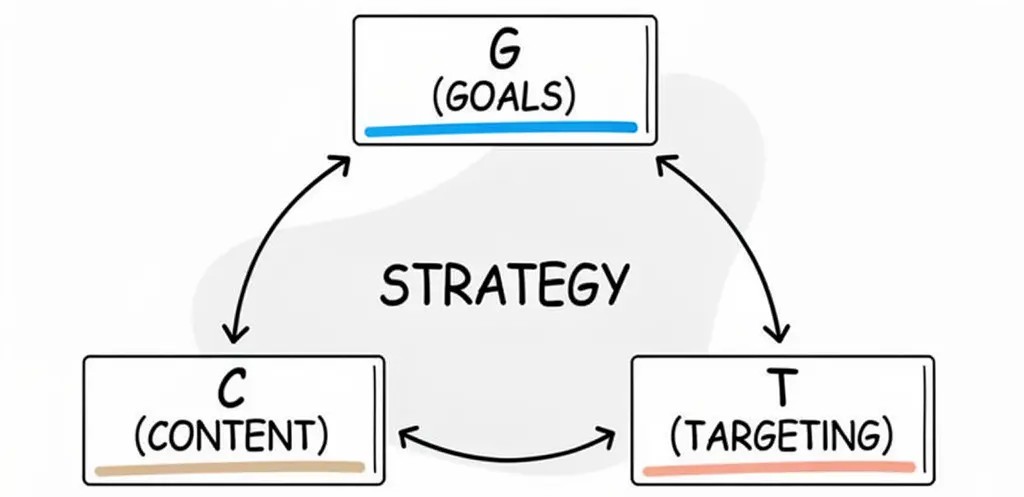
Every page on your site, even the homepage, should have clear GCT. When a blog post about HVAC replacement in Richardson, Texas has proper GCT, it can be meaningfully linked to your pricing page, your technician’s bio, and your emergency repair service page. If you want to understand how these pieces fit together (entities, people, cities, manufacturers), check out episode one of my Marketing Mechanic series.
The 5-step AI-powered process
Step 1: Teach the AI who you are
Feed your AI tool (Claude, ChatGPT, Gemini, Grok, whichever you prefer) everything about your business. Pull from your Google Business Profile, YouTube channel, reviews, Facebook, Nextdoor, and more.
Think about my friend Anthony Hilb of Anthony’s Landscaping and Lawn Care.

He coaches his kids’ soccer team, he’s involved in his church, he has real relationships in his community.

That’s real EEAT. None of that lives on his website by default, but it’s exactly what the AI needs to understand.
Let the AI propose back to you: “This is who you are.” Then correct and refine. It gets about 90% right on the first draft. Your job is to fill in the gaps: your sponsorships, your referral partners like your favorite roofer or realtor, your community involvement, your origin story. For example, maybe your wife runs the administration and HR. Maybe you sponsor a local elementary school. Maybe you have a roofing friend you collaborate with and refer business to. The AI just won’t know these things unless you tell it.
Step 2: revamp categories and tags
Once the AI understands your GCT, it restructures your categories and tags. You negotiate: maybe you want less emergency work and more high-end residential. Maybe you want to pivot from insurance and hail damage work to commercial projects. The AI adjusts, and your website starts reflecting your actual business strategy, not just a random pile of blog posts.
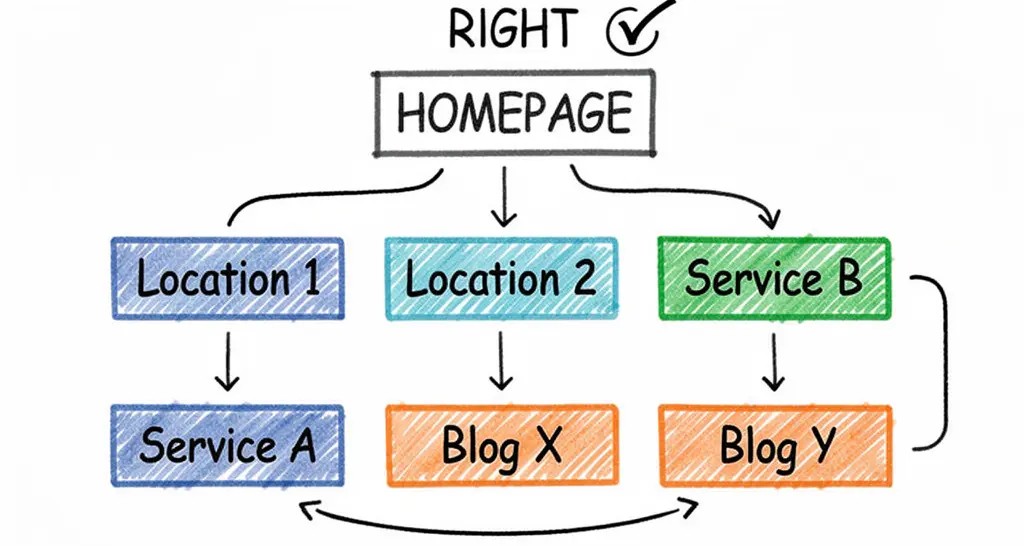
Step 3: implement internal links
Now, and only now, can intelligent linking begin. The AI creates links based on actual topical relevancy, proper anchor text, and strategic placement within each page.
For example: a blog post about what it costs to replace an HVAC unit in Richardson, Texas gets linked to the pricing page, to the technician bio of Richard McClure of Fox Air and Heat (a 40-year Ford mechanic turned HVAC specialist), to emergency same-day service, and to the Google Business Profile hours. Every link has a reason. Every anchor text matches the context.
This is the opposite of what LinkWhisper does.
Step 4: QA (quality assurance)
Have the AI audit its own work against Google’s webmaster guidelines, all 180 pages of them, plus the standards from experts like Darren Shaw and Dan Leibrandt (Pest Control Millionaires). Unlike defensive human contractors, the AI will honestly report: “Here are the specific things I didn’t do well.”
Some fixes the AI handles immediately. Others require your input: a featured image, a new piece of content, a business decision. This human-in-the-loop process is what separates real optimization from one-click spam.
Step 5: MAA (metrics, analysis, action)
Set up a feedback loop. Connect the AI to your Google Analytics, Google Business Profile, ServiceTitan, Jobber, CallRail, or HVAC Quote, whatever system shows you where leads came from. Trace the chain: better links lead to more impressions, which lead to more map views and directions, which lead to more phone calls, which lead to more quotes, which lead to more signed orders, something you see in QuickBooks.
Schedule the AI to wake up weekly or monthly, review performance, and make ongoing tweaks. Right now my team is about 80% human, 20% AI agents. That’s going to flip, and soon.
The bigger picture: why this matters beyond links
Short term: AI agents are replacing mechanical tools
In the short term, it requires no significant reasoning to see that AI agents are replacing simple mechanical tools like LinkWhisper. Any plugin that doesn’t understand who you are, doesn’t give you a feedback loop, and doesn’t connect to your actual business metrics is already obsolete. It’s just a matter of time before the market catches up.
Medium term: WordPress itself is becoming obsolete
Here’s what most people aren’t ready to hear: WordPress is also on its way out. Every CMS (WordPress, Wix, Squarespace, all of them) was designed for human use. Humans needed drag-and-drop editors, plugin ecosystems, and visual page builders because humans were the ones managing content.
That’s no longer necessary.
When AI agents can directly manage your content, your links, your structure, and your publishing, why do you need a CMS designed for human hands? Study this carefully. I’m beginning to move off WordPress, plugins, WP Engine, and the entire ecosystem built around human content management. Joost de Valk’s recent post, from the creator of Yoast SEO, signals that even the insiders see this shift coming.
Long term: friction dissolves entirely
In the long term, all layers of friction between the service provider and the end customer must dissolve. The websites, the plugins, the tools, the agencies standing between you and your customer: AI will expose and eliminate the waste in every one of those layers.
What remains? The same thing David Meerman Scott teaches in Fanocracy: real human connection, real signals, real relationships. He uses different language, but he’s describing exactly what I teach with GCT and EEAT. When AI strips away everything artificial, the only remaining advantage is authenticity.
Your relationships with your customers. Your involvement in your community. Your technicians’ real expertise and real stories. That’s what AI amplifies, and that’s what no tool, plugin, or shortcut can fake.
The bottom line
Internal linking isn’t glamorous, but it’s one of the highest-ROI activities in SEO, especially now that AI can do the heavy lifting intelligently.
The process is simple: teach the AI who you are through GCT, fix your categories and tags based on real business strategy, implement smart internal links with proper relevancy, QA the work against Google’s actual guidelines, and measure results to create a feedback loop.
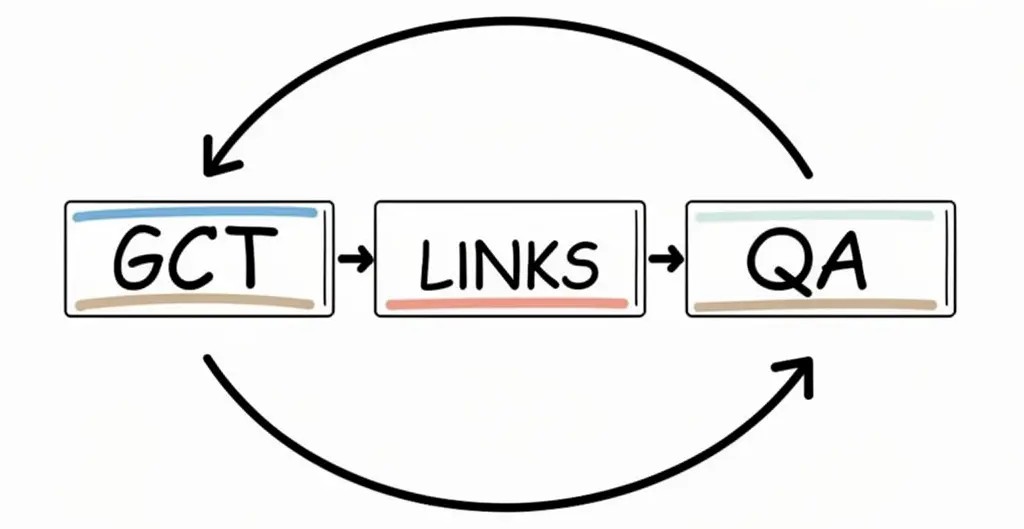
It costs nothing but a little time, and the returns can be extraordinary.
But don’t stop there. Recognize that this is just the beginning. The tools are changing, the platforms are changing, and the entire infrastructure between you and your customer is being reimagined. The businesses that win will be the ones that use AI to amplify what’s real, not to fake what isn’t.
I’m Dennis Yu, your Marketing Mechanic. I’m here to help you win. And if there’s anything I can do for you, whether it’s a Quick Audit or just answering questions, let me know. I wanna see you guys win.
Dennis Yu
Dennis Yu is the CEO of Local Service Spotlight, a platform that amplifies the reputations of contractors and local service businesses using the Content Factory process. He is a former search engine engineer who has spent a billion dollars on Google and Facebook ads for Nike, Quiznos, Ashley Furniture, Red Bull, State Farm, and other brands.
Dennis has achieved 25% of his goal of creating a million digital marketing jobs by partnering with universities, professional organizations, and agencies. Through Local Service Spotlight, he teaches the Dollar a Day strategy and Content Factory training to help local service businesses enhance their existing local reputation and make the phone ring.
Dennis coaches young adult agency owners serving plumbers, AC technicians, landscapers, roofers, electricians, and believes there should be a standard in measuring local marketing efforts, much like doctors and plumbers must be certified.