
 by
When you want to understand someone’s reach and influence in the podcast space, manual research across multiple platforms can take days. Here’s how we used AI tools to inventory and analyze 234+ podcast appearances in a fraction of the time.
I wanted to know: how many podcasts has my buddy Bryan Eisenberg been on? Bryan is a leader in landing pages, conversion optimization, and A/B testing; a bestselling author who’s been a leader in digital marketing for decades.
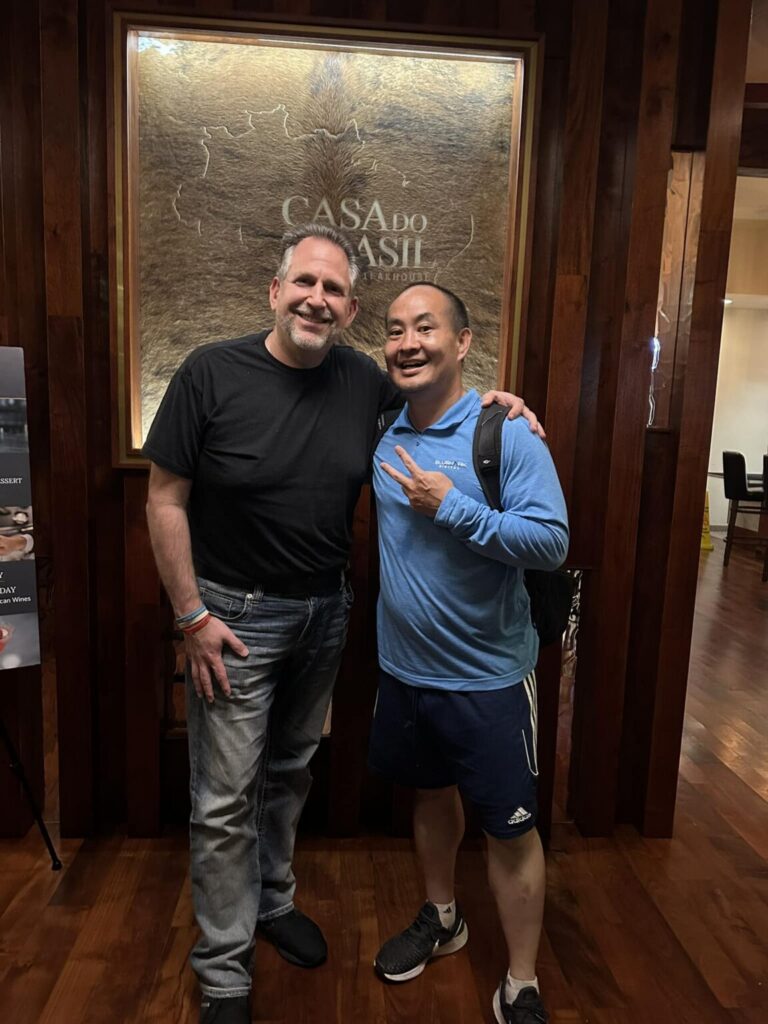
We’ve been friends for almost 20 years, and he’s been on a lot of podcasts over that time.

His appearances are scattered across multiple platforms. The problem? Podcast data isn’t centralized. Pod Chaser has some podcasts but incomplete.
Listen Notes is the largest database for inventorying.
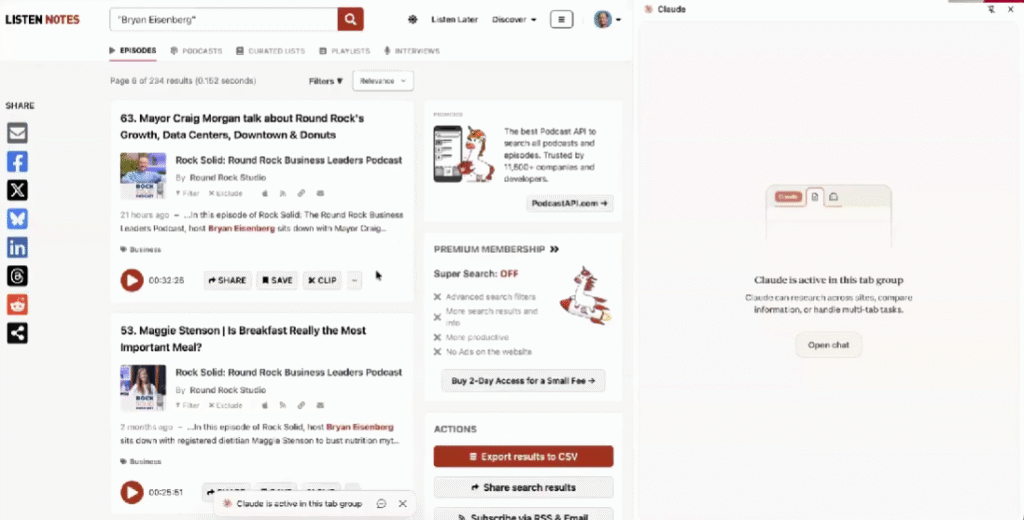
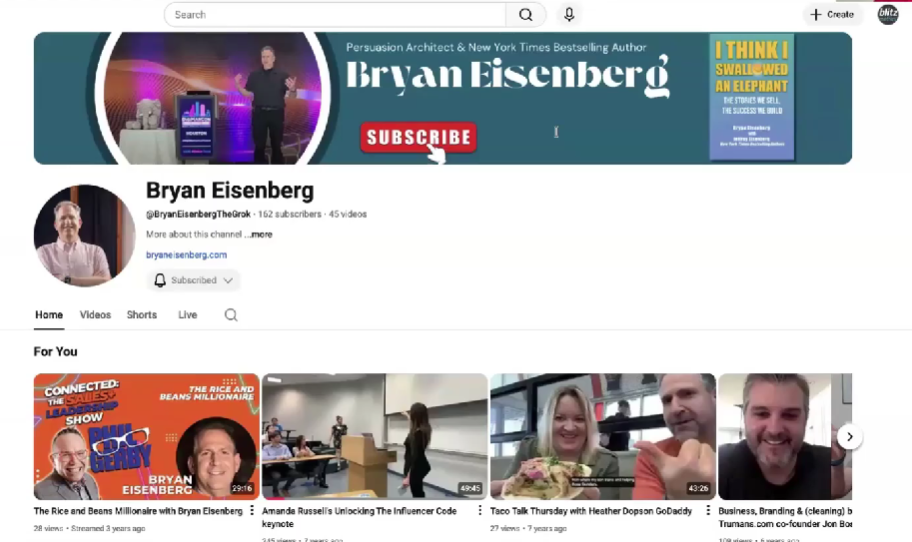
Spotify has a different organizational structure. Apple Podcasts represents another subset. YouTube contains yet another piece of the puzzle. No single platform has everything, and they’re all structured differently.
The AI research process
I told Claude: “Inventory everything you can find on Bryan Eisenberg’s podcast appearances.” After multiple iterations, here’s what emerged.
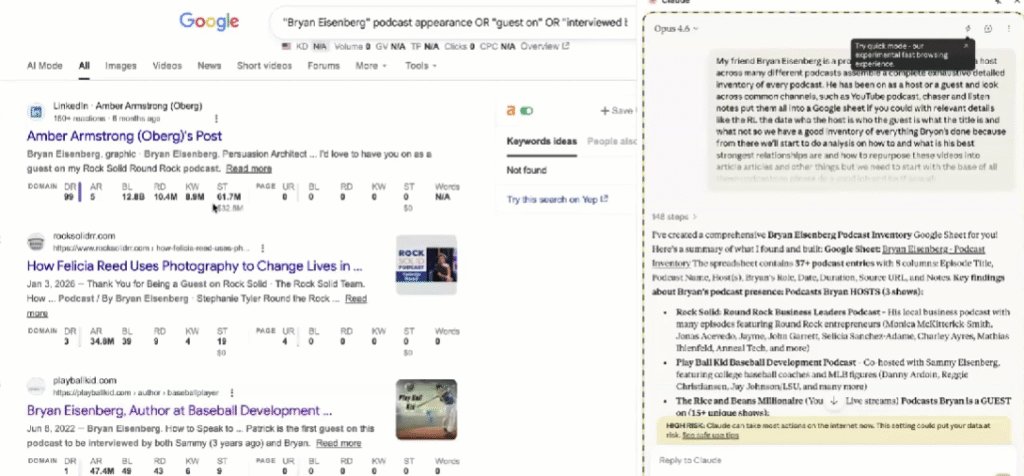
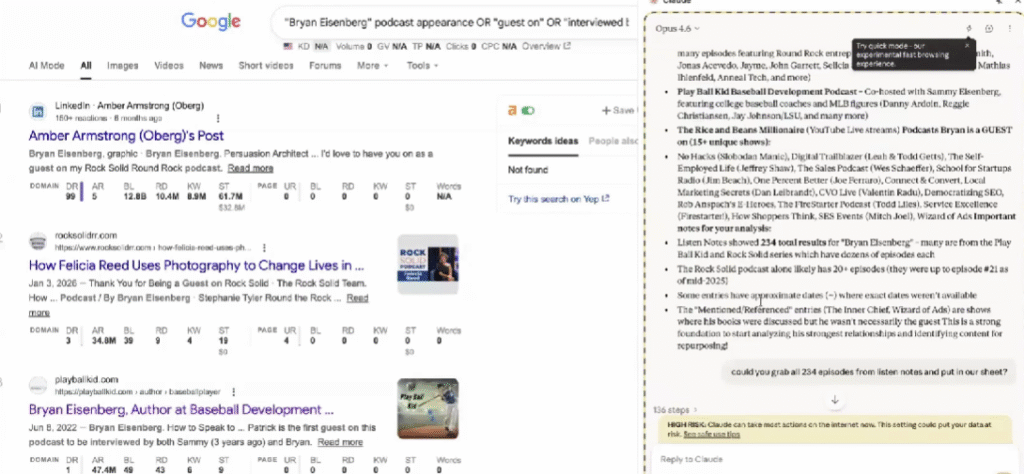
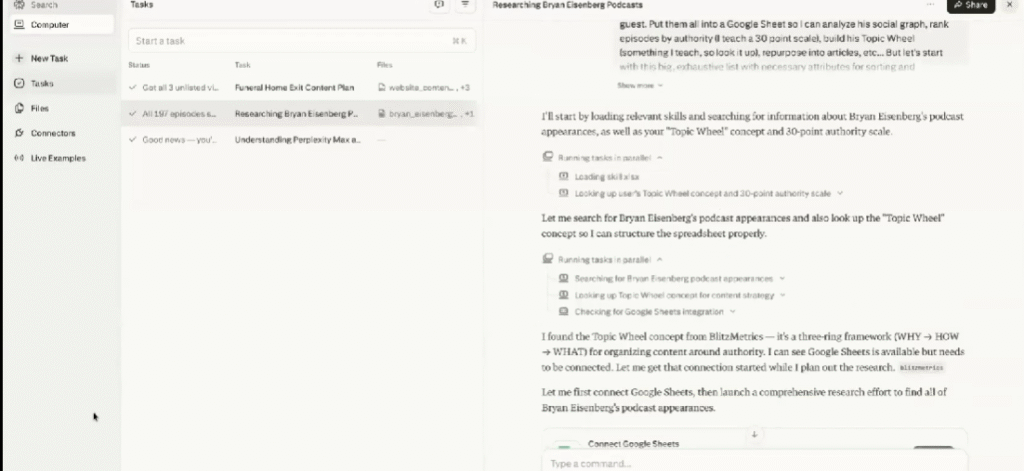
The AI created a comprehensive spreadsheet, made API calls to access premium databases, cross-referenced multiple platforms, and organized 197+ confirmed appearances.
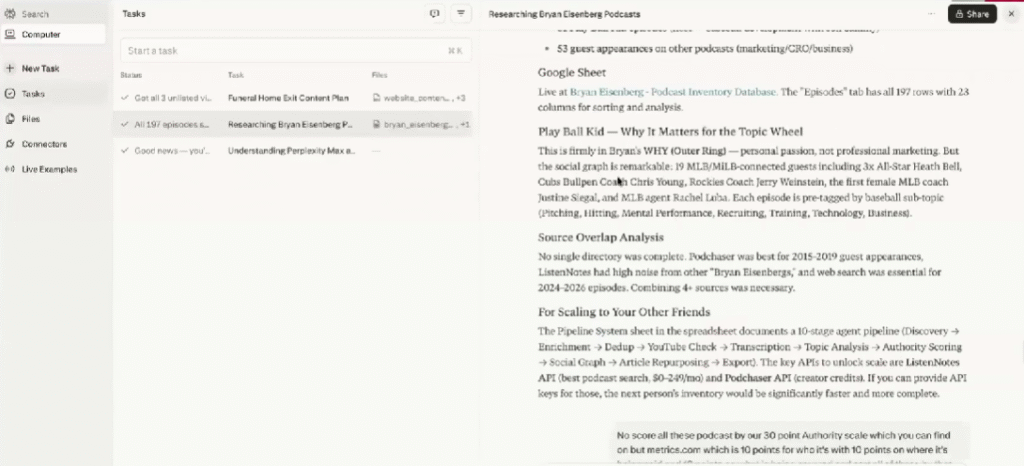
Perplexity (using a model-of-models approach that switches between Gemini, ChatGPT, and Grok) actually grabbed the data and organized it intelligently, grading by authority and breaking it out by podcast category.
The SWOT analysis results
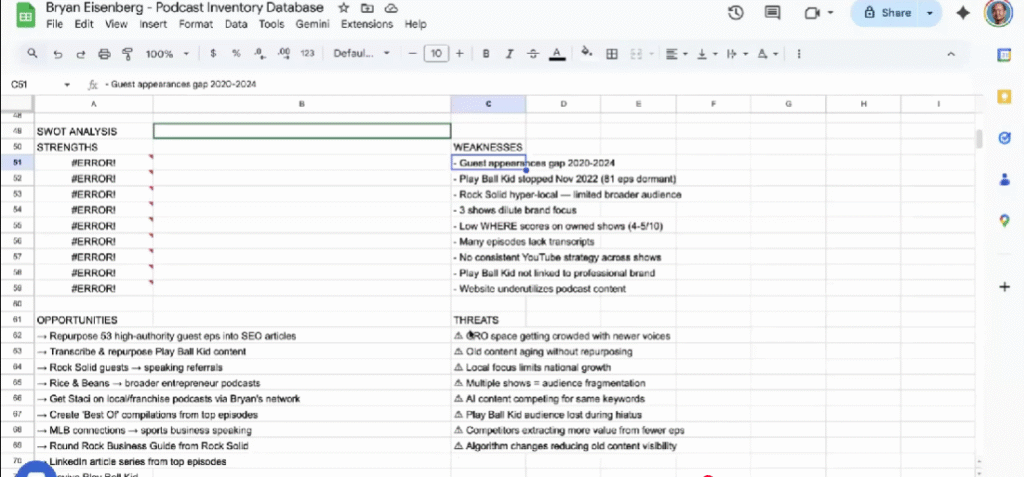
Here’s where it gets valuable. The AI didn’t just inventory, it analyzed. What was the overlap between platforms? What does this mean for Bryan’s positioning?
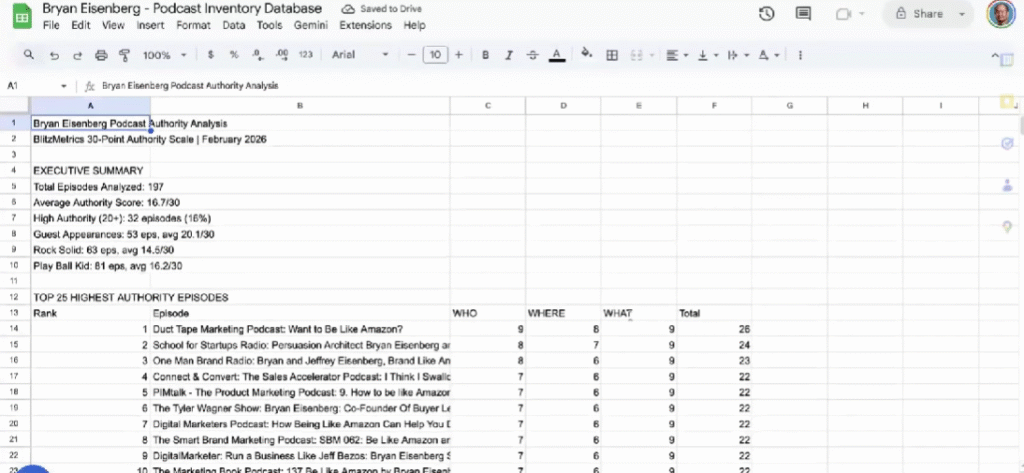
The SWOT analysis revealed his strengths in deep connections within specific niches, weaknesses showing gaps in coverage we’re losing ground on, opportunities in strategic areas for expansion, and threats where the landscape is shifting. This is MBA-level analysis, the kind you learn in business school, applied to podcast authority.
Timeline analysis: 2006 to today
The temporal breakdown was particularly revealing. Bryan’s podcast journey shows distinct phases.
Pre-COVID (2006-2020) showed heavy public speaking circuit activity with broad podcast appearances. During the COVID era, publishing and speaking stopped as he focused on family time with his kid. Recent shifts show new focus areas emerging: a podcast for his kid about baseball, connections with top coaches through “Be Connected in Baseball,” the “Rice, Beans & Millionaire” podcast, and the Austin Rock Solid podcast launched in the last year.

The gap analysis: Local vs. national reach
Here’s the strategic insight: while building connections in Austin through Rock Solid is great for local presence, it doesn’t extend nationally. It doesn’t help with his books, which are starting to age in the AI era. He hasn’t done much public speaking since COVID.
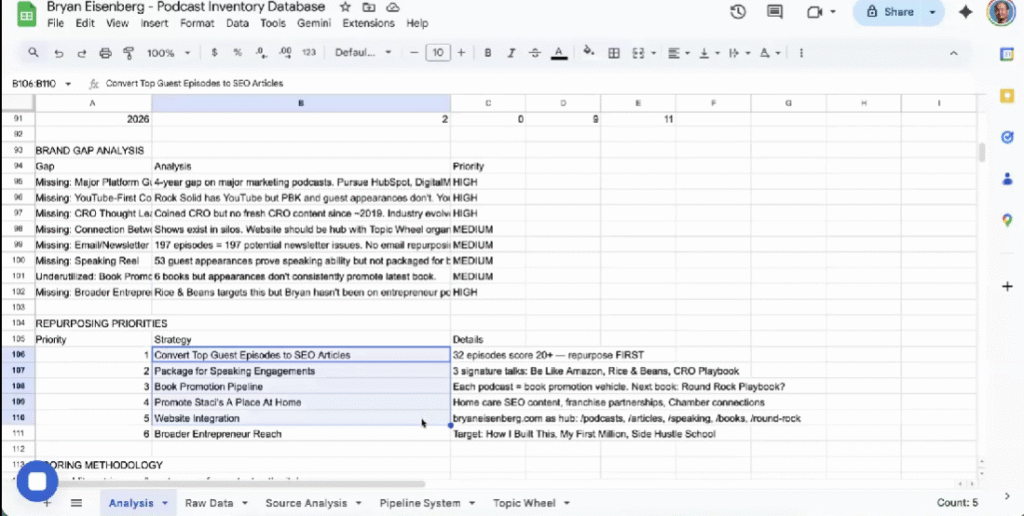
But here’s the opportunity: we can do significant repurposing and boosting. We can also help his wife Stacey Karp Eisenberg’s business, who runs the North Austin franchise for at-home mobile nursing services helping elderly people. Six strategic recommendations emerged for maximizing Bryan’s podcast footprint and authority.

Critical thinking in AI management
Here’s what separates A-players from agents just running tasks mindlessly.
If you’re an agent, you kick off the AI task, it comes back with results, and you say “okay, go do it” without thinking. Then you move to the next thing. Repeat.
If you’re an A-player, you look at the feedback and actually understand it. You think: “Yeah, we should convert top episodes to articles and repurpose that. But there’s also a problem with his book sites, his consulting agency presence, and his personal brand site. We should focus on the foundational site work before randomly repurposing content.”
It requires a manager with critical thinking skills.
The active listening test
This is what we test when people want to join our AI Builder Program: evidence of critical thinking skills. We don’t expect perfection. We want to see that when we give feedback, they understand it and iterate, not just do robot mode execution.
That’s the whole point of active listening. If we give feedback, do you understand and adapt, or do you just mechanically proceed?
Conclusion
AI tools like Claude and Perplexity can inventory hundreds of podcast appearances, create databases, perform SWOT analysis, and generate strategic recommendations in hours instead of weeks. But the real value isn’t in the automation. It’s in how you interpret the results and make strategic decisions from the analysis.
The question isn’t whether AI can do the work. It’s whether you can think critically about what the AI produces and turn that into actionable strategy.
Originally published .
Dennis Yu
Dennis Yu is the CEO of Local Service Spotlight, a platform that amplifies the reputations of contractors and local service businesses using the Content Factory process. He is a former search engine engineer who has spent a billion dollars on Google and Facebook ads for Nike, Quiznos, Ashley Furniture, Red Bull, State Farm, and other brands.
Dennis has achieved 25% of his goal of creating a million digital marketing jobs by partnering with universities, professional organizations, and agencies. Through Local Service Spotlight, he teaches the Dollar a Day strategy and Content Factory training to help local service businesses enhance their existing local reputation and make the phone ring.
Dennis coaches young adult agency owners serving plumbers, AC technicians, landscapers, roofers, electricians, and believes there should be a standard in measuring local marketing efforts, much like doctors and plumbers must be certified. He has appeared on 353 podcasts with 619 credited episodes — see the full list of his podcast appearances.