
 by /
by /
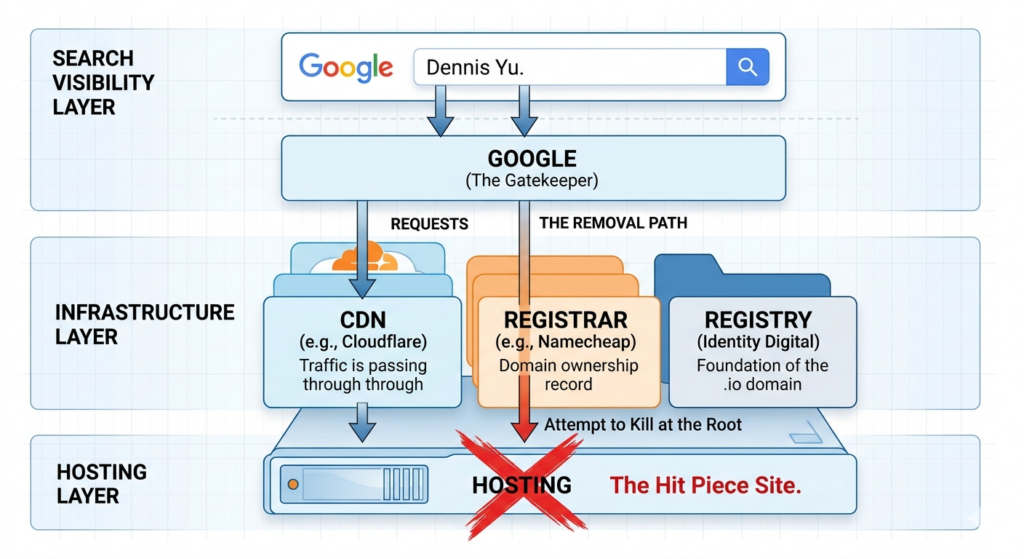
If you have a public profile, you are a target. Recently, I faced a sophisticated hit piece attack via the domain dennisyu.io. This was not just a mean blog post but a coordinated attempt at SEO poisoning. The attacker used my own legal name to hijack the top of Google search results with false criminal allegations. While I have not fully won yet, my team and I have successfully navigated the labyrinth of Big tech rejections. Here is the exact battle plan I used to move the needle when every automated system told us no.
The DMCA and defamation trap
When I first saw the site, my instinct was to report it for defamation via DMCA copyright tools. This was a mistake.

Google and Cloudflare are not courts and they will not judge if a statement is true or false.
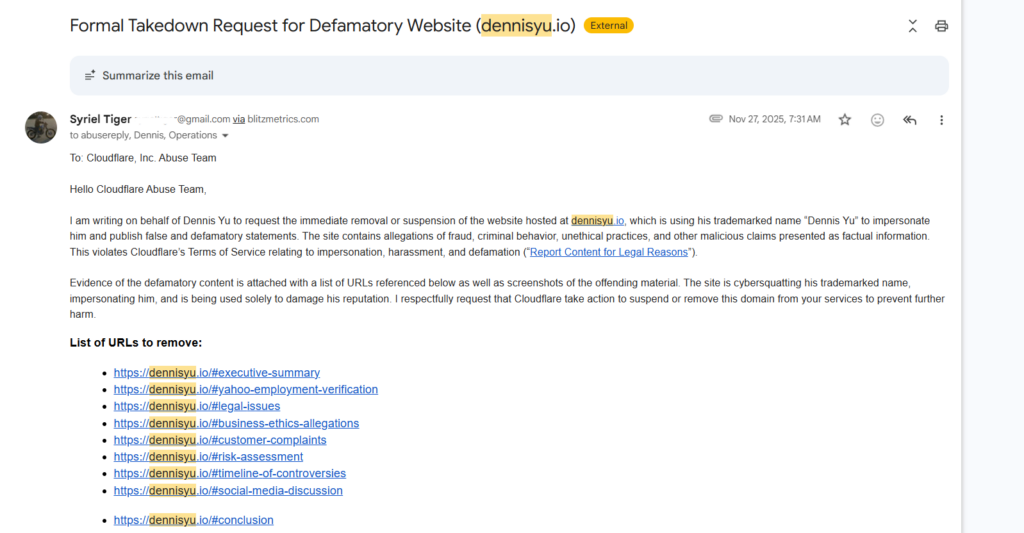
If you report for defamation, they will send you a boilerplate email telling you to contact the webmaster. I stopped talking about truth and started talking about policy. I shifted my claim to malicious impersonation and doxxing with intent to harm.
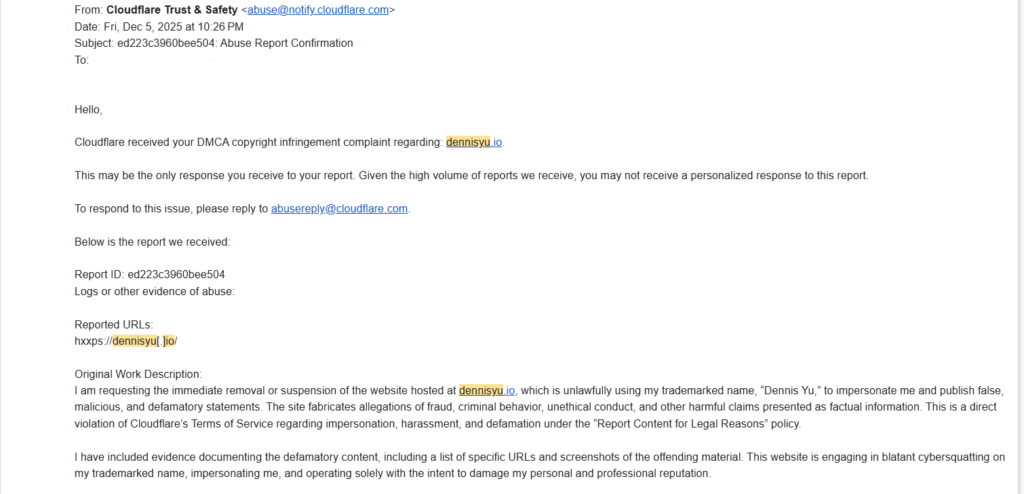
The infrastructure wall
We hit the plumbing of the internet first. Cloudflare claimed they are just a pass-through and cannot delete content.
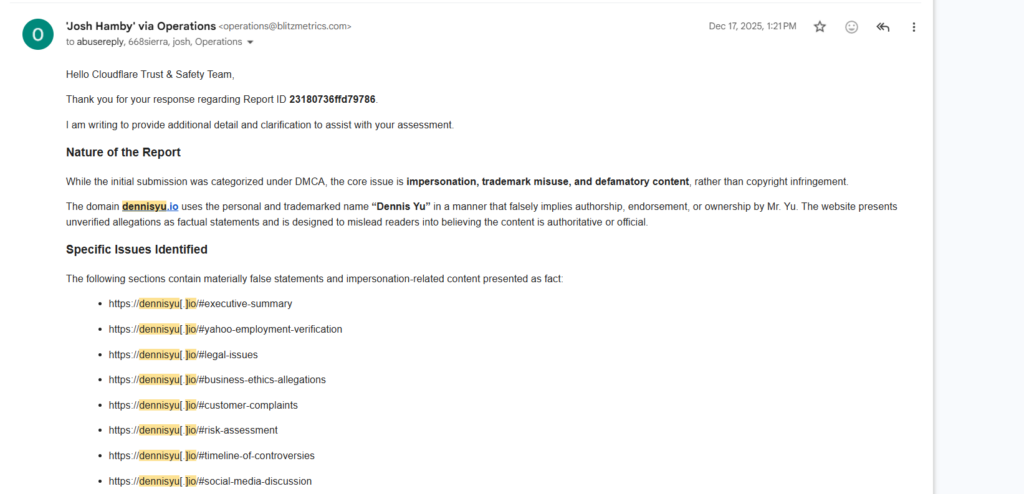

Namecheap hid behind automated tickets and requested engagement IDs while moving at a snail’s pace.
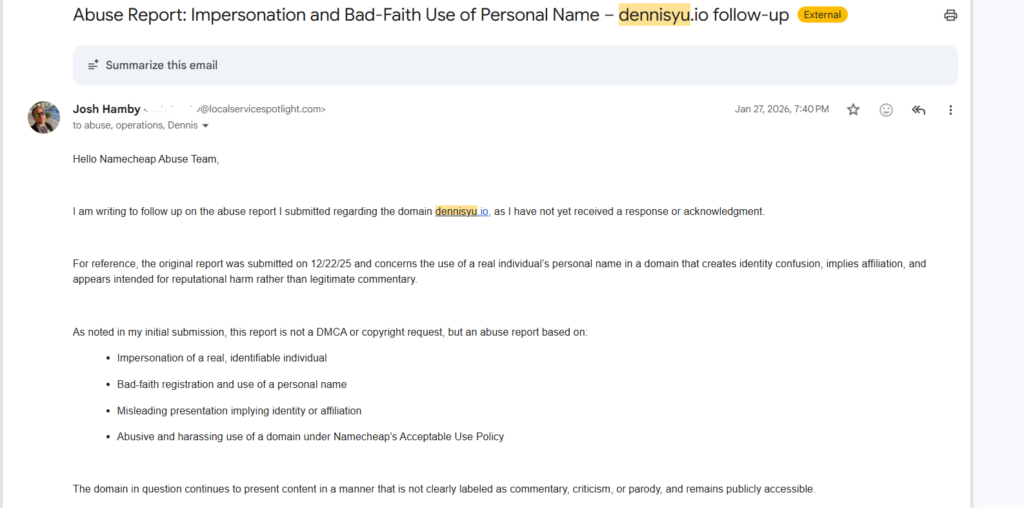

Identity Digital, the registry for .io domains, claimed it was out of my jurisdiction without a court order.



I realized you cannot kill a site at the root without a fifty thousand dollar legal bill. Instead, I shifted our focus to search visibility. If people cannot find the site on Google, the site effectively does not exist.
The Google operations breakthrough
When we finally got to Google, we hit a new wall regarding residency flags.

Because my operations team is in Pakistan and I am in the United States, Google’s automated systems flagged the request as suspicious.
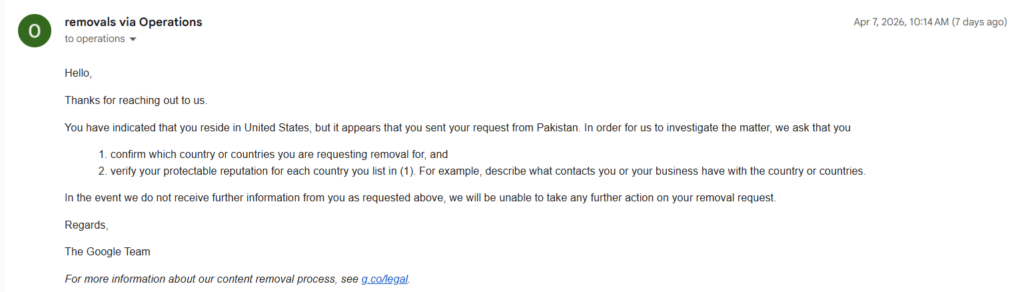
I fixed this through total transparency. I explicitly explained the relationship and stated that I authorized my operations specialist to act as my agent.
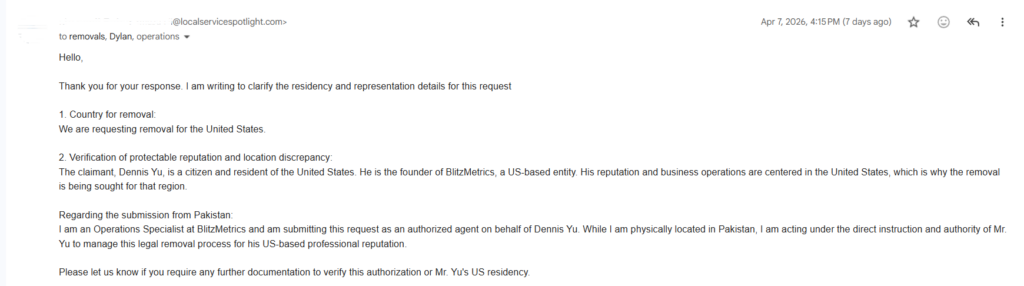
We also realized we could not just send a link to the domain. We had to search my name, right-click the result, and copy the Google redirect URL.

This proved to their engineers that their own engine was actively promoting the harassment.
The targeted harassment argument
I stopped arguing that the site was lying. Instead, I pointed to Google’s own snippet evidence. The search result for my name was broadcasting the label prolific liar and scammer directly in the search interface.
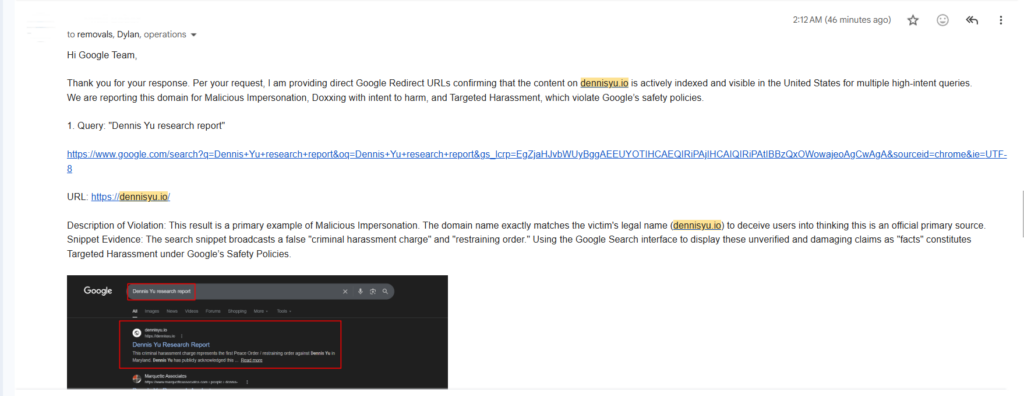
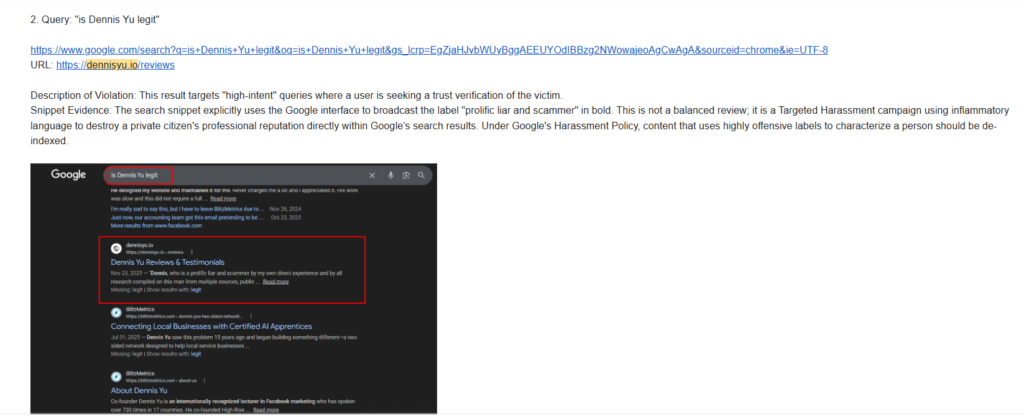


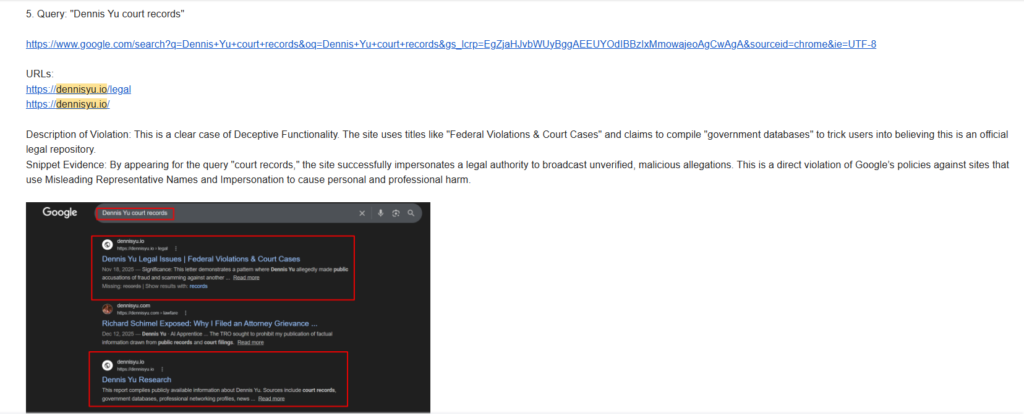
I argued that this is not a third-party dispute but Google’s own user interface being used as a billboard for targeted harassment. This violates Google’s safety policies, which is a much higher priority for them than a defamation claim.
The SEO war room checklist
If you are being attacked by a hit piece site, do not waste time proving the attacker is lying because Big tech does not care. Instead, report the content for doxxing, harassment, and malicious impersonation.
Never send the site URL alone. Always send the long, messy redirect link from the actual search result page. You must also establish a seven-day heartbeat by setting a recurring task to follow up every week. If you do not chase the response, the ticket will be closed by a bot.
I also used AI for reasoning to help us draft responses that used Google’s own policy language, which kept us clinical and objective while the situation was emotional.
Current status
I am still in the fight. By providing Google with evidence of systemic harassment across multiple search queries, we have forced a manual review. My goal is simple. I want to document the process so that the next person targeted by the Lane Houk of the world has a map to follow.
Despite giving Lane Houk two years to address our failed project, he continues to attack me with personal lies rather than addressing the facts. Documenting this journey is my way of ensuring that these tactics no longer work in the dark.
Dennis Yu
Dennis Yu is the CEO of Local Service Spotlight, a platform that amplifies the reputations of contractors and local service businesses using the Content Factory process. He is a former search engine engineer who has spent a billion dollars on Google and Facebook ads for Nike, Quiznos, Ashley Furniture, Red Bull, State Farm, and other brands.
Dennis has achieved 25% of his goal of creating a million digital marketing jobs by partnering with universities, professional organizations, and agencies. Through Local Service Spotlight, he teaches the Dollar a Day strategy and Content Factory training to help local service businesses enhance their existing local reputation and make the phone ring.
Dennis coaches young adult agency owners serving plumbers, AC technicians, landscapers, roofers, electricians, and believes there should be a standard in measuring local marketing efforts, much like doctors and plumbers must be certified.