
 by /
by /
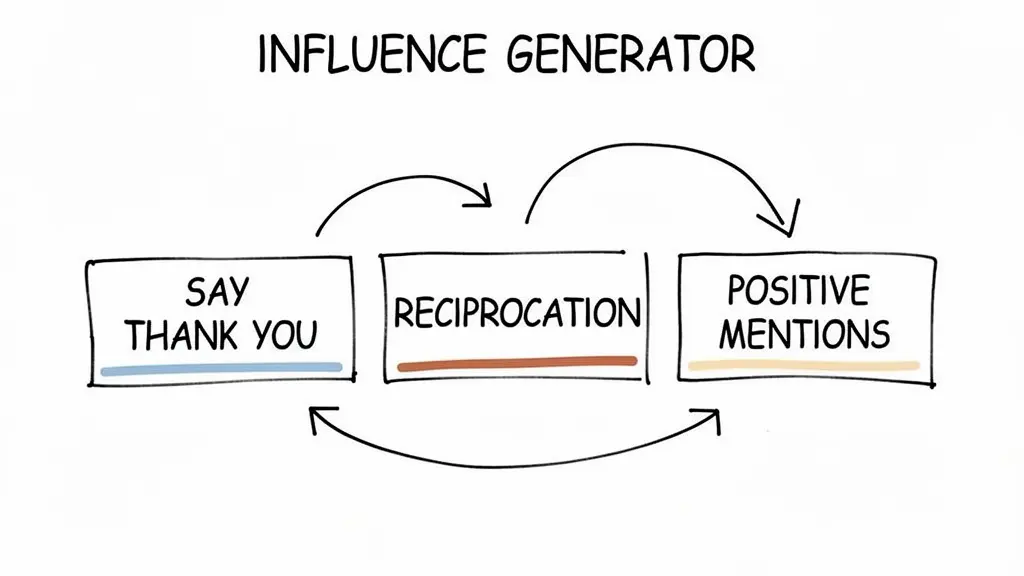
Most marketers are so focused on selling that they forget the most powerful tool in their arsenal: gratitude. When you say thank you, whether it’s a 15-second video, a Cameo, a gift card, or a LinkedIn recommendation, you trigger something deeply human: reciprocation.
When you put positive energy out there, people respond in kind. They leave reviews, they tag you in posts, they record videos saying nice things about you. This isn’t theory, it’s basic human psychology. Gary Vaynerchuk calls it “jab, jab, jab, right hook.” You give first, and the returns follow naturally.
The problem? Most people never collect these positive mentions. They scroll past them, forget about them, or don’t realize how valuable they are. That’s what this system fixes.
Understanding the why, how, what framework
Before you start collecting mentions, you need to understand how to categorize content. Every piece of content falls into one of three categories.
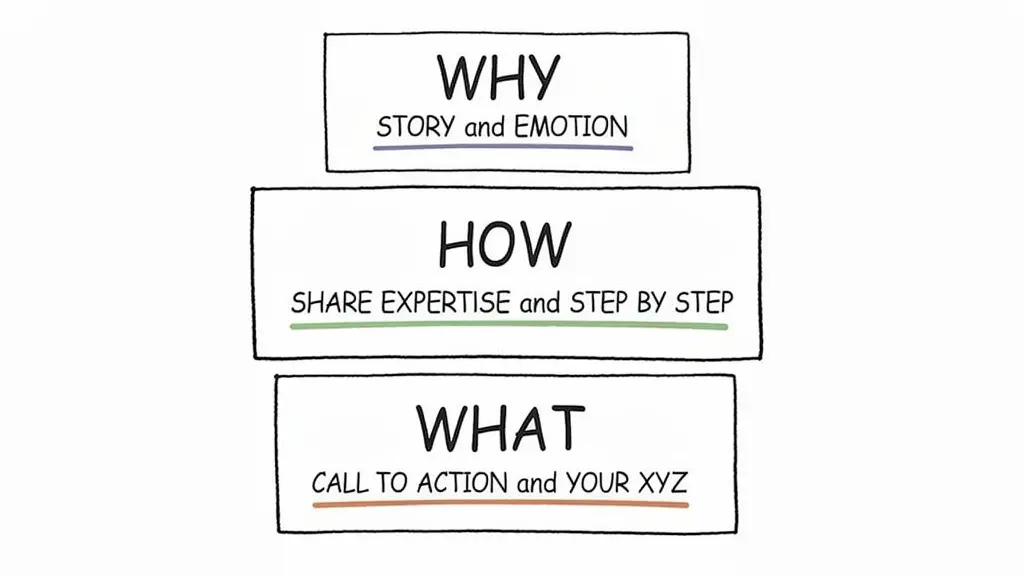
Why content tells a story. It captures a specific moment in time that carries an emotional payload. A video of someone expressing gratitude, a memory from a conference, a heartfelt thank you. These are all “why” content. They work because they make people feel something. It’s the same reason reality TV is so addictive. The emotional content is what drives engagement, even when the scenarios are staged. We had clients like TBS and WWE, and I didn’t realize until later that all of it is staged because they’re engineering the emotional payload.
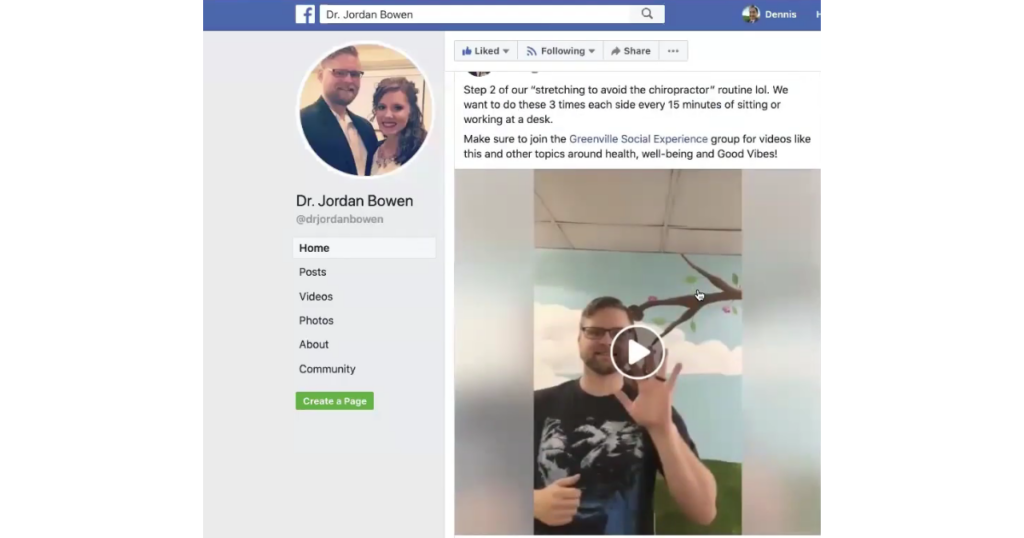
How content shares knowledge. It’s step-by-step, educational, and practical. For example, Dr. Jordan Bowen, a chiropractor, posts videos showing stretching exercises to help people avoid injury. That’s a perfect “how” video. He’s demonstrating his expertise so that people watching naturally think, “I need this guy to help me.” This is where most of your effort should go, like the meat in a hamburger.
What content is your call to action. It’s your X, Y, Z statement: “I’m [name] and I help [audience] achieve [result].” It’s direct and clear about what you offer.
The biggest mistake people make is mixing these together. A video titled “Why You Need to Hire Me” isn’t a why video, it’s a what. Getting this distinction right is critical because your entire content library depends on proper categorization.
Building your Content Library from scratch
Here’s where the real work begins.
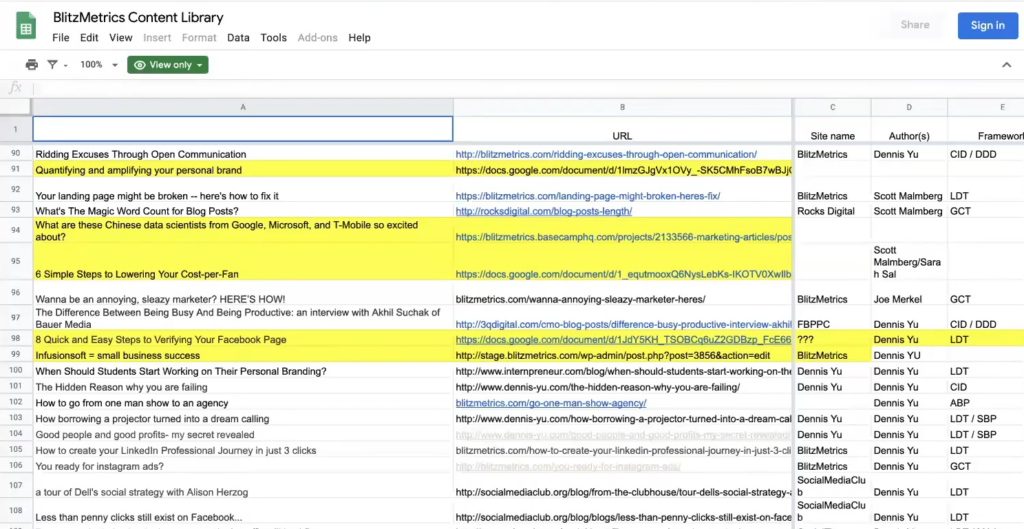
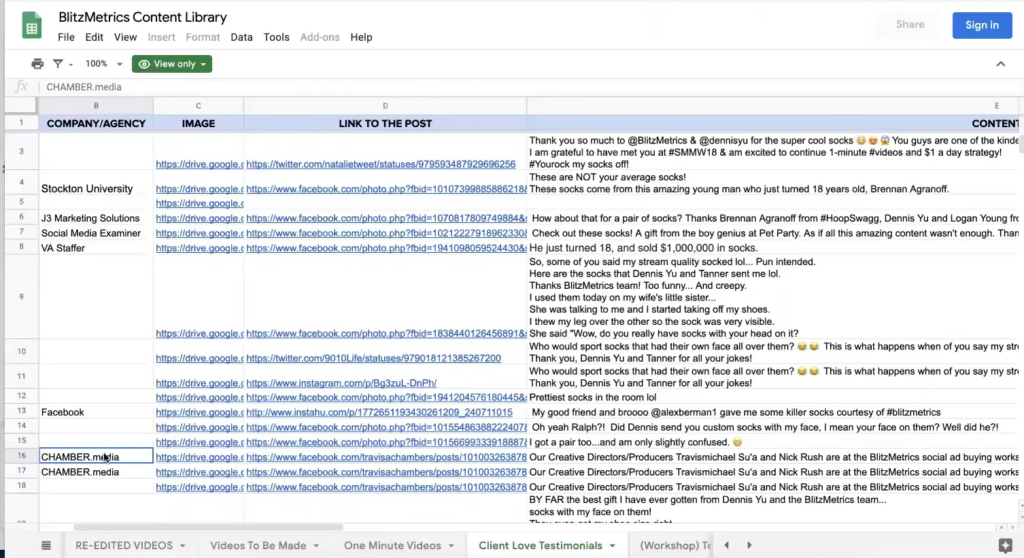
Open a Google Sheet (or any online spreadsheet, the key is that it’s shareable so virtual assistants can help later) and create these columns:
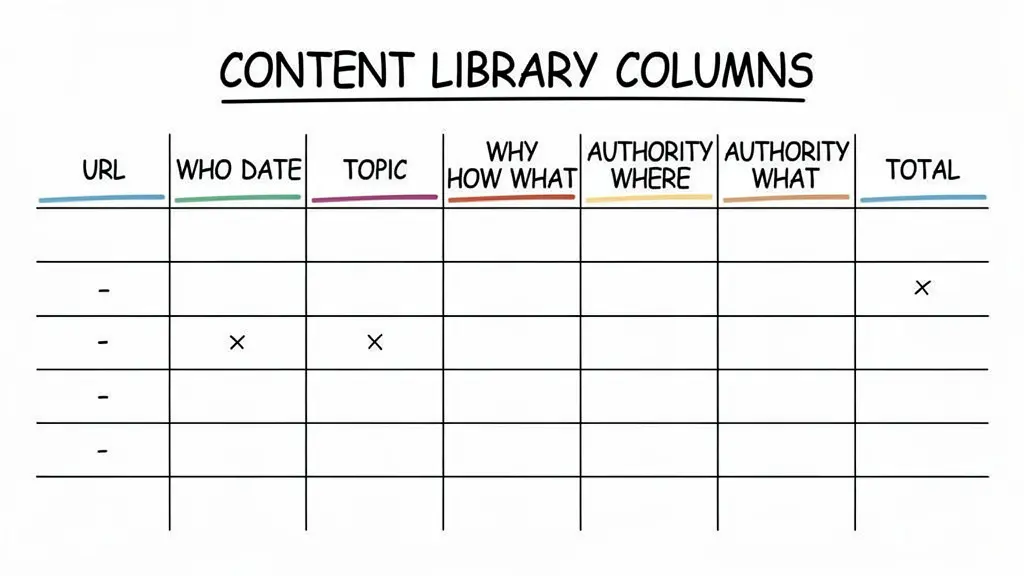
URL for the link to the mention. Who for the person who said it. Date in year-month-day format for easy sorting. Topic for how it ties to your topic wheel. Category for whether it’s a why, how, or what. Comments for any notes. Edited for whether you’ve processed it. Flag for follow-up. Then three authority columns: Authority who scored 1 to 10, Authority where scored 1 to 10, and Authority what scored 1 to 10, plus an Authority total that sums the three.
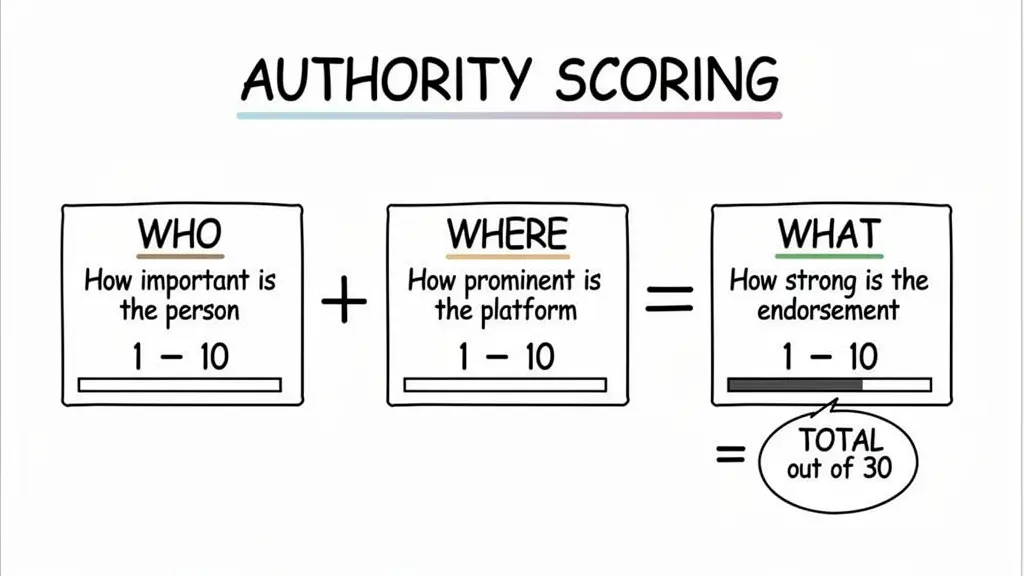
Don’t overthink the scoring. A 10 means top-tier authority, a 1 means minimal. You’re looking at three dimensions: how important is the person saying it, how prominent is the platform where it appears, and how strong is the actual endorsement.
For example, Eric Swanson, a major conference organizer, recorded a casual phone video in his backyard saying “you’re the best” six times in eight seconds.
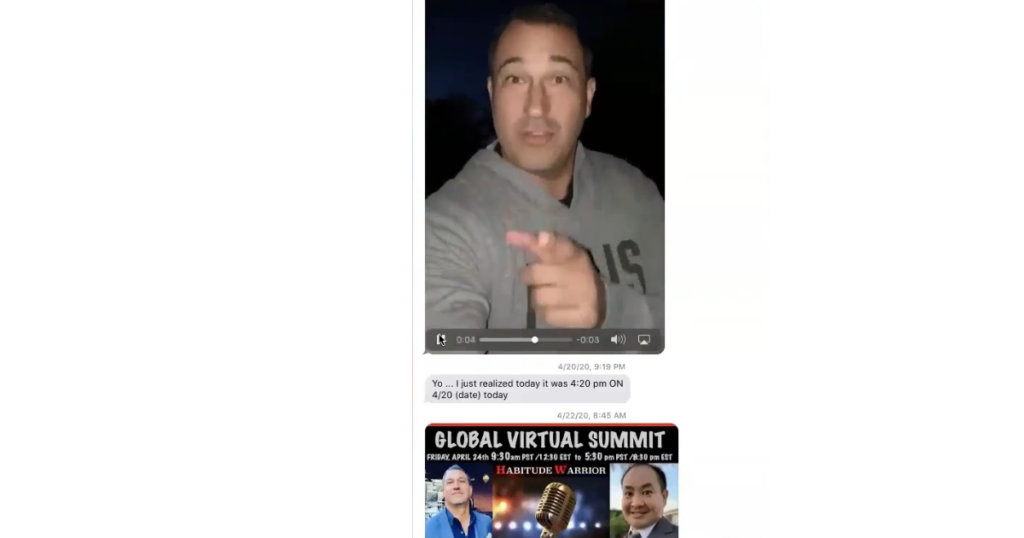
That scores about an 8 for who, a 2 for where, and an 8 for what, giving 18 out of 30 points. Compare that to Heather Dopson, who ran social media globally for GoDaddy, interviewing you on the GoDaddy Facebook page about your digital marketing process. That might score 26 or 27 out of 30 because the who, where, and what are all high authority.

Processing inbound Google Alerts
Setting up Google Alerts for your name and brand is step one. But the real value is in what you do when an alert lands in your inbox. Most people glance at it and move on. That is where the system breaks down.
Here is the standard operating procedure for processing every inbound alert. When a Google Alert fires, open the article immediately and take a screenshot of the full page. Web pages disappear without warning, and a mention that scores 26 out of 30 on authority is worthless if the URL goes dead before you capture it. Save the screenshot to your Google Drive and run the URL through archive.org/save to create a permanent Wayback Machine copy. This takes thirty seconds and protects months of leverage.
Next, add the mention to your Content Library spreadsheet within four hours. Fill in every column: the URL, who said it, the date, the topic, the why/how/what category, and any notes about context. Then score it using the three authority dimensions described above. Authority Who asks how important the person or outlet is. Authority Where asks how prominent the platform is. Authority What asks how strong the actual endorsement is. Each dimension gets a 1 to 10 score, and the total out of 30 tells you how aggressively to amplify it.
Anything scoring 20 or higher deserves immediate action: social posts drafted within 24 hours, Dollar-a-Day boost set up within 48 hours. Anything below 20 still gets logged and archived, but the amplification can wait. The point is that nothing gets ignored. Every alert gets processed, scored, and either acted on immediately or queued for later use.
How positive mentions fit the MAA framework
If you follow the BlitzMetrics methodology, you already know MAA: Metrics, Analysis, Action. Every project runs through this loop, and positive mentions are no exception. The mistake most teams make is treating mention collection as a passive archiving exercise instead of running it through the same MAA cycle they use for ads and content.
Metrics is the alert itself plus the authority score. When a Google Alert fires, that is raw data. The three-dimensional authority score (who, where, what) turns that raw data into a metric you can compare, prioritize, and track over time. A mention on a major news outlet scoring 26 out of 30 is not the same as a Facebook comment scoring 11. The spreadsheet makes this visible.
Analysis is evaluating what the mention is worth and how to use it. A 26-point article where you are the sole interview subject has different leverage than a 20-point panel recap where you are one of four speakers. Analysis asks: what is the best use of this mention? Should it update your LinkedIn headline, anchor a social proof post, get embedded in a sales deck, or fuel a Dollar-a-Day campaign? The authority score informs the analysis, but the context determines the tactic.
Action is doing the thing within 48 hours. Not planning to do the thing. Not writing a conceptual response about how you should leverage your assets. Actually drafting the social post, updating the bio, setting up the boost, and marking the spreadsheet row as processed. The last A in MAA is where most teams fail, and it is exactly where the value lives.
The leverage playbook: what to do after you collect
Collecting mentions into a spreadsheet is necessary but not sufficient. The spreadsheet is an engine, not a trophy case. Here are the specific ways to turn a scored mention into business value.
First, create social posts that use the mention as proof. Do not just share the link. Frame it with context: who covered you, why it matters, and what it demonstrates about your expertise. A post that says you were quoted in an international news outlet on AI and media literacy alongside executives from TikTok and LinkedIn carries more weight than a bare URL. Write two or three variations, test them, and boost the best performer with Dollar-a-Day.
Second, update your professional profiles. Your LinkedIn About section, your website bio, and your speaker page should always reflect your most recent and highest-authority mentions. If a major outlet positions you as an expert in your field, that language belongs in the spotlight.
Third, when you pitch a potential client or partner, a link to a news article quoting you is more persuasive than any claim you could make about yourself. Third-party validation converts better than self-promotion every time.
Fourth, cross-reference mentions in your blog content. When you write an article or record a video on a topic where you have been quoted by a credible source, reference that coverage. This creates internal loops of authority that reinforce each other, the same loops of influence that make personal branding compound over time.
The 48-hour rule
Mentions lose value over time. A fresh article quoting you is newsworthy. The same article nine months later is a footnote. This is not a theoretical problem. We have seen it happen firsthand.
In July 2025, a Google Alert fired showing coverage from two international news outlets after a global media forum appearance. One article was a full interview scoring 26 out of 30 on our authority scale. The other named the speaker alongside executives from TikTok, LinkedIn, and a major university, scoring 22 out of 30. Both were high-authority mentions that deserved immediate amplification.
Neither was processed. No one added them to the Content Library. No social posts were created. No Dollar-a-Day boosts were set up. Nine months later, when the team finally circled back, two of the three article URLs had gone dead. The pages returned 404 errors. The highest-scoring mention, the sole-subject interview, was only recoverable through the Wayback Machine.
This is what decay looks like. The mentions still exist in cached form, but their live leverage is gone. You cannot boost a dead URL. You cannot embed a 404 page in a sales deck. The authority was there for the taking, and it evaporated because no one acted within the window.
The 48-hour rule prevents this. Every mention gets processed within 48 hours of discovery: spreadsheet entry, authority score, screenshot, Wayback Machine archive, and at least one amplification action such as a social post, bio update, or boost setup. If 48 hours feels aggressive, consider the alternative. Nine months of inaction turned a 26-point authority asset into a recovery project. Forty-eight hours of execution would have turned it into a client-winning proof point.
Mining your existing content for hidden mentions
Here’s the part most people skip: you already have a goldmine of positive mentions sitting in your history. You just need to dig them up.
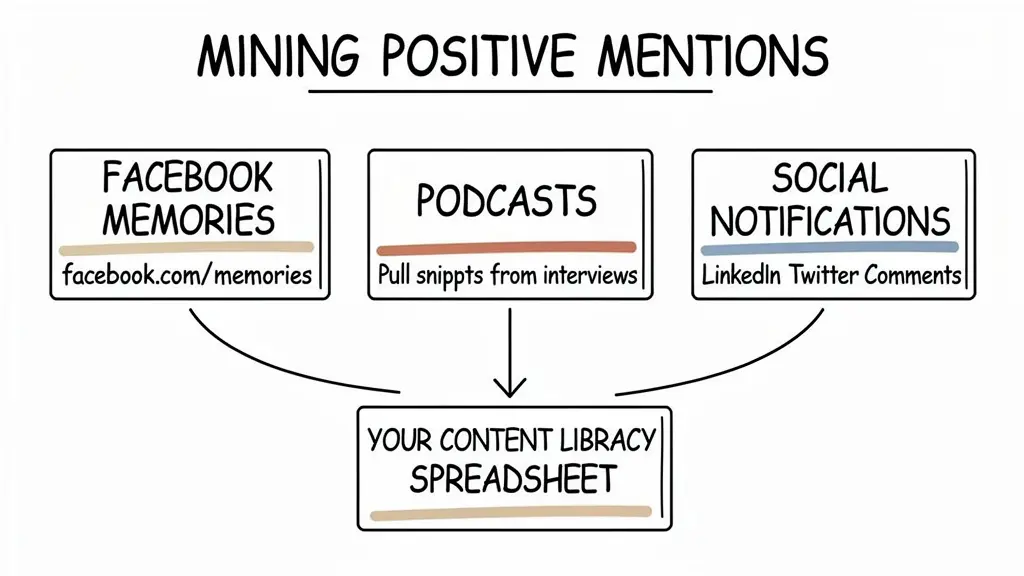
Facebook Memories at facebook.com/memories is one of the most underrated tools for this. Every day, Facebook surfaces posts from one, two, five years ago. When a memory pops up showing someone saying something positive about you, grab it. Put it in your spreadsheet. Then re-share it, which rekindles the relationship and often generates fresh engagement. I do this every single day.

Podcasts are another massive source. If you’ve been interviewed on a podcast, think about how many positive mentions are embedded in that episode. The host reads your bio, which is essentially an endorsement. They say nice things to make you look good because why would they interview someone they don’t respect? Throughout the conversation they’re validating your expertise. I was on the Escape Your Limits podcast with Matthew Januszek, who runs Escape Fitness and has interviewed people like Mr. Olympia and Olympic World Champions. That single interview, which ran an hour and 46 minutes, contains roughly a hundred collectible positive snippets.

I also appeared on the GoDaddy blog with Heather Dopson, and that one conversation alone scored nearly 27 authority points.
LinkedIn, Twitter, and other social platforms are full of notifications you’ve probably ignored. People tagging you, commenting on your posts, sharing your content. Mary Henderson, for example, is someone to follow for LinkedIn and personal branding. She tagged me in a post and made a one-minute video about it. Ryan Deiss, who runs Digital Marketer, even joked about me in a comment thread. All of these are collectible mentions that most people never bother to save.
Working with others to multiply mentions
One of the most powerful things about this system is that it works even better when you collaborate. Travis Chambers, who runs Chamber Media (they’re known for high-end Harmon Brothers style video production), brought his entire team to one of our workshops. He posted about it, said great things, and his people learned alongside ours. Is he a competitor? Not at all. We refer high-end video work to him, and he refers analytical and ad-tuning work to us.
Chandler Bolt, who teaches people how to publish books through Self-Publishing School, was another great example. I interviewed him about how to publish a book, said thank you multiple times throughout the conversation, and those snippets became shareable content for both of us. It’s a mutual admiration society, and it works because the endorsements are genuine.
The key insight is this: when you collaborate with others in your space, you’re not competing, you’re creating a network of mutual endorsements that makes everyone more credible.
Scaling with virtual assistants (Human or AI)
Once you understand the system, you don’t have to do it all yourself. An AI tool can go through a one-hour podcast and pull out every positive mention, categorize it, score it, and add it to your spreadsheet.
But here’s the important part: do it yourself first. Spend a few days filling your spreadsheet to at least 50 items. You need to understand the process before you can delegate it effectively.
What happens when you don’t act: a case study
This is not a hypothetical scenario. This is a real thread from our own team that stretched over nine months, surfaced by an automated reminder system fourteen times, and produced exactly zero execution.
The timeline started when a Google Alert fired in July 2025 showing international media coverage from a speaking engagement. The alert was forwarded to the team with clear context about why it mattered and how to leverage it. One team member responded a few weeks later with a conceptually correct answer about the importance of leveraging assets and mentions. Good thinking. No action taken.
The automated reminder system resurfaced the thread three more times over the next two months. No reply. Five months after the original alert, leadership followed up asking what should be done. Another team member responded saying they should start including more high-authority references in posts and use positive mentions. Again, conceptually correct. Again, no execution.
The reminder system fired five more times. A project lead was assigned. The project lead responded saying they were moving toward better analysis and action. Then five more reminders with no further reply from anyone.
By the time the thread was addressed with actual execution, nine months had passed. Two of three article URLs were dead. The highest-authority mention required Wayback Machine recovery. The social proof window had closed. The leverage opportunity had decayed from a live, boostable, client-winning asset into an archival recovery project.
The lesson is not that the team lacked knowledge. Every response in the thread demonstrated understanding of the concepts. The failure was entirely in the last A of MAA: Action. Knowing that you should leverage positive mentions is worthless without a system that forces execution within a defined timeframe. That is why the 48-hour rule exists, why the SOP has clear ownership assignments, and why every mention gets archived on discovery. Systems prevent what good intentions cannot.
The magic box mindset
Think of your Content Library not as a tedious spreadsheet, but as a magic box. Everything you put in, you get 10 times more out of. Every positive mention you collect becomes fuel for social proof, blog posts, social media content, and ultimately, client acquisition.
You wouldn’t leave money lying on the ground. Don’t leave positive mentions uncollected either. Dollar bills, quarters, hundred dollar bills, put them all in the box. Close the lid, press the button, and watch the returns multiply.
The system is simple: say thank you, collect the positive mentions that come back, organize them, score them for authority, and let them work for you. Start today, even if you’re starting from zero. The momentum builds faster than you think.
Download the Skill File
This article has a companion Claude skill file that turns the strategy described above into a reusable, automated workflow. After installing the skill, Claude can execute each step on your behalf — building drafts, running audits, and producing deliverables in minutes instead of hours.
Dennis Yu
Dennis Yu is the CEO of Local Service Spotlight, a platform that amplifies the reputations of contractors and local service businesses using the Content Factory process. He is a former search engine engineer who has spent a billion dollars on Google and Facebook ads for Nike, Quiznos, Ashley Furniture, Red Bull, State Farm, and other brands.
Dennis has achieved 25% of his goal of creating a million digital marketing jobs by partnering with universities, professional organizations, and agencies. Through Local Service Spotlight, he teaches the Dollar a Day strategy and Content Factory training to help local service businesses enhance their existing local reputation and make the phone ring.
Dennis coaches young adult agency owners serving plumbers, AC technicians, landscapers, roofers, electricians, and believes there should be a standard in measuring local marketing efforts, much like doctors and plumbers must be certified.