

I had the CEO of American Airlines as a mentor of mine. His name was Albert Casey, and he didn’t just run American Airlines. He was the Postmaster General of the United States, he ran the LA Times, and he ran the Resolution Trust Corporation. The man operated at the highest levels of business, and the funny thing is, the same framework worked across all of them.
I’ve reflected on what he taught me over the last several decades, and I’ve found this wisdom to be so simple, so powerful, and so applicable to anyone trying to grow a business, whether you’re a solopreneur or managing hundreds of people.
The problem most entrepreneurs face
This week, several young adults reached out to me. They were struggling to grow their companies while staying profitable. They were working incredibly hard, yet after a month or two, their bank accounts weren’t growing and they were completely burnt out.
This is the story I hear over and over again. And the solution goes back to what Al Casey shared with me.
The three components: M, O, and F
I once asked Al, “How do you go from running the postal service to being the CEO of American Airlines? Aircraft, fuel, flight attendants, strikes, marketing, databases, frequent flyer programs… how do you manage all that?”
He said, “Dennis, there are three components: M, O, and F.” Marketing, Operations, and Finance.

Marketing: focus on one thing
Marketing is about getting people to buy. And where most entrepreneurs under a million dollars go wrong is they try to help everybody.
I see coaches and agency owners with five or six clients, and every single one is different. Different packages, different industries. I tell them: you’re running five different businesses.
The riches are in the niches. You need one very particular customer type, one offering, at one price point. Not five packages. Not serving everyone. One thing, done well, for one specific customer.
When your marketing is focused, your operations can also be focused, and that’s where the magic happens.
Operations: deliver what you promised
Once you’ve collected the money, you have to deliver. If your SOPs are not aligned with the expectations of your specific customer type in a repeatable way, you won’t generate ROI for that customer. Then they want a refund. They cancel.
The churn rate on digital marketing agencies is 25% per month, not per year. That’s largely because of this misalignment.
Think about what’s driving the most ROI in your business. If you’re a roofer doing commercial, residential, insurance, and warranty work, but 85% of your business is residential in one neighborhood, zero in on that.
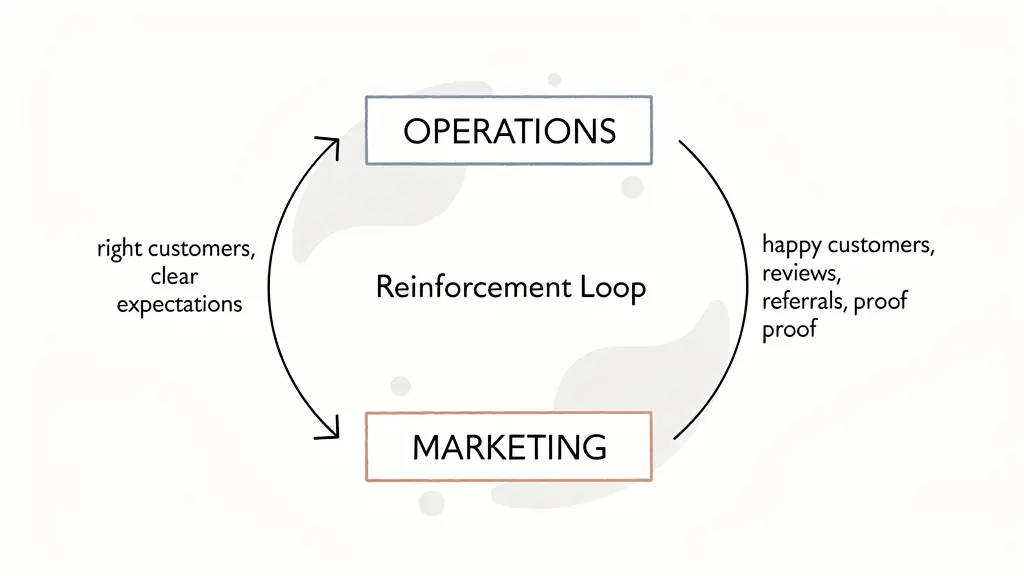
When you do great work for a specific customer type, it generates proof. Customers leave good reviews. They talk to others. They refer you without you ever asking. You don’t need to cold call or run ads or buy a booth at a conference. The work speaks for itself.
This is the Chick-fil-A principle. Chick-fil-A doesn’t really need marketing because the experience is so good. They do one thing, the chicken sandwich, over and over with tight operations.
You don’t want to be the Golden Corral with 300 menu items. You want to be focused on a couple of things done extremely well.
The reinforcement loop
Here’s what’s powerful: good operations drive your marketing. When customers are happy, the content practically creates itself.
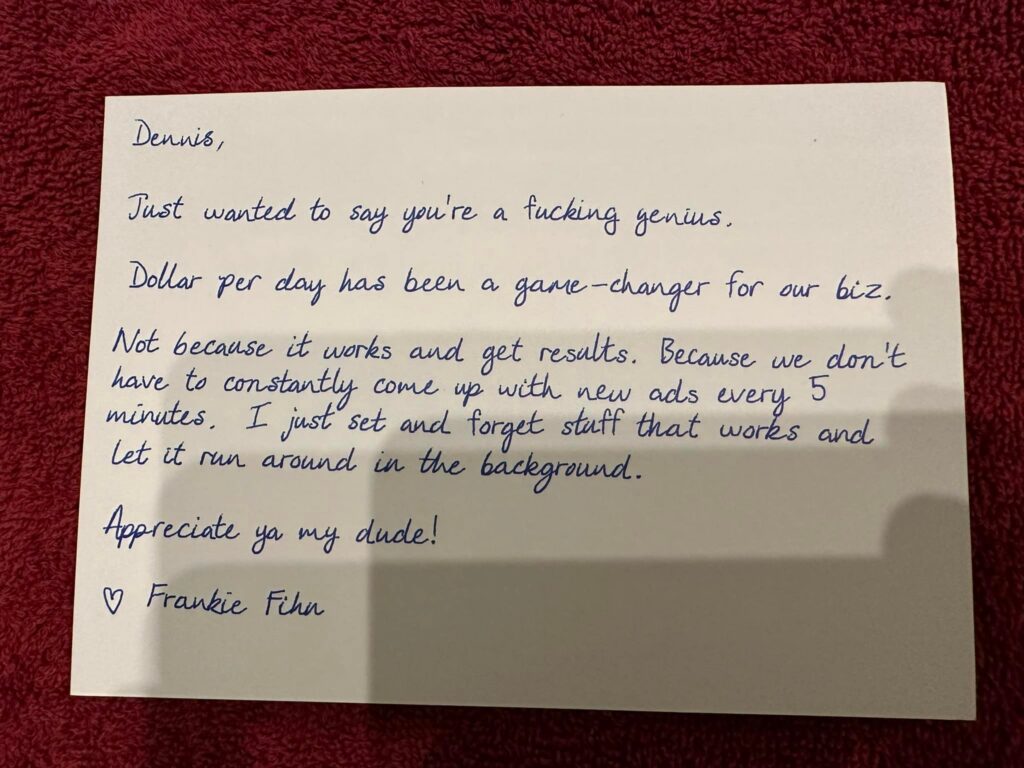
You document the wins, capture testimonials, take photos of the work. That becomes the raw material for your marketing.
And when your marketing attracts the right customers, operations become easier because you’re serving people who are a good fit. It’s a reinforcing cycle.
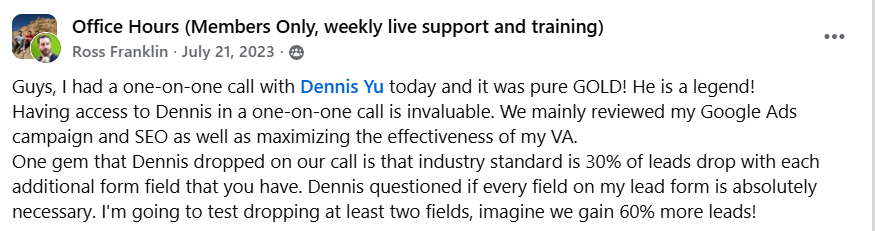
The opposite is the leaky bucket. If you’re not delivering results, no amount of leads will save you. A lot of digital marketing folks say their problem is they need more leads. No. Their problem is they’re not keeping customers and they’re not generating credibility, or worse, they’re generating a negative reputation.
Finance: revenue does not equal profit
Al Casey broke finance into two parts: accounting, which looks backwards, and finance, which looks forwards.
Are you making money? Are you charging the right amount? Are you paying people correctly? Do you need to invest in more team members or technology?
What I like to see is about a 20% margin for a healthy business. In the trades, most companies are at around 15% or less. In the agency world, it should be higher.
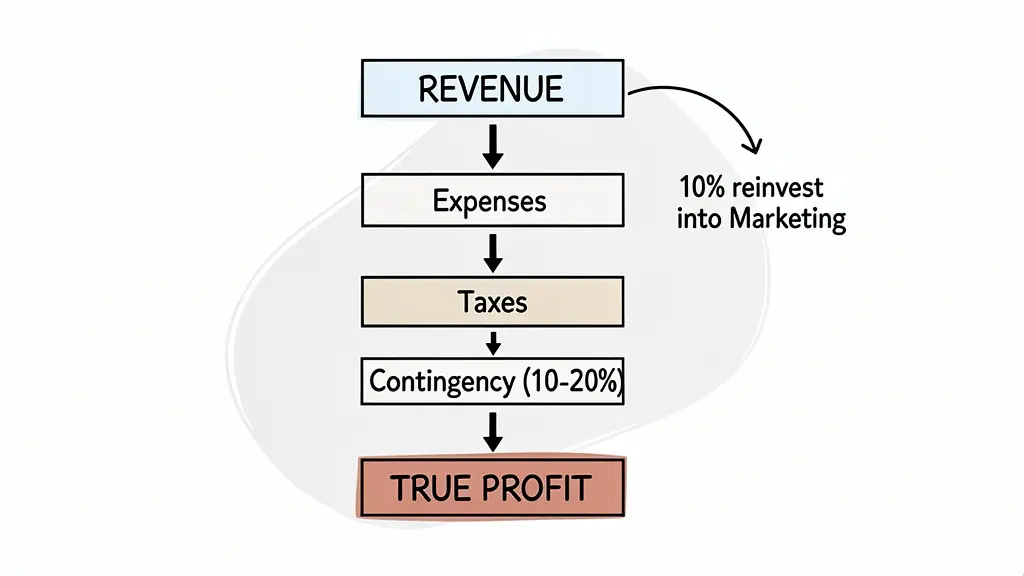
But here’s the critical mistake I see: people confuse revenue with profit. One person I know had $50,000 come in during the first few months. They started paying themselves right off the top, didn’t account for expenses, and meanwhile their team wasn’t getting paid.
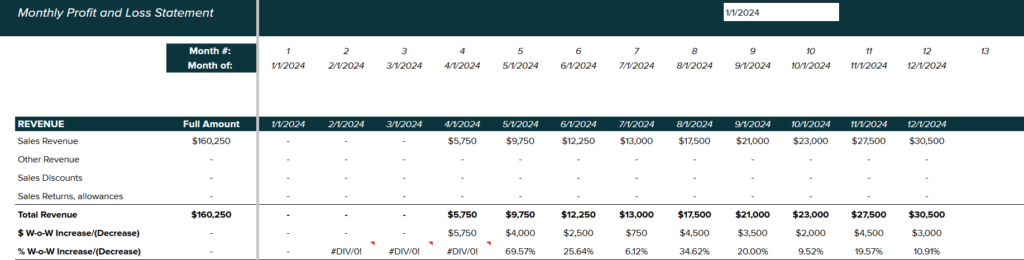
You have to take your revenue, subtract expenses, hold back for taxes (quarterly or annually), set aside a 10-20% contingency for refunds or unexpected issues, and only then do you have profit. And if you’re not paying yourself a real salary, that’s not really a profit either.
Private equity companies looking to buy your business will calculate what’s called add backs. They strip out your company car and other personal expenses you’ve been running through the business to figure out the true profit. Because when they buy your business, they’re not going to keep paying for those things.
When you understand your true numbers, you can reinvest wisely. Al taught me to put 10% back into marketing. Every dollar that comes in, 10 cents goes back into the marketing engine. That’s when the machine starts to operate.
Pricing and the right clients
A lot of people are underpricing. I’m not saying charge more just for the sake of it, but a premium customer will pay more and demand less of your time.
My friend Avi, one of the top Facebook ads specialists in Israel, complained that his clients in Tel Aviv wouldn’t pay more than $200 a month. I told him there are people who would pay $2,000, even $20,000. He was just talking to the wrong people.
We were at Social Media Marketing World in San Diego and I introduced him around.

He narrowed his audience to a particular kind of e-commerce, raised his prices, offered the same service, and suddenly had better clients. He became a big deal because he stopped trying to serve everyone.
The less people pay you, the more they tend to demand. That $100 client who texts you five times a day asking why one click didn’t convert is not the client you want.
I had dinner recently with Liana Ling we talked about this exact thing.
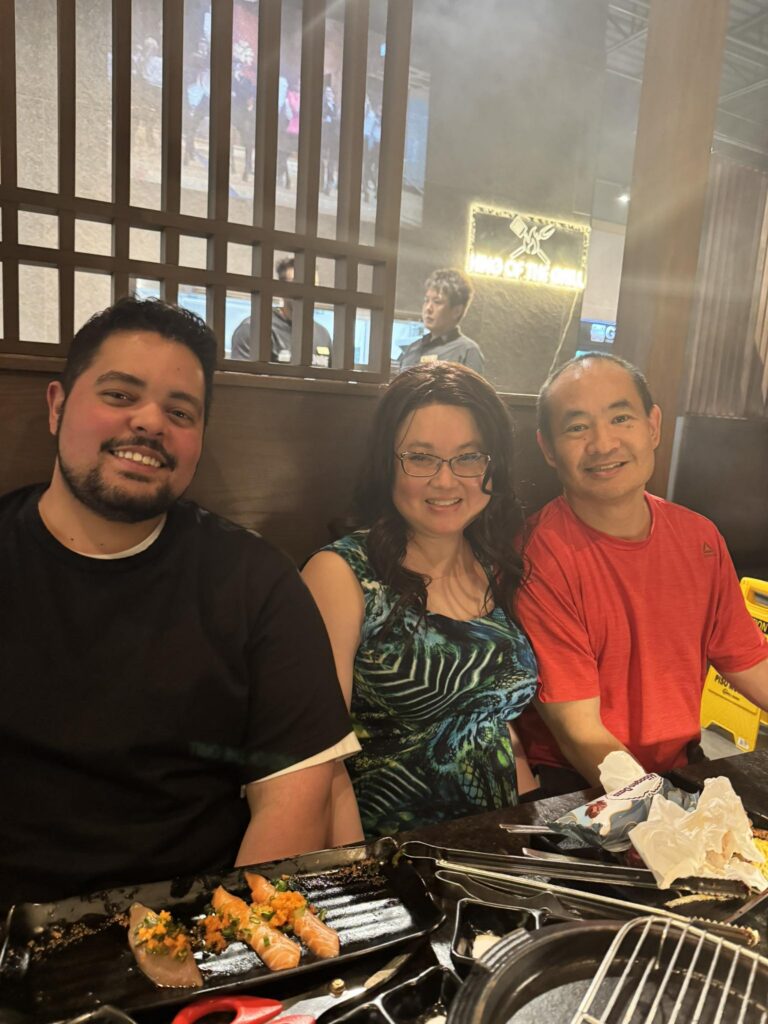
We don’t love the agency business, but there are a few people we enjoy working with, and that’s what makes it work. You set the right expectations, that makes operations easier, and finance is healthy because the price itself acts as a filter.
For our AI Apprentice program, we tell people upfront the price is $7,500 one time. Here’s what you have to do, and here’s what we won’t do. We won’t chase you, we won’t hold your hand, and we’re not a replacement for ChatGPT. Every Friday you submit your MAA report on what you’ve done, and we give you feedback. If you’re stuck, come to Office Hours. That’s how it works.
And we’re mainly working with home service businesses, people like George Paladichuk and Chuck Thokey who serve roofers and want to scale.

They come in with existing clients, proof of results, and clear books. It always goes back to the basics.
Building your team: personality types matter
When I see someone unable to grow from a one-person show to a company, it’s usually because they’re lopsided. They’re great at sales and marketing but weak on operations or finance.
Salespeople hang around with other salespeople. Finance people hang with other finance people in their Patagonia vests. Operations people just want to get stuff done without being interrupted by the loud salespeople who exaggerate every deal by a factor of three.
Knowing your personality type helps you understand who you need to complement you. I’m an INTP, which makes me a good entrepreneur and thinker. The I is introvert, N is intuitive, T is thinking, P is perceiving. If you know your type, you know who fills the gaps.
If you’re the CEO visionary, the public speaker, the relationship builder, you probably need an integrator, someone who manages the day-to-day details and operations. If you use the EOS system from Michael Gerber’s The E-Myth, you know about Level 10 meetings and the integrator/visionary dynamic. A COO has a fundamentally different approach than a CEO, and you can’t be both. Optimizing for one is sub-optimizing for the other.
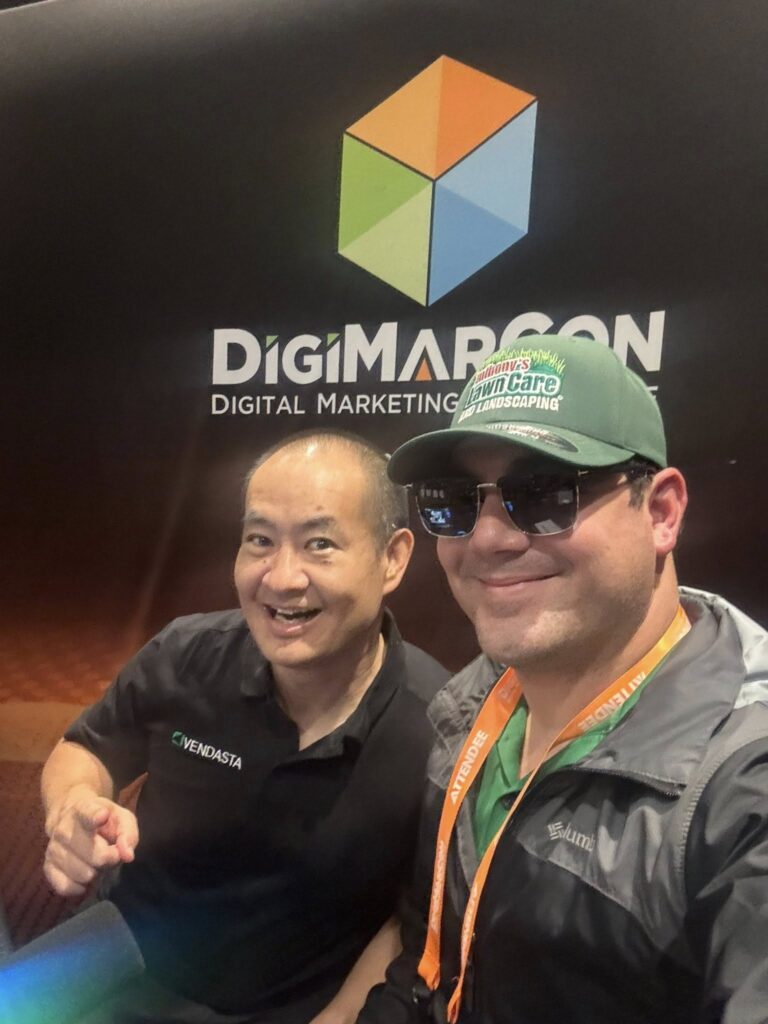
People I know who own multiple businesses, people like Anthony Hilb who runs a $5 million year landscaping business without being involved in the day-to-day, they look at this as the ultimate game.

Mark Cuban said he loved business because it was a game that operated 24/7 with no timeouts. I remember meeting him 30 years ago in Deep Ellum, Dallas, before he sold Broadcast.com to Yahoo. He was selling computer parts. He read the manuals, he serviced the customers, he called on CompUSA. He could do the sales and marketing because he knew the operations cold. Then he hired people to represent different territories and scaled it. Same framework.
Where to start
If I had to tell you where to begin, start with one happy customer. I don’t care if it costs you five times your price to deliver the first time. Can you do it once? Document it with an SOP. Then do it 10 times. Once you’ve done it 10 times, you have real marketing material: stories, examples, proof.
Your landing pages won’t be AI-generated fluff. They’ll be built on real experiences from real customers. And that’s what builds trust, both with humans and with the AI systems that are increasingly deciding who to recommend. A report came out this week showing it’s very easy to be seen by ChatGPT and the LLMs, but whether they actually recommend you is a whole other issue. That trust gap comes from real proof.
Don’t bring in AI agents until you have the diagnosis. Prescription before diagnosis is malpractice. Figure out where your bottleneck is. Is it marketing? Operations? Finance? When you solve your number one problem, your number two problem gets a promotion.
That’s why business is a 24/7 game. And I think it’s fascinating.
I’m Dennis Yu, your Marketing Mechanic. I’d love to hear: where’s the bottleneck in your business?
This article is based on Episode 29 of the Marketing Mechanic. Watch the full episode on Dennis Yu’s YouTube channel.

MOF is one of the 9 Triangles, the complete framework for building scalable, profitable businesses. Explore the full framework to see how Marketing, Operations, and Finance connects to the other eight triangles.
This article connects to BlitzMetrics processes including one-minute video, Dollar a Day, Thank You Machine, MAA, SEO Tree. Each of these concepts has a definitive article that explains the full framework.
Dennis Yu
Dennis Yu is the CEO of Local Service Spotlight, a platform that amplifies the reputations of contractors and local service businesses using the Content Factory process. He is a former search engine engineer who has spent a billion dollars on Google and Facebook ads for Nike, Quiznos, Ashley Furniture, Red Bull, State Farm, and other brands.
Dennis has achieved 25% of his goal of creating a million digital marketing jobs by partnering with universities, professional organizations, and agencies. Through Local Service Spotlight, he teaches the Dollar a Day strategy and Content Factory training to help local service businesses enhance their existing local reputation and make the phone ring.
Dennis coaches young adult agency owners serving plumbers, AC technicians, landscapers, roofers, electricians, and believes there should be a standard in measuring local marketing efforts, much like doctors and plumbers must be certified.