
 by
by

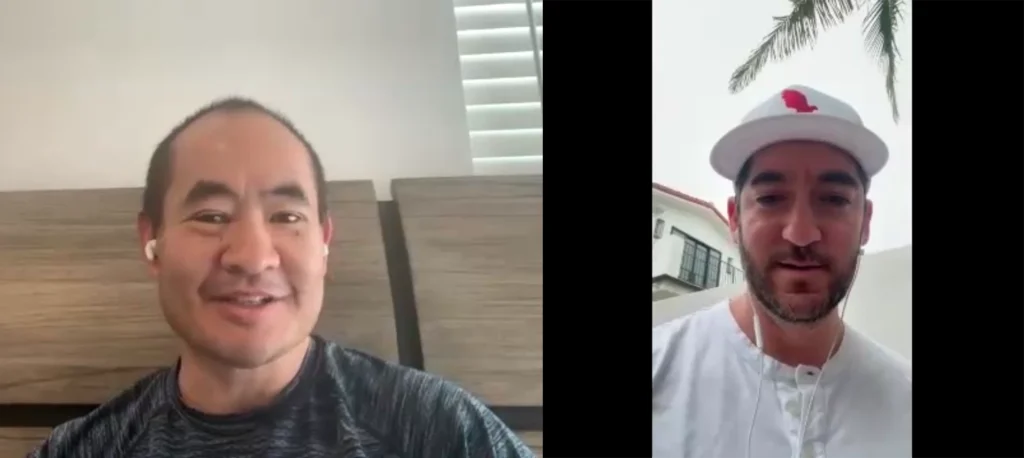
Erik Huberman sent me a DM, saying he was buying agencies and wanted to connect. I first met Erik at a DigitalMarketer event in Austin years ago. We have shared stages in San Diego, Miami, and probably a dozen other cities I cannot even remember.
He knew I talked to agency owners every day. He wanted deal flow from people he trusted.
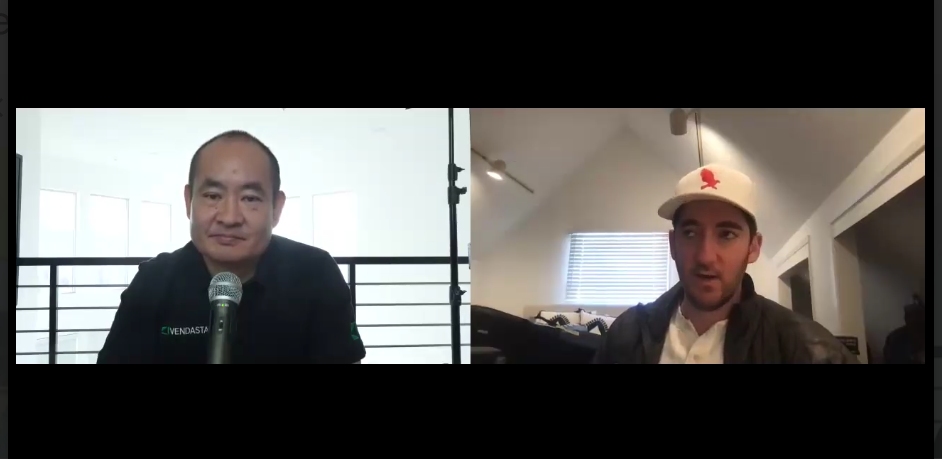
I told him we should record the conversation. What he is doing goes against what every other agency owner I know is doing right now, which is panicking about AI and trying to sell before the floor drops out. The conversation ran 24 minutes, and I think any agency owner doing between $1 million and $5 million in revenue needs to hear it.
Why Agency Owners Are Freaking Out About AI
Every agency owner I know is asking the same question. Is AI going to kill my business?
The short answer: if your business was selling cheap labor dressed up as a service, yes. Agencies that paid VAs $8 an hour to do work they billed at $80 an hour are getting demolished right now. AI does that work faster and costs less. That model is dead.
But the panic crowd is confusing the commodity layer with the value layer. I see it every week on LinkedIn. Guys posting “the agency model is over” who were running glorified Fiverr shops to begin with. Erik put it bluntly on our call:
If you’re cutting costs with AI tools, you’ll get mediocre content and mediocre marketing. The agencies that win are the ones using AI to maintain costs while doing more — more horsepower.
Erik Huberman
The agencies getting crushed by AI were never delivering real strategic value. Erik knows that. He is buying the ones that do deliver it, because those agencies are actually worth more now than they were two years ago. I cover how to build that kind of authority-led agency in the LIGHTHOUSE strategy.
Who Is Erik Huberman
Erik Huberman started selling things when he was 9. He literally went through his parents’ house, found stuff they were not using, and sold it. By 26, he had already founded, grown, and sold two e-commerce companies. Then, in 2014, he launched Hawke Media out of Santa Monica.
His pitch was simple: make world-class marketing accessible to brands that cannot afford $50,000 a month retainers. Twelve years later, Hawke is valued at over $150 million. Erik landed on Forbes 30 Under 30. He won Entrepreneur of the Year from the International Business Awards. He wrote a USA Today bestseller called The Hawke Method. Hawke Ventures has invested in more than 50 startups. The client roster includes Red Bull, Verizon, Crocs, and Casamigos.
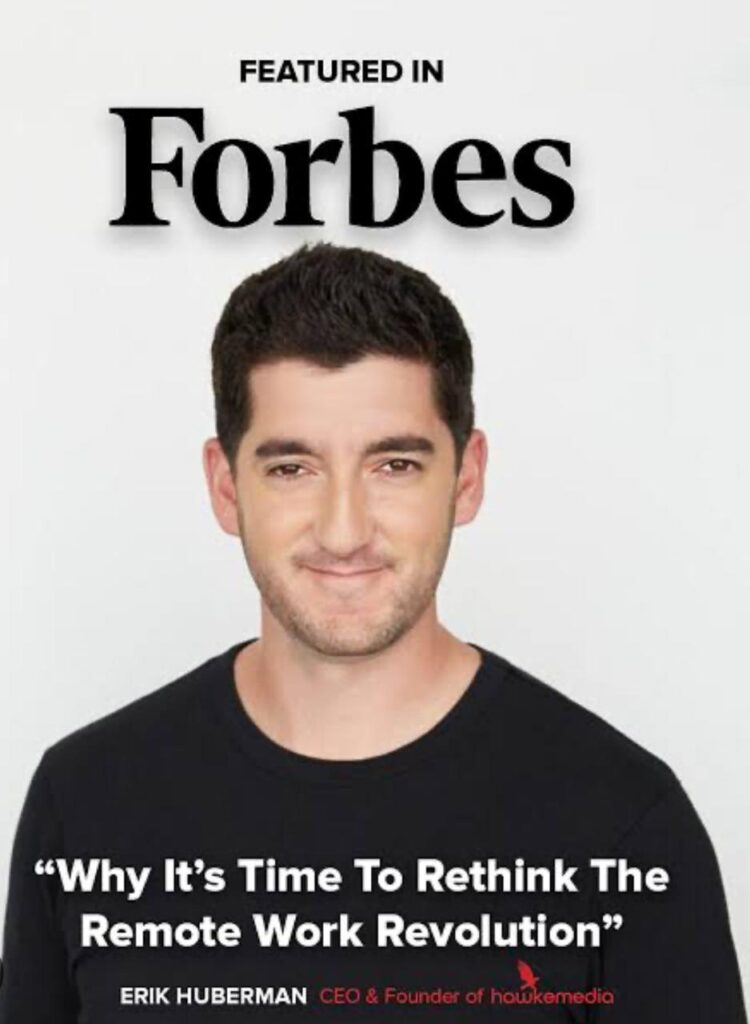
I covered Erik’s approach to agency growth in a previous conversation about cracking the code to agency growth. But the acquisition play is new territory.
How Erik’s Model Differs From Private Equity
Most agency owners expect an acquisition to go like this: PE firm swoops in, offers 3x EBITDA, guts the team, consolidates everything into a holding company, squeezes every dollar until the founder’s non-compete expires. I have watched it happen to people I know personally. Erik has too. On the call he described having PE firms look at buying Hawke and said, “I’m listening to the deals and I’m like, with all due respect, why the” — again, a word I will leave out — “would I ever do that?” So he built his own model instead.
Erik does something different. When Hawke acquires an agency, the founder keeps running the shop. The team stays. The clients stay. But now you have got a $700 million organization handling your back office — your billing, your HR, your tech stack, your line of credit. Erik described it on the call like this:
Look, we handle the back office stuff — billing, HR, tech, all of it — so the founder can just focus on growing. And yeah, we keep the team. That is the whole point. If you gut the team, you just bought an empty shell.
Erik Huberman
There is no upfront cash in this model. Erik uses a perpetuity earnout structure. Your profit margins are guaranteed, and your job is to grow the top line. Here is where it gets real.
Erik told me about one of his best acquisitions, where the founder’s favorite phrase became “with all due respect, not my problem anymore.
” The guy punts everything that has nothing to do with growing his business straight to Hawke’s team. Billing issues, legal questions, HR headaches — gone.”
Erik also described a situation where one agency’s biggest client went 90 days late on a bill that represented 50% of their payroll. His words:
“That could be bankruptcy if they weren’t with us. For us, it was just like, hey, guys, pay this. Come on. And they did. But it took 90 days.”
A small agency owner loses sleep over that. Inside Hawke, someone sends an email.
That is the operational backbone I have been talking about in why agencies need SOPs to scale. Systems that get the founder out of being a single point of failure.
How the Deal Actually Works
Erik walked me through the process on the call. It starts with a financial review and a non-binding term sheet. Then there is a 1.5 to 2-month due diligence period where Hawke evaluates operations, culture fit, and systems. They want to make sure both sides are actually a match.
Closings happen on the first of the month. After closing, the focus shifts to growing the acquired agency. Erik told a story on the call that stuck with me. After one acquisition last year, two employees immediately gave notice.
“They were like, hey, we’re out.” Then, a week later, they asked if they could take it back. Erik laughed about it. “We have great benefits. We really do have a great program that a lot of these small agencies frankly can’t afford.” Most employees end up staying once they see what is actually on the table.
23 Agencies, Zero Slash-and-Burns
Here is the full list of agencies Hawke has acquired since 2018. I am listing these because the track record matters more than any pitch deck.
- Execute LA (January 2018) — early-stage digital marketing, expanded growth capabilities.
- Artemis Digital Media (November 2019) — affiliate marketing specialists.
- Trident Growth Partners (December 2019) — Northeastern US expansion.
- MediaBuyers.com (February 2021) — print media buying, added offline channels.
- Seriously Creative (August 2021) — web development agency.
- Morphio (August 2022) — AI MarTech platform, became the foundation for Hawke.AI.
- Tribute Media (June 2023) — Midwestern US expansion, full-service digital agency.
- Lone Fir Creative (November 2023) — CRM expertise, Northwestern US.
- SimplyBe. (December 2023) — personal branding agency, Midwest.
- Social Thrive (March 2024) — social media specialists, Northeast.
- PRP Group (May 2024) — public relations, education industry.
- ARMR (May 2024) — Amazon and retail media.
- Normal Bear Media (May 2024) — home and spa industry.
- Lemonade (May 2024) — entertainment and gaming marketing.
- Mcomm Group (July 2024) — heavy equipment and manufacturing.
- We Are Unicorns (November 2024) — brand strategy and storytelling, Seattle boutique agency.
- Blue Light Media (March 2025) — creative and social marketing, Orange County.
That is 17 publicly listed acquisitions. Several more recently closed bring the total to 23. Molly Hawkins from We Are Unicorns said joining Hawke lets her scale her vision. Mikhail Alfon brought his entire Blue Light Media team through the transition. Those are real names attached to real outcomes.
AI Makes Good Agencies Worth More
I asked Erik on the call what he thinks about agencies getting fired in favor of ChatGPT. His answer was immediate. “Yeah, cool. That company’s not going to be around very long.” He said Hawke has been building their own AI systems since 2016, has an AI venture fund, and has zero fear of the technology. Then he laid it out: “Sure, go cut your whole team. Use ChatGPT for all your content. You’re going to have mediocre content and your marketing is going to be” — he used a word I will leave out here — “and over the next year I don’t think that’s going to change very much.” He brought up OpenAI shutting down Sora and called the output “AI slop.” His exact words: “If you want to be the brand that’s associated with AI slop, good luck.”
Hawke acquired Morphio in 2022, an AI MarTech platform, and that became the foundation for their proprietary Hawke.AI tool. They have a dedicated AI team helping acquired agencies integrate these tools. Erik is deep in the technology — he is investing in AI companies through Hawke Ventures and has been building internal AI systems for a decade.
But here is the thing. When Erik pitches an agency owner on joining Hawke, he leads with ops infrastructure. The AI stuff is in the background. I have been building AI agents from SOPs through BlitzMetrics, and the conclusion I keep landing on is the same one Erik landed on: AI makes experts more productive. Amateurs stay amateurs.
Two Kinds of Founders Are Calling Erik Huberman Right Now
Erik and I talked about the two types of agency owners reaching out to Hawke. The first type loves their agency but has hit a ceiling. They are great at the work, but they are drowning in all the stuff that has nothing to do with the work — payroll, insurance, hiring, firing, chasing invoices, managing tech subscriptions. They want to keep doing the work. They just want someone else to handle the parts that drain them. Joining Hawke is basically like hiring an entire back office overnight.
The second type is tired. Maybe AI spooked them. Maybe they have been grinding for 15 years, and they are done. For those founders, Erik offers a clean transition that protects the team and the clients without a predatory deal structure. I have written about why the agency model is broken, and this kind of infrastructure plays a role in solving many of the structural problems I described.
What to Ask Before You Sell Your Agency
I asked Erik what agency founders should ask when evaluating any potential acquirer. His answer was direct:
Ask them why. Why are they buying your agency? And then ask why 23 other agencies have successfully gone through this process. If you can’t get a good answer to both questions, walk.
Erik Huberman
Erik emphasized that acquired founders keep full autonomy. The founder runs their shop. Hawke runs the back office.
Honest Considerations
Look, I need to be straight about something. This model works for a specific kind of agency owner.
If you want a big upfront check and a clean break, a traditional 3x EBITDA deal is probably better for you. If your agency relies heavily on one or two clients, due diligence will flag that risk immediately. And if you plan to coast after the acquisition, the perpetuity earnout structure will underperform compared to a lump-sum exit. Erik’s model is built for builders.
I also want to acknowledge what I do not know here. I did not ask Erik about the failure rate. Out of 23 acquisitions, how many founders are genuinely happy two years later? How many wished they had taken a different path? I should have asked that on the call, and I did not. If you are considering this, ask Erik that question directly. Ask to talk to two or three founders who joined over a year ago. If the answers are good, that tells you something. If he hesitates, that tells you something, too.
Why I Wrote This
Erik and I have known each other for years. We have both spoken at the Traffic and Conversion Summit in San Diego and at the DigitalMarketer events in Austin. I have toured his offices in Santa Monica. Last month, we were both speaking at Deal Con in Miami, a conference focused on buying and selling companies.
Erik Huberman and I at Deal Con in Miami

Erik reached out because years of mutual trust meant that if I sent agency owners his way, they would be the right fit. That is how deals happen in this business. Relationships. I teach that in the Dollar a Day strategy and in growing your personal brand. The best deals come from people who already know you.
What Actually Changes When You Join Hawke
When Blue Light Media joined Hawke in March 2025, they went from managing their own billing, their own tech stack, and their own client collections to having a $700 million organization handle all of that. Mikhail Alfon and his full team stayed. The clients stayed. But the operational headaches went away.
Hawke manages over 600 clients across virtually every vertical. If your biggest client churns tomorrow, it hurts, but you survive. That kind of risk diversification is something a 15-person shop cannot replicate on its own. Erik spends millions per year on platform technology. Hawke.AI has been in development for eight years, starting with the Morphio acquisition. A small agency could never build or buy that independently.
Then there is the financial piece. Larger credit lines. Cash reserves. A dedicated AI team. A ventures arm for investment opportunities. Financial services through Hawke Capital. And the collective knowledge of 23 agency teams who have already gone through integration. Acquisitions span from Seattle to Orange County to the Northeast and Midwest, giving Hawke a national footprint. For agency owners who feel stuck at $1 to $5 million in revenue, this kind of infrastructure plays directly to the growth strategy problems that keep small agencies small.
The Bottom Line
The agencies built on actual expertise and actual client relationships are becoming more valuable. Erik Huberman is acquiring those agencies while everyone else panics.
23 acquisitions. $700 million in combined revenue. The track record is real.
If you run an agency doing between $1 million and $5 million in revenue, whether you want to grow or you are honestly just tired, reach Erik at e@hawkemedia.com. Or visit Hawke Media’s acquisitions page to see the full portfolio.
Originally published .
Dennis Yu
Dennis Yu is the CEO of Local Service Spotlight, a platform that amplifies the reputations of contractors and local service businesses using the Content Factory process. He is a former search engine engineer who has spent a billion dollars on Google and Facebook ads for Nike, Quiznos, Ashley Furniture, Red Bull, State Farm, and other brands.
Dennis has achieved 25% of his goal of creating a million digital marketing jobs by partnering with universities, professional organizations, and agencies. Through Local Service Spotlight, he teaches the Dollar a Day strategy and Content Factory training to help local service businesses enhance their existing local reputation and make the phone ring.
Dennis coaches young adult agency owners serving plumbers, AC technicians, landscapers, roofers, electricians, and believes there should be a standard in measuring local marketing efforts, much like doctors and plumbers must be certified. He has appeared on 353 podcasts with 619 credited episodes — see the full list of his podcast appearances.