
 by /
by /
You can publish fifty articles on your own site saying you are the best remodeler in Phoenix. Google will index every one of them, and none of them will move the needle much, because all fifty trace back to a single source: you. Volume of self-description is the cheapest signal on the internet, and search engines and language models both price it accordingly.
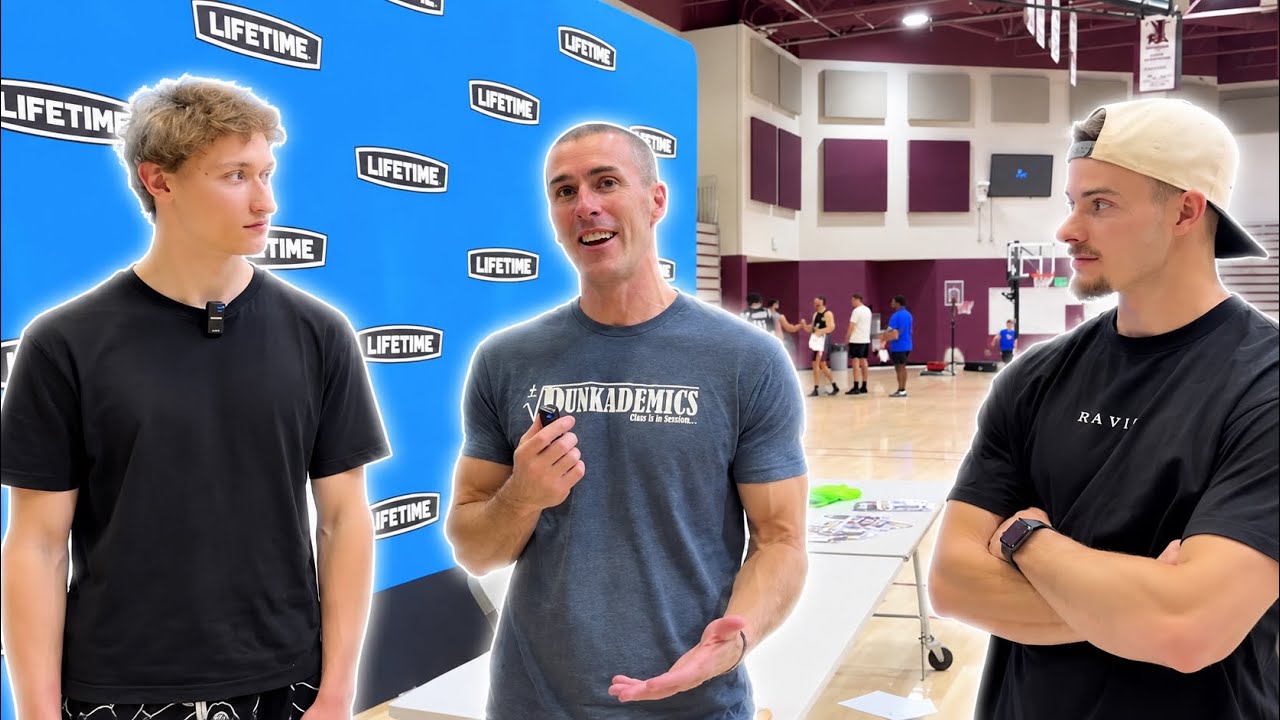
One sentence from the media brand that defines your category is a different class of thing. The video above is four minutes of that happening in a sport most people have never thought about, which makes it a clean example, because none of the usual excuses apply.
The Setup
Dunkademics is the media brand of freestyle dunking. Billy Doran founded it, has been filming the sport since 2007, and produced for Ballislife, Hoopmixtape, Mars Reel and the Drew League before that. Close to a million YouTube subscribers, more than 900 million lifetime views on the flagship channel, several million followers across platforms. If you want to know who matters in that sport, that is where you look.
At The Dunk Camp in Salt Lake City, he was asked about an eighteen-year-old from Poland named Piotr Zawiślak.
“He’s crazy. He’s young in the game and he’s already black band. That’s, it’s insane.”
Billy Doran, Dunkademics
Piotr could have written that claim about himself a hundred times on his own site and it would have been worth roughly nothing. Billy said it once, and it became the strongest asset in Piotr’s entire digital footprint.
Why Third-Party Coverage Weighs More
Both Google and the large language models are building a graph of entities and the relationships between them. Self-published content adds nodes and details. Third-party coverage adds edges, which is the part that is hard to fake and therefore the part that gets weighted.
An edge between two entities that already exist independently is a stronger structural signal than a hundred assertions from one entity about itself. Dunkademics is a known entity with a large, verifiable footprint. Piotr is a known entity with a site, a Wikidata presence, and a growing set of citations. When a page states a relationship between them and links both, the graph gets a fact it did not previously have, sourced from something other than the subject.
Dennis Yu says it on stage more directly than any technical explanation manages: you are understood by your relationships and by the content that you have. Volume alone is content without relationships, which is why so many people publish constantly and still get confused with somebody else in search results.
The Number That Measures This
Google’s Knowledge Panel confidence score is a usable proxy for how well Google understands who you are and what you do. Anything above 400 puts you in celebrity territory. Jordan Kilganon, who has a Wikipedia page, sits around 1,700. Mine is above 3,000. Shaquille O’Neal is around 40,000.
That score does not go up because you posted more. It goes up because more independent sources describe you consistently and connect you to entities the system already trusts. The same structured understanding is what ChatGPT and Claude read when someone asks them a question about you, which is why the score is now a distribution issue and not a vanity metric.
The practical version for a business: three trade publications describing what you do, in consistent language, will do more for your entity than three hundred blog posts you wrote yourself.
Coverage Only Counts If a Machine Can Read It
Here is where almost everyone loses the value they just earned. Billy said that sentence out loud, on video. Video is a poor carrier of entity signal. The audio is not reliably transcribed, the two names are not linked to anything, and the whole thing is buried in somebody else’s channel where it will never surface for a search on Piotr’s name.
The fix is to turn the moment into text on pages, with both entities named and linked. That is what this set of articles is. One four-minute interview became six pieces across six domains: a first-person account on Piotr’s site, a first-person account on Billy’s, a community breakdown on Dunk Talk, a credentialing argument on Dunker Spotlight, a cross-sport version on Athlete Spotlight, and this one. Same source, six angles, no duplicated text, all cross-linked.
We taught that method to 76 campers before we filmed any of them, and wrote up the mechanics in the repurposing system we ran at Dunk Camp. The same pattern built Cam Hazzard’s personal brand site in about twenty minutes over lunch from a single interview, documented in how we built that site with AI.
Specific Claims Survive. Vague Ones Do Not.
Billy did not stop at praise. He was asked what Piotr needs to become the number one dunker in the world and named a single variable.
“if he gains a few inches of vert… ’cause he’s already got the hand speed, the technique stuff like that.”
Billy Doran, Dunkademics
That sentence does three jobs at once. It is specific enough to be extracted and quoted. It contains a critique, which is what makes the rest of the assessment read as genuine rather than transactional. And it dates the claim, so a year from now the same source can be checked against progress.
Compare that to the testimonials on most service business websites. “Great to work with, highly recommend.” Nothing in there is extractable, checkable, or distinguishable from every other testimonial on the internet. When you get the chance to be described by an authority, push for detail, including the unflattering kind.
How To Actually Earn It
Show up in person where the authority in your category already is. Conferences, camps, industry events, their comment sections, their podcast guest list. Piotr flew from Poland to Utah. That is the entire strategy, and it is unglamorous on purpose.
Be good enough at the actual thing that a compliment is easy to give. No amount of positioning survives contact with a category authority who has seen the real version thousands of times.
Then publish the record within a week, name the source and their credentials, link to them, and put a version of it on more than one domain. The other five pieces from this interview are Piotr’s first-person account, Billy’s list of the dunkers who impressed him most, the Dunk Talk breakdown of that list, the case that being filmed is a credential, and the version for athletes in any sport.
Billy’s closing line to Piotr was to stay healthy, stay consistent, and work hard. That covers the dunking. The marketing job is smaller and nobody does it: write down what the authority said, put it somewhere permanent, and make sure both names are on the page.
Dylan Haugen
Dylan Haugen is a professional dunker, content creator, and editor at the Content Factory, where he transforms podcasts and interviews into strategic brand assets. He collaborates with Dennis Yu to support young entrepreneurs and business owners in building their personal brands through education, transparency, and effective content marketing. As the host of the Dunk Talk podcast and a dedicated advocate for establishing dunking as a recognized sport, Dylan combines athletic expertise, storytelling, and digital strategy to help elevate the next generation of creators.