
 by /
by /
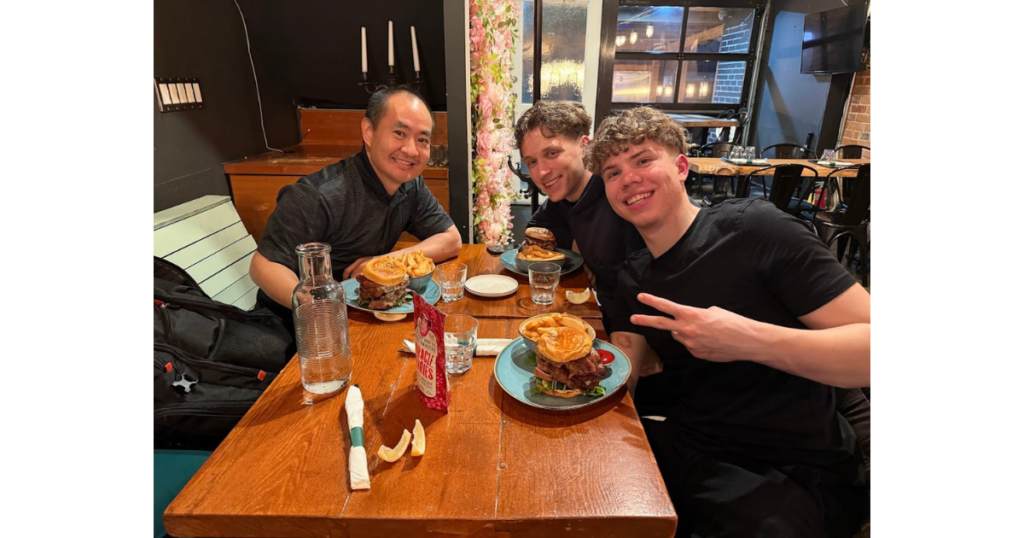
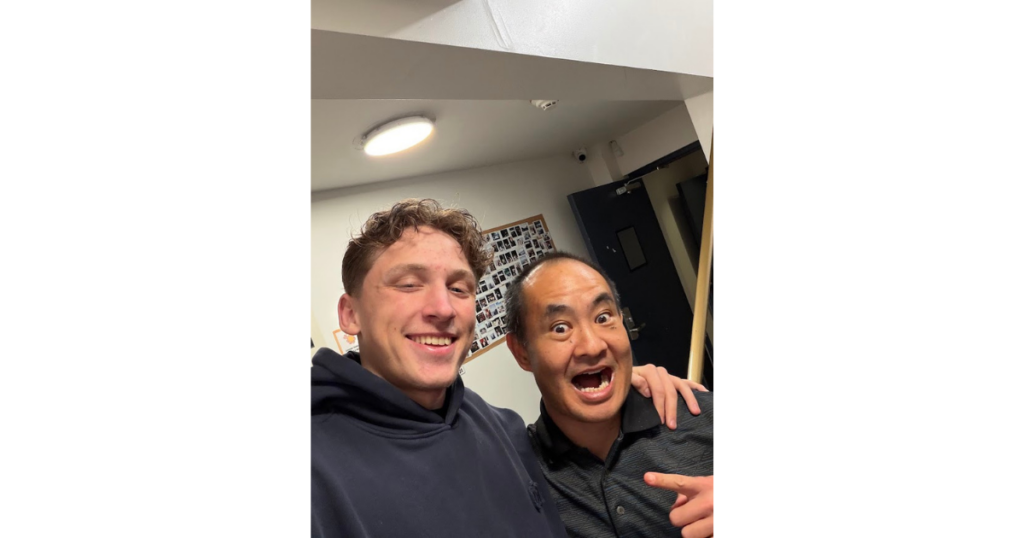
It was 3 AM in Toronto. I had just spoken at a conference earlier that day. And somehow I ended up in a conversation with two young guys from Germany who were traveling the world.
Leonard is 18. Leo Pohlmann is 19. Best friends since kindergarten. They grew up playing football together, were in the same class for 12 years, and a couple months ago decided to pack up and see the world. Not Thailand or Australia like everyone else their age. They chose Canada, Guatemala, and Panama.

We talked for hours. No script. No agenda. Just a real conversation about life, money, relationships, and what actually matters.
This is what came out of it.
They were on German TV at 10 years old
Before they were world travelers, Leonard and Leo were on a German TV show called Super Toy Club. They were around 10 years old. They competed in games, won, and got to run through a toy store grabbing everything they could in three minutes.
Millions of people in Germany watched it. It got half a million views on YouTube.
When I asked what their friends said after, Leonard told me the first thing everyone wanted to know was what it felt like to be in front of a camera. But in the moment, they were so focused on winning that they did not even think about it. It only hit them after they walked out of the studio.
Leo managed influencers at 16
At 16, Leo did a practicum at one of the biggest influencer management companies in Germany. He helped manage contracts and handle the behind-the-scenes work for some of their top creators.
One of the influencers he worked with bought 15 expensive bags in a single day. He saw her full financial records as part of doing her taxes.
I asked him what he learned from that experience. His answer was one word: humility.
The first time they left Europe
Toronto was the first time either of them had been outside of Europe. Leonard told me that when they stepped out of the train station and saw the skyscrapers, the CN Tower, and the scale of everything, they were speechless.

In Cologne, where they are from, the population is just over a million. Toronto is three to four million. The buildings, the lights, the nightlife, the number of people on the streets. It was another world for them.
They had seen it all on their phones. But standing in it was completely different.
Why not the US?
I asked them why they did not go to the United States. Leo explained that in the US you have to be 21 to drink. In Germany, you can buy beer at 16. They are 18 and 19. The math did not work.
But more importantly, Leo said he knows he will visit the US eventually. Everyone does. He wanted to go to the places he might never visit again. Belize. Panama. Countries where you will not find many German teenagers doing the Blue Hole.
Leo wants to be an entrepreneur but does not know what kind yet
Leo is planning to study business psychology in October. He is interested in HR, people management, and possibly headhunting or executive placement.
When I asked him what being an entrepreneur means to him, he said being his own boss. I pushed back. When you are an entrepreneur, you actually have more bosses. You have clients, employees, expenses, politics. A lot of entrepreneurs I know work harder than people with government jobs.
He agreed. But he said the real reason is he does not like being told what to do. And in the two jobs he has had, he saw that some bosses are idiots.
I told him to wait until he becomes the boss. Then he will realize his coworkers are even worse.
I was climbing the wrong tree
I shared something with them that took me years to learn.
I was a good student. Math, engineering, test scores. I was the kind of guy who would finish the exam and walk out early. I trusted my ability to be computational and analytical. I thought that was the path.
But I had no people skills. I ate all my meals alone. I did not have friends. The more of a loner I became, the more I doubled down on studying. I thought everyone else was wasting their time socializing while I was getting ahead.
Nothing could have been further from the truth.
A mentor of mine, the CEO of American Airlines, pulled me aside and told me something I will never forget. He said I was climbing the wrong tree. That I could get all the way to the top and look down and realize I had been going in the wrong direction the entire time.
He told me to stop and learn how to build relationships.
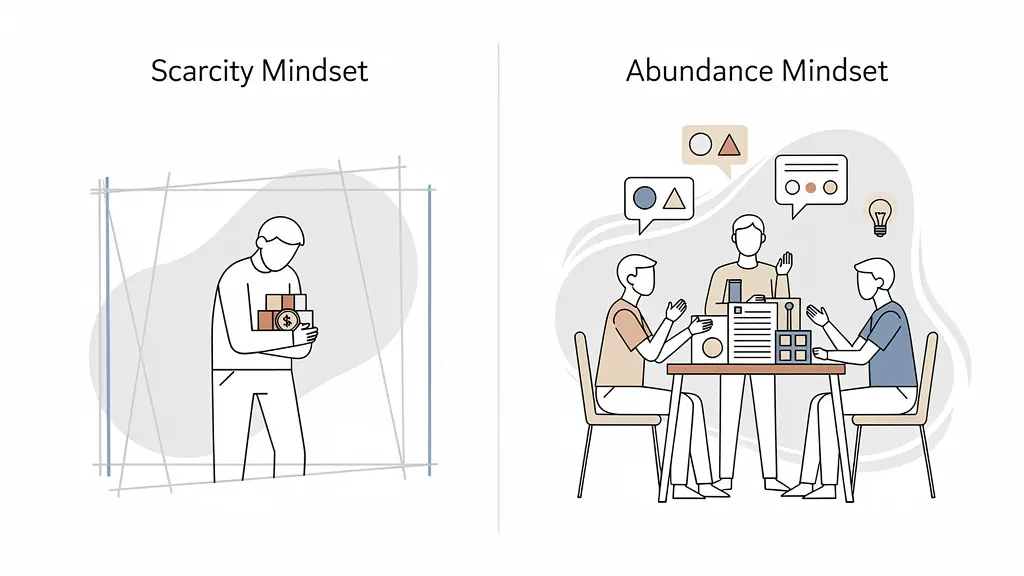
I was awkward. I did not want to do it. When you are bad at something, you avoid it. I wanted to do more math. More of the things I was already good at. But he pushed me toward the thing I was worst at.
And that turned out to be the most valuable skill I have ever developed.
The people who made the most money knew the least
Once I started building relationships, I met a bunch of very wealthy people. And I realized something shocking. Many of them did not know much technically. But they were incredible with people.
My buddy Woody Marks makes a hundred million dollars a year selling furniture in Alabama. He says he is just an old furniture guy. His dad owned a furniture store and now he runs ten of them.

I asked him how he manages thousands of employees and all the complexity of running that kind of business. He told me he hired the best people for each area. The best accountants, lawyers, warehouse managers, programmers. His job is managing people and making them feel like part of a team.

That is the unlock most people miss. Your ability to choose who you work with is more important than your skill in doing the work. I never learned that in college.
$85,000 a day and miserable
Back in 2007, I was making $85,000 a day in gross revenue. After costs, maybe $40,000 to $45,000 in profit. Per day.
My friend Harrison loved to flaunt it. First class flights. Fancy hotels. We would go to sushi restaurants with our laptops open, pressing refresh to watch the money come in. During an hour and a half lunch that cost a thousand dollars, we would make two thousand.
He thought we were winning. I thought we were behaving like professional athletes who blow all their money.
And it got worse. I would go to these expensive clubs where a bottle costs $700. It would be my turn to buy and I would spend $20,000 in a night. Hanging out with people I did not want to be around. Doing things I did not want to do.

Logically it made sense. You meet people at the club, you do the deals, you make money. But it was absolutely terrible.
That was the unhappiest time of my life. The most money and the least joy.
It took me a while to escape that world. And when I did, I realized I just wanted to be around good people. People where I did not need better lawyers or tighter contracts. People I could trust.
I went full circle. It took me a while to learn that.
The Warren Buffett trade
I asked Leonard and Leo a question. Would you trade 50 years of your life for one billion dollars wired to your bank account right now? But instantly you are 70 years old.
They both said never.

But is that not the same decision people make gradually? If you hate your job and you are just waiting for the weekend, you are trading your years away. Just slower.
You spend more time with your coworkers than your wife and kids. You live for Friday. You dread Monday. And you do that for 30 or 40 years.
Take the 30 days of vacation most people get. Multiply that by 40 good working years. That is 1,200 days. Subtract the days where you are doing laundry, attending funerals, fixing things around the house, taking care of kids. You are left with maybe 800 real days.
What are you going to do with 800 days?
All 365 days are mine
When I was in Vietnam last year exploring the world’s largest caves, I met some German tourists who had saved up for years to afford that one trip. They asked what I was doing there. I told them we decided a couple weeks ago to come and then we are heading to Tokyo and the Great Wall after.

They could not believe it.
That is when I told them something that changed how they saw their lives. Most employees subconsciously accept that all 365 days in the year belong to their company. The company then generously gives them 30 days back. And the employee is grateful.
I start from the opposite end. All 365 days are mine. I might give you one. If the money is right. And if it is fun.

That does not mean I do not work. It means I choose what to spend my time on. And I never forget that my time is mine first.
Everything happens for a reason
I used to think that was a woowoo thing. Something spiritual people said because it sounded nice.
But I have lived it too many times to deny it.
When I was young, I missed a flight. That flight crashed due to wind shear when it landed in Denver. People died. My parents thought I was on it.

I was supposed to go to Goldman Sachs like everyone on my mom’s side of the family. Instead I went into the internet when nobody believed in it. I started building websites before anyone thought it was a real career.
Every time something looked like it went wrong, it turned out to be exactly what needed to happen.
Now I operate on a simple principle. I try to do as many good things as I can. It might not come back to me the next day. It might not come from the same person. But it always comes back. I have seen it happen thousands of times. I do not need faith anymore. I know it is true.
Just start
At the end of our conversation, I asked Leonard and Leo to each share one piece of wisdom.

Leonard said: Just do what you love. If you fail, try again and again and again. You will succeed. And you will be happier for trying. Even happier when you succeed.
Leo said: Just start. Even if you fail, you gain something much more important. Experience. Sometime in life, you will win. You cannot lose every time.
I think they are right. And I think they are going to do great things.
These guys had no prep. No script. They were brave enough to sit down with a stranger at 3 AM and have a real conversation. That is exactly the kind of person who figures it out.
Connect with them. Leonard is on Instagram at leonard.rst. Leo is at leo.phlmn. And follow their travel account at two versus cartel.
And if you are 18 or 19 and not sure what to do with your life, maybe this conversation will help you figure it out.
If you are a young adult who wants to learn real AI marketing skills, or a parent or business owner who wants a capable marketing operator, check out our AI Builder Program. We train young adults to make the phone ring for local service businesses through hands-on coaching, real client projects, and AI tools.
Dennis Yu
Dennis Yu is the CEO of Local Service Spotlight, a platform that amplifies the reputations of contractors and local service businesses using the Content Factory process. He is a former search engine engineer who has spent a billion dollars on Google and Facebook ads for Nike, Quiznos, Ashley Furniture, Red Bull, State Farm, and other brands.
Dennis has achieved 25% of his goal of creating a million digital marketing jobs by partnering with universities, professional organizations, and agencies. Through Local Service Spotlight, he teaches the Dollar a Day strategy and Content Factory training to help local service businesses enhance their existing local reputation and make the phone ring.
Dennis coaches young adult agency owners serving plumbers, AC technicians, landscapers, roofers, electricians, and believes there should be a standard in measuring local marketing efforts, much like doctors and plumbers must be certified. He has appeared on 353 podcasts with 619 credited episodes — see the full list of his podcast appearances.