
 by /
by /

Dennis Yu pulls up a contractor’s contact page in the video above and starts listing everything Google is missing. The business has a 4.9-star rating, over 1,300 reviews, and valid license numbers for two states. By most standards, the page looks great. But when an AI agent ran a structured audit on ARDMOR Windows & Doors’ contact page, it flagged 11 specific fixes in under 30 seconds — fixes that would directly improve local rankings, map pack visibility, and the number of calls hitting the phone.
The takeaway was not that ARDMOR had a bad page. The takeaway was that most local businesses — even the ones booking $2M+ in annual revenue — are leaving serious SEO power on the table with their contact page. And now, with AI agents handling the audit process, finding and fixing those gaps takes minutes instead of days.
Why Your Contact Page Is Your Most Important SEO Asset
Most business owners treat their contact page as an afterthought — a place to dump a phone number and an email address. But Google treats it very differently. The former head of Google Business Profile Support, Joel Headley, has confirmed that Google specifically crawls and parses your contact page to gather information about your business. Your contact page is not just a place for customers to reach you. It is one of the primary pages Google uses to determine who you are, what you do, and where you do it.
When your contact page only says “Contact Us — How can we help?” you are telling Google nothing. When it says “Contact ARDMOR Windows & Doors — Window & Door Repair and Replacement in PA, NJ, DE, NY & Other States” — you are reinforcing brand, service, and geography in a single heading. That is the difference between a page that exists and a page that ranks.
This is why the MAA framework (Metrics, Analysis, Action) matters here. The Metrics piece tells you where your business stands — how many calls from your Google Business Profile, how many booked estimates per week, and what your cost per acquisition looks like by lead source. The Analysis piece identifies exactly which contact page elements are costing you rankings and why a 20% improvement on 100 monthly clicks moves more revenue than a 100% improvement on 2 clicks. And the Action piece is where you execute the fixes that put more calls on the schedule. An AI business audit handles that Analysis layer in seconds, so you can skip straight to execution.
What the AI Agent Found on a Real Contractor Contact Page
Here is what the AI agent flagged when it audited ARDMOR’s contact page — and why each finding matters for any local service business. Whether you are running an HVAC company tracking SEER ratings on every install, a plumber quoting GPM for water heater replacements, or a painting contractor estimating square footage for exterior jobs — the contact page fundamentals are identical.
The H1 tag was conversion copy, not SEO copy. The page headline said “CONTACT — How can we help?” That is fine for a human visitor, but it tells Google nothing about what the business does or where it operates. A stronger H1 — like “Contact ARDMOR Windows & Doors — Window & Door Repair and Replacement in PA, NJ, DE & NY” — reinforces the three signals Google weighs most heavily for local pack rankings: brand, services, and geography.
The service area listed regions but never named actual cities. The page mentioned Pennsylvania and New Jersey, but never said Philadelphia, Willow Grove, Doylestown, Cherry Hill, or Hackensack. Each missing city name is a missed ranking opportunity. If you are an HVAC contractor in ServiceTitan and your dispatch board covers 15 cities, every one of those city names should appear on your contact page with internal links to dedicated city pages.
Business identity information was scattered instead of consolidated. ARDMOR had the right information on the page — license numbers, years in business, service area — but it was spread across different sections. A consolidated entity authority block that lists your business name, credentials, established year, star rating, review count, and certifications in one visible section gives Google a structured signal to parse. This is how you move from “we have a contact page” to “Google understands exactly who we are.”
No FAQ section — and that is a massive miss. Contact pages rank when they answer search intent. Questions like “Do you repair Andersen windows?” or “Do you offer emergency glass replacement?” are queries real customers type into Google. Adding an FAQ section with FAQ schema markup captures those queries and feeds them directly into Google’s understanding of what your business does and where you do it. Whether you run a pool company answering questions about chemical balance and weekly service costs or a plumber fielding questions about GPM and tankless water heaters — FAQ schema is free SEO that produces compounding results.
No structured data markup at all. The page looked credible to a human, but it never told Google explicitly through structured data. LocalBusiness schema, Organization schema, AggregateRating schema, FAQ schema, Service schema, and GeoCoordinates should all be implemented on a contact page. The page looks good to visitors. Schema makes it look good to Google’s crawlers too.
Why These “Small” Fixes Produce Outsized Results
Here is the critical thinking piece that separates real marketing strategy from busywork. A 100% improvement on 2 clicks per week is still only 4 clicks. A 20% improvement on 100 clicks per week is 20 additional clicks — and if your average ticket is $3,500 for a window replacement or $8,000 for a full HVAC install, those 20 extra clicks represent real revenue on the schedule. This is the Analysis layer of MAA in practice — understanding which fixes actually move booked estimates and closed jobs, not just which ones look impressive on a report you never read.
For a contractor like ARDMOR, the highest-impact fixes in priority order were: improve the H1 with service and geo keywords, add an FAQ section with schema, expand the service area with specific city names, consolidate the business identity block, implement full schema markup, and strengthen trust messaging near the contact form. Each of these directly impacts whether a business shows up in the map pack when someone nearby searches for their services.
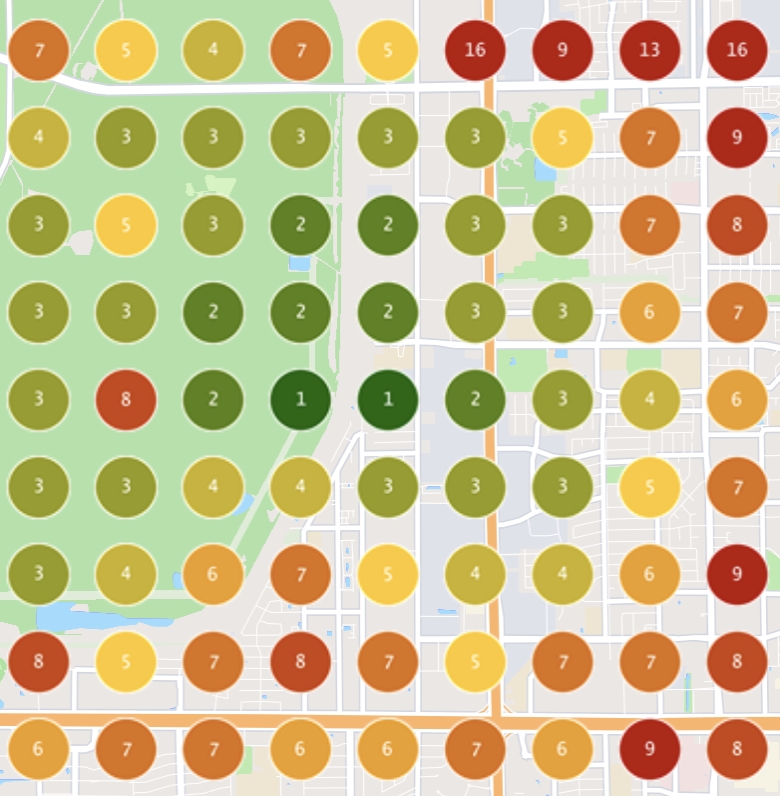
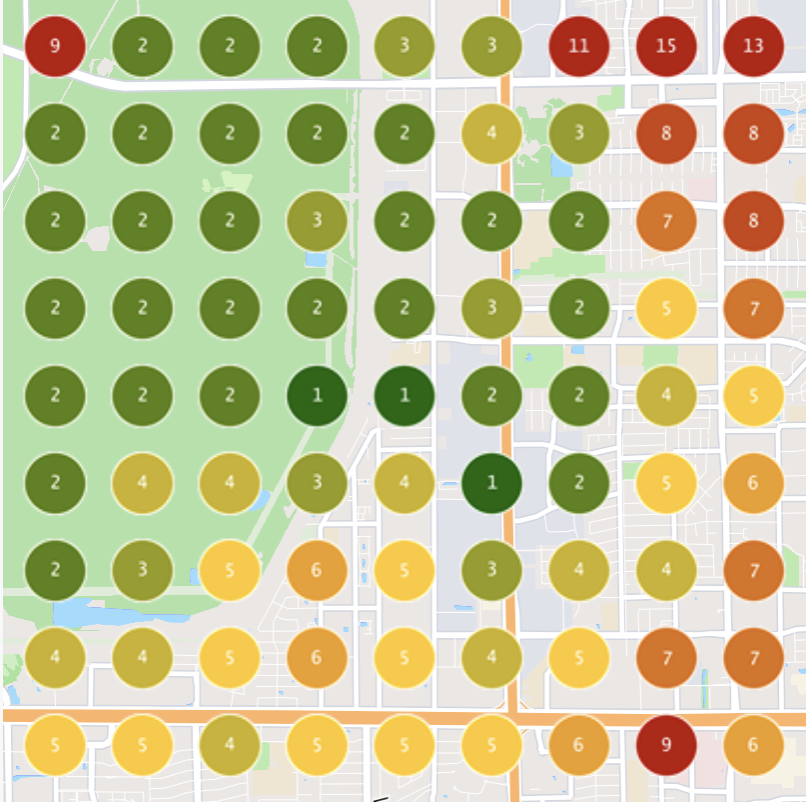
The data is clear: moving from position 4 to position 1 in the local map pack can double or triple call volume. That is why these “small” contact page fixes — an H1 change, an FAQ section, a schema block — can produce outsized revenue impact. The contact page is often the highest-leverage page on a local business website, and most companies never optimize it. Case studies on Local Service Spotlight show this pattern repeatedly — contractors who fix their contact page fundamentals see measurable call volume increases within weeks, often showing up in Housecall Pro or Jobber dashboards as a clear before-and-after.
The Contact Page Optimization Checklist for Any Local Business
Whether you are an HVAC contractor, a painter like American Classic Painters, a pool company like Master Touch Pools, or a window and door operation like ARDMOR — your contact page should pass every one of these checks:
H1 tag includes your business name, primary service, and geography. Do not settle for “Contact Us.” Tell Google who you are and where you operate in the first heading on the page.
Service area lists every city you serve by name, with internal links. Generic region names are not enough. Name the cities. Link them to dedicated city pages if you have them. If your ServiceTitan dispatch zones cover 15 cities, your contact page should name all 15.
Entity authority block consolidates your credentials. Business name, license info, years in business, star rating, review count, and certifications should all appear in one visible section — not scattered across the page. This is how you build the kind of E-E-A-T signals Google rewards.
FAQ section answers the five to ten most common customer questions with FAQ schema markup. This costs nothing and directly captures search queries Google is already showing results for.
Schema markup is fully implemented. LocalBusiness, Organization, AggregateRating, Service, FAQ, and GeoCoordinates — all of these help Google parse your page with confidence.
Map embed is present with city name text nearby. Google likes explicit city name text near map embeds, along with driving distance context like “Our showroom is located in Willow Grove, PA, just minutes from Abington, Jenkintown, and Horsham.”
Trust signals appear near the contact form. A response time promise like “We respond within 1 business hour,” a review snippet, or a technician photo near the form increases both conversions and Google’s confidence in your page.
If your contact page is missing even two or three of these items, you are leaving rankings — and calls — on the table.
How an AI Business Audit Makes This Easy
The audit process described above used to require a senior SEO consultant spending half a day per client. Now an AI agent can run the full analysis in under 60 seconds. Feed the agent your contact page URL, and it returns a structured audit covering NAP consistency, heading structure, service area coverage, schema presence, entity authority signals, conversion optimization opportunities, and FAQ gaps — all prioritized by business impact, not by how easy they are to implement.
This is especially powerful for teams managing multiple locations or multiple clients. The same audit framework applies to every local service business — the entities change, the geography changes, but the methodology stays the same. An HVAC company in Phoenix and a plumber in Philadelphia both need the same contact page fundamentals, and an AI agent checks all of them against the same MAA-driven checklist every time. The HVAC Growth team, led by Luke Crowson, runs this exact playbook for HVAC contractors across the country.
The training resources at High Rise Influence walk through exactly how to build these audit workflows — from setting up the AI agent prompts to interpreting the results and prioritizing fixes by revenue impact. The apprentices trained through the program are the ones running knowledge panel builds and GBP monitoring for clients every week. And the real-world results speak for themselves: local businesses that implement these contact page changes consistently see stronger entity presence, better geo-grid coverage, and more calls on the schedule.
What You Should Do Next
Pull up your own contact page right now. Run through the checklist above. If your H1 says something generic like “Contact Us,” if your service area does not list specific city names, or if you have zero schema markup — you have immediate, high-impact fixes waiting. These are the fixes that move calls onto your schedule, not vanity metrics on a report.
You can feed your contact page URL into an AI agent and ask for a structured audit. Prioritize by business impact, not by ease of implementation. The fixes that feel small — an H1 rewrite, an FAQ section, a schema block — are often the ones that move the most calls onto your schedule.
If you want a professional AI business audit of your contact page — or if you want to learn how to run these audits yourself — get in touch with our team. We help local service businesses optimize the pages that actually drive revenue, measure what matters using the MAA framework, and turn contact page fixes into real business growth through stronger brand mentions and entity authority. No vanity metrics. No busywork. Just strategy that puts calls on your schedule.
This is a definitive article, following the guidelines on how every major BlitzMetrics concept is documented and maintained. All supporting content — case studies, meta-articles, and related guides — links back here as the canonical reference.