
 by
by
People always ask me how I actually make money advising companies. The answer is simple: consulting for equity. When the companies I advise exit, I get a small piece, usually 3 to 5%. Instead of charging $10,000 to $20,000 a month in retainer fees, I take equity that vests quarterly over 36 months.
There’s no monthly retainer, but that doesn’t mean there’s no commitment. I like balanced risk, which means the founder has skin in the game too. What I have to demonstrate is that I can grow them another 5%, enough to accelerate their ability to sell to private equity or get acquired.
Why this works better than a retainer
The shift in the last six months has been dramatic. AI now does a lot of the heavy lifting. The gap between consulting and implementation has been squeezed down to where it’s basically the same thing. Want to fix a website, tune Google ad campaigns, or build out landing pages? With the right ingredients and connected accounts, saying it is nearly as close as having it done.
That means I don’t need a full agency relationship. There’s no need to sell people because I’m leveraging the reputation I already have. It’s very little effort on my part, and way better than the client-by-client, month-to-month agency model.
We also have the data. We know the marketing, what percent close, what the average job is worth, across a lot of roofing and plumbing and HVAC companies. Agencies without that many clients, without that experience, without the tech back end, are at a real disadvantage.
This is not a discount
When people come to me saying they love the consulting for equity model because they don’t have any money and this seems like a cheaper way to hire me, that’s not what this is.
It needs to be a company that’s doing well, has a great reputation, is growing, and has a clear exit. If there’s no exit, why would either of us want equity? The SaaS companies I have partial ownership in are going to exit in 12 to 18 months.
And it’s all about speed. Not putting up intellectual property barriers with legal, not being secretive. Your competitive advantage is moving faster than the other guys, because anyone can see what you’re doing and copy you, and AI makes copying faster every month.
Skin in the game
Advising for equity doesn’t mean the founder carries no risk. I want to see commitment on both sides. That’s why our AI Builder Program is $7,500 one time, not monthly. It isn’t priced to be a revenue stream, it’s a small hurdle that shows someone is serious, since the bigger payoff comes from the exit and from the synergies between our companies.
The power of the ecosystem
The real magic is in the network. Here’s how it plays out in home services.
George Paladichuk runs NaiL AI, an AI call center for roofing companies. It booked $3.5 million for over 100 roofing companies in a single month and recovered $400,000 in booked jobs for one fencing company. He started as a broke college student, built an agency, converted it into SaaS, and is on track to exit. He has zero sales reps and does zero cold calls. His customers sign up because the results speak for themselves.
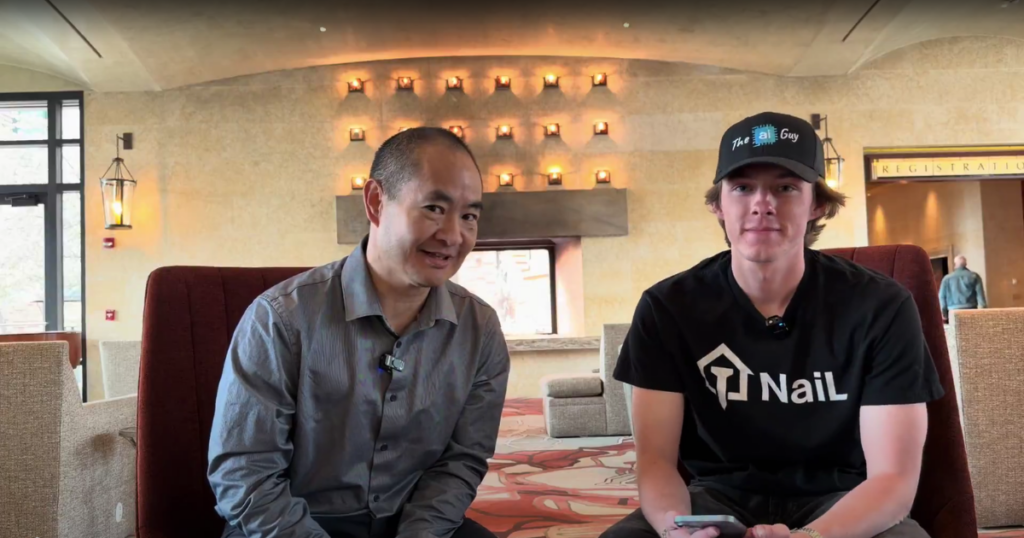
Marko S. Sipilä built HVACQuote.ai, a SaaS that shows replacement quotes directly on HVAC websites and generates 40% more leads because homeowners want to know what a new unit costs before they call. It scaled to 300 clients across HVAC and plumbing in under a year. Before that he built CoatingLaunch, which drives booked appointments for over 50 concrete coating companies.

The customers of one company benefit from the customers of all the related companies. Often the easiest and most powerful thing I can do is put two of these founders together on a podcast, because then we can remarket to the client bases of both. The more we emphasize those relationships, the more of a sustainable advantage we build, one that AI alone can’t replicate.
This is also how referrals work in our network. When a $25 million roofing company came to me for SEO help, I could have charged $10,000 a month. Instead I referred them to the specialist who serves that niche. Each agency in the network does one thing well, sends leads to the others, and grows with zero cold outreach. Most agencies spend 20% of revenue on sales. This structure eliminates nearly all of it.
We also work with folks like Joe Crisara of Service MVP and others across the home services space.
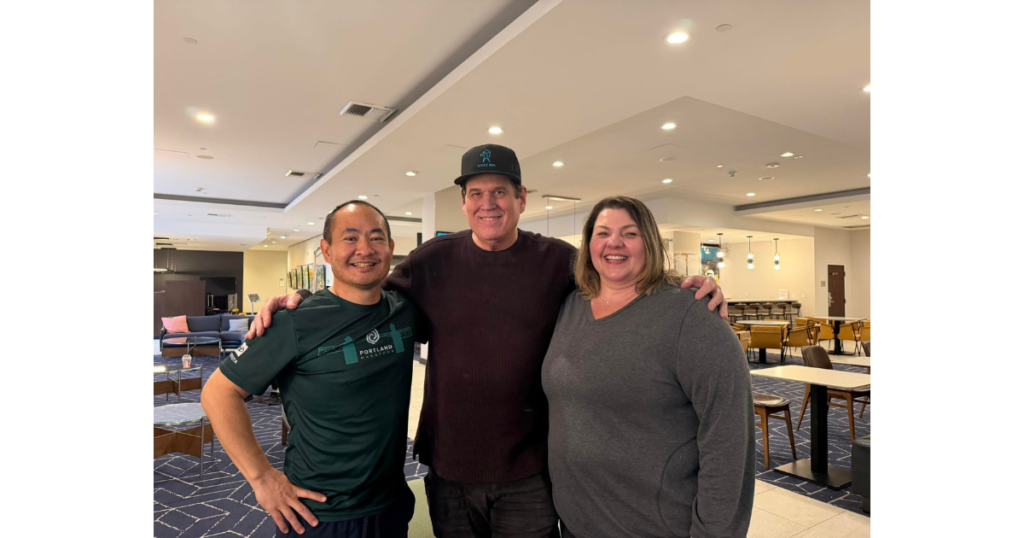
Erik Huberman, who runs the largest and fastest-growing digital agency on the planet, is acquiring other agencies because there’s power in centralizing capabilities around media buying, AI, TikTok ads, YouTube channels, blog repurposing, email funnels, and retargeting. The same logic applies to what we’re building, just through equity partnerships rather than acquisitions.
Cross-equity and mutual marketing
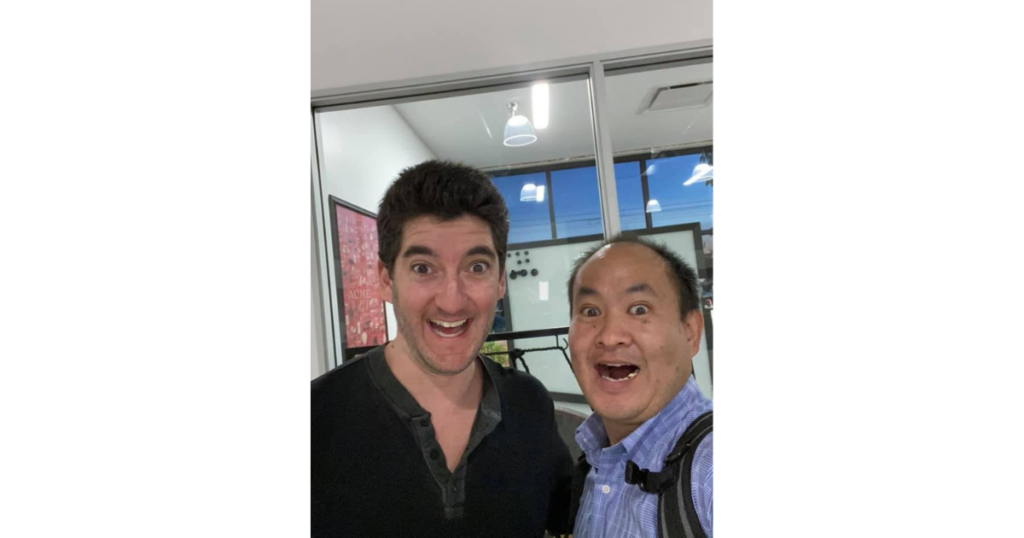
One of the neatest things I’ve been able to broker is cross-equity deals. When a SaaS company I advise serves HVAC or roofing, and there’s a complementary agency, I tell them they should do cross equity. Since I already own a little piece of each company, when they work together and mutually market, everybody wins.
I own 3% of a $5 million landscaping company because it’s complementary to a landscaping agency and another SaaS we have. We create mutual value between those combined customer bases as they open more locations.
Dan Antonelli is a great example.

We did a whole bunch of work for Dan, building out his knowledge panel, his YouTube, and other digital assets.
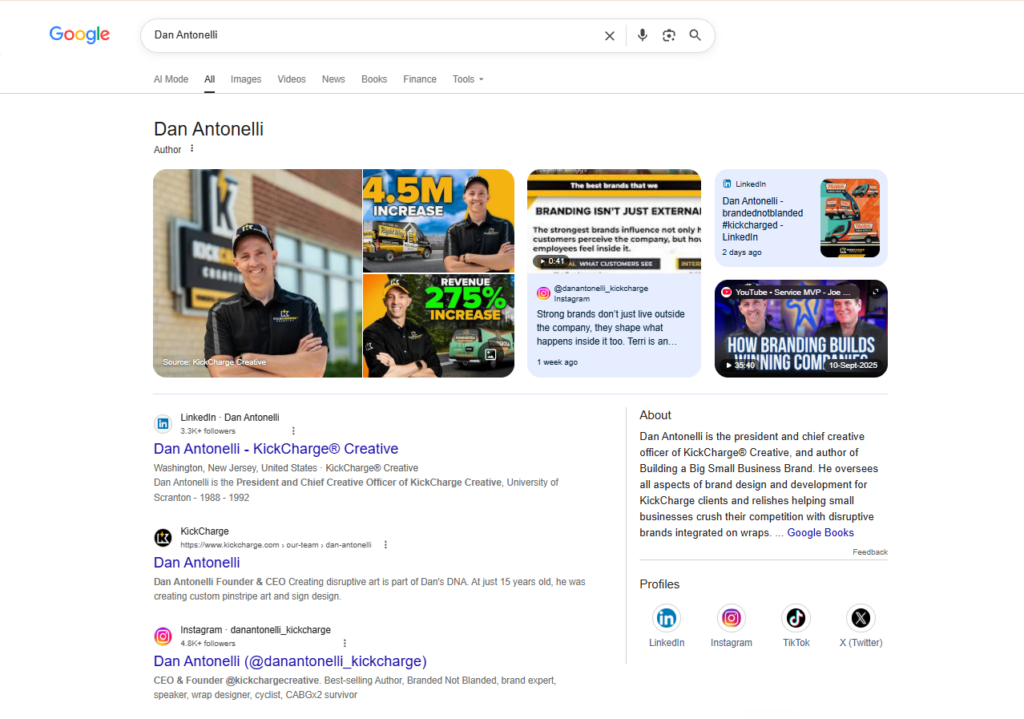
Tommy Mello ended up buying his company, KickCharge. And because we delivered real results, Dan has referred other partnership opportunities to me, and that’s been worth way more than if he were paying me $10,000 a month.
The criteria for a good deal
I learned this model from David Meerman Scott 20 years ago.
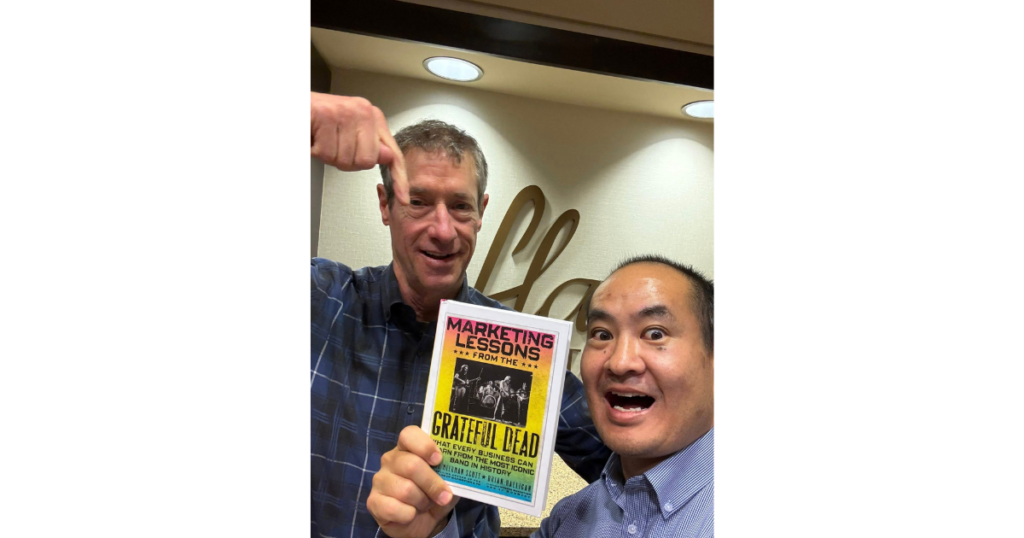
His criteria, which I still follow, start with working with a founder you like. No difficult people. It has to be someone you’d actually want to hang out with. And it’s the founder directly, not layers of team members.
There also has to be a clear path to exit. Someone else has already invested, whether that’s a Series A, PE, or angels. Usually there are VCs or angels we already know involved, so I don’t have to push for that event myself.
The company needs a strong reputation. It can’t be some untested startup idea. There have to be real customers saying good things. And the service should be complementary to the other companies in roofing, plumbing, HVAC, or landscaping that we already know. That’s what creates mutual value across the network.
The math should be a no-brainer
Here’s how I think about it. If your company is doing $1 million EBITDA and looking at a 6x multiple toward a $6 million exit, can I add 5% of that value, about $300,000, by fixing broken marketing? Can we exit 5% faster? Can we eliminate 5% of cost?
At 5% equity, the downside is contained. If it doesn’t work out, you cut the agreement and the equity stops vesting. The vesting is quarterly, and we always include an immediate acceleration clause, so if the company sells at month 18, all 36 months of vesting kick in immediately. It can also be structured as phantom equity, which handles the tax liability differently.
Some people say I should charge 20 or 30%. I’d rather make it so obvious that I don’t have to do a lot of convincing. The value is easy to measure because the first thing we put in place is digital plumbing, all the tracking and data to show that what we’re implementing together is working.
Relationships are the durable advantage
With everyone generating AI this and AI that, it’s our relationships and assets that produce the real durable advantage. It’s not dependent on AI creating software or generating ads. Think about what unique, sustainable edge you have, and whether there are clever ways to align incentives so that an agency or partner shares in the upside through equity rather than fees.
If your business has a clear exit, a strong reputation, and fits within the home services ecosystem, consider the consulting for equity model. If that sounds like you, let me know.
Originally published .
Dennis Yu
Dennis Yu is the CEO of Local Service Spotlight, a platform that amplifies the reputations of contractors and local service businesses using the Content Factory process. He is a former search engine engineer who has spent a billion dollars on Google and Facebook ads for Nike, Quiznos, Ashley Furniture, Red Bull, State Farm, and other brands.
Dennis has achieved 25% of his goal of creating a million digital marketing jobs by partnering with universities, professional organizations, and agencies. Through Local Service Spotlight, he teaches the Dollar a Day strategy and Content Factory training to help local service businesses enhance their existing local reputation and make the phone ring.
Dennis coaches young adult agency owners serving plumbers, AC technicians, landscapers, roofers, electricians, and believes there should be a standard in measuring local marketing efforts, much like doctors and plumbers must be certified. He has appeared on 353 podcasts with 619 credited episodes — see the full list of his podcast appearances.