

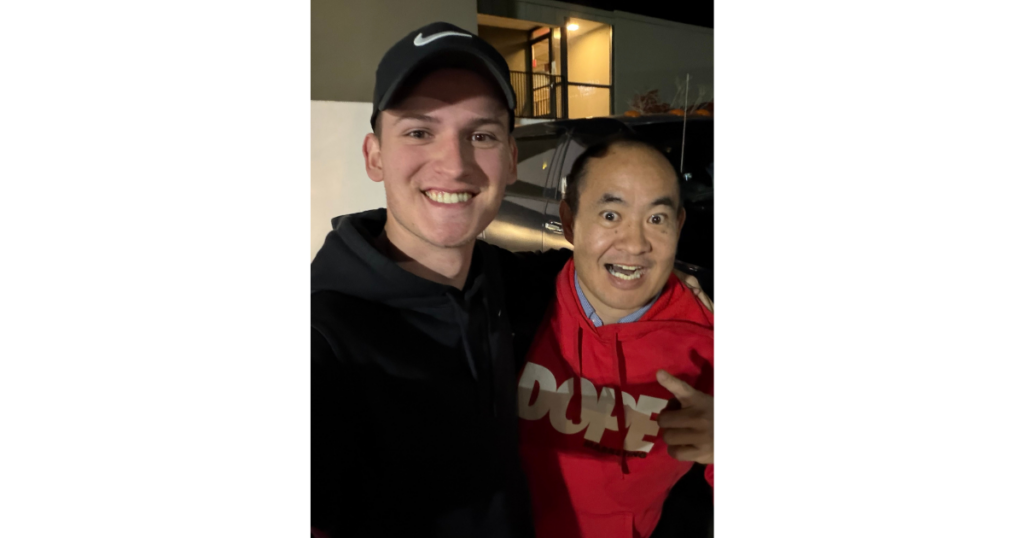
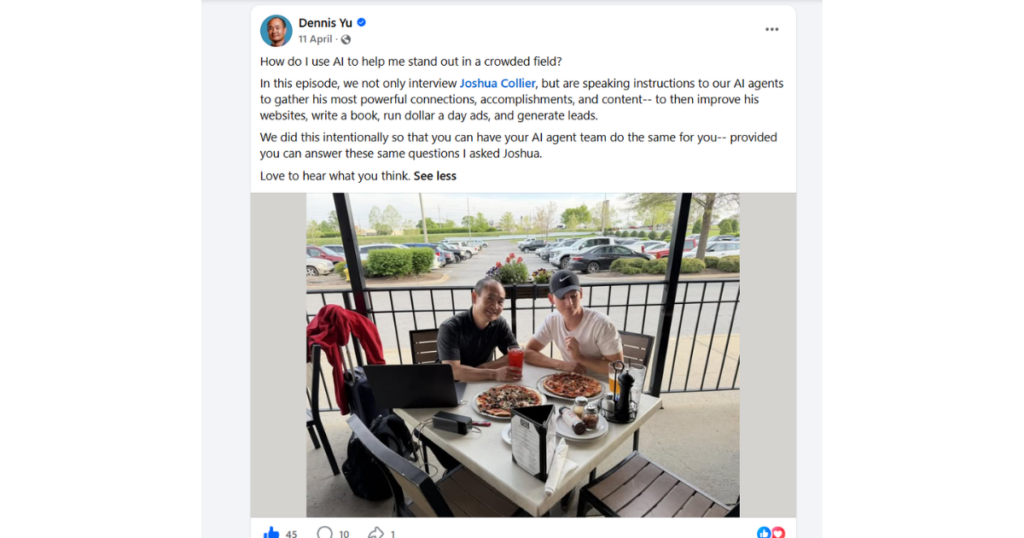
I sat down with Josh Collier at a random restaurant with an iPhone and $49 microphones. No studio, no production team. Just a real conversation between two friends about how to use AI to stand out as an entrepreneur.
From that single conversation, here’s everything we produced and exactly how we did it.

We recorded the full episode
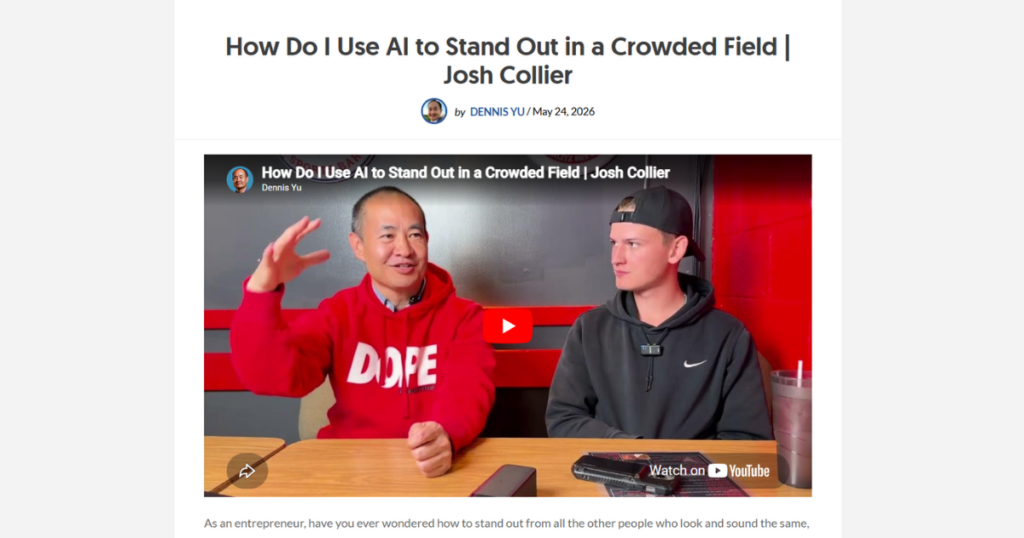
The raw conversation became a full-length Coach Yu Show episode. Josh and I talked about leveraging existing relationships, the implied endorsement strategy, faith-driven entrepreneurship, and why trust matters more than features.
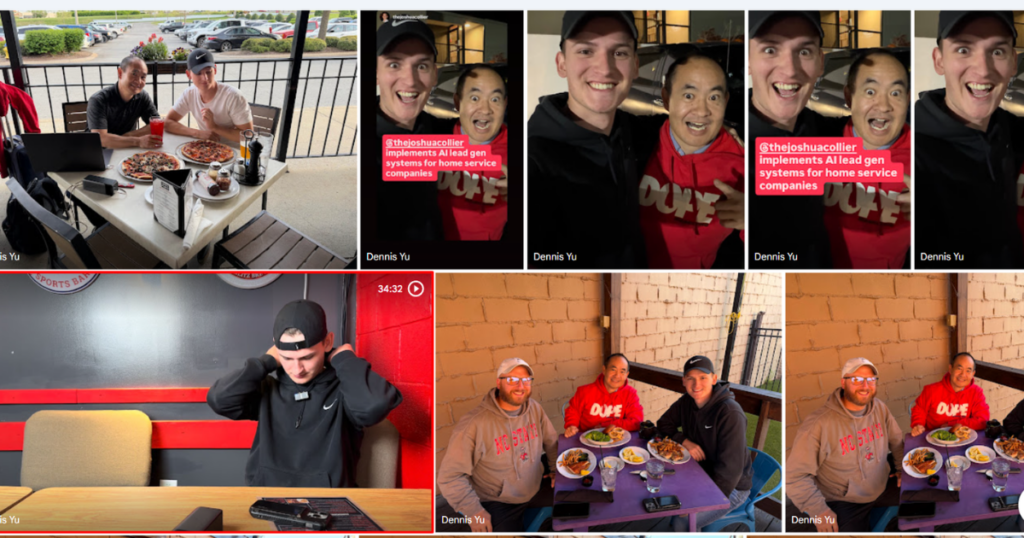
We cleaned up the audio using AI, removed 156 filler words and shortened 2 long silences. The result was a tighter, more professional episode without losing any of the real, unscripted energy.
We optimized it for YouTube
We gave the video a search-friendly title: “How Do I Use AI to Stand Out in a Crowded Field | Josh Collier.” We wrote a first-person description with chapters at key moments, added tags for discoverability, and structured everything so people searching for AI, entrepreneurship, or personal branding would find it.
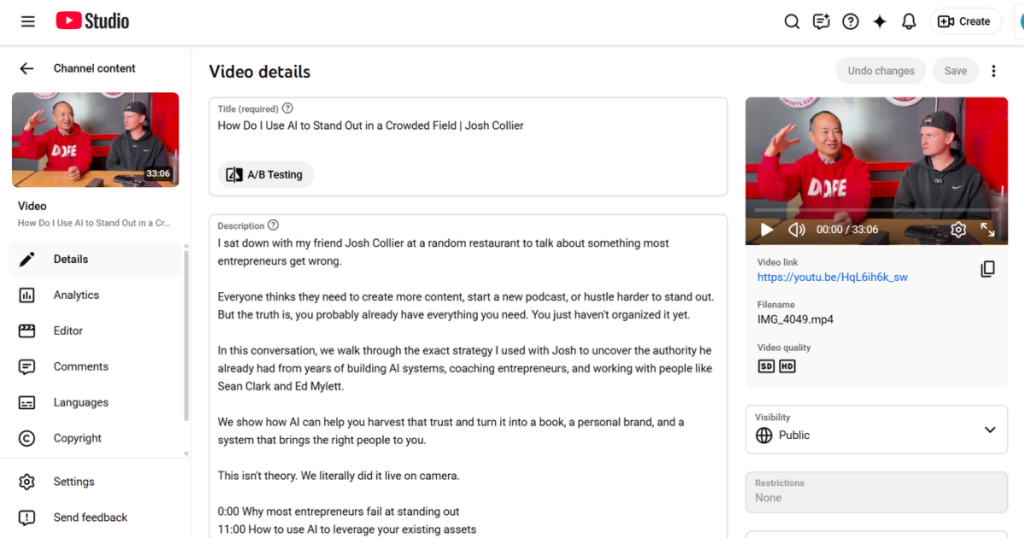
The chapters break the episode into three sections: why most entrepreneurs fail at standing out, how to use AI to leverage existing assets, and the implied endorsement strategy that builds trust.

We cut three shorts from the episode
Instead of randomly chopping clips, we identified three moments where only one person was speaking and the message was powerful enough to stand on its own.
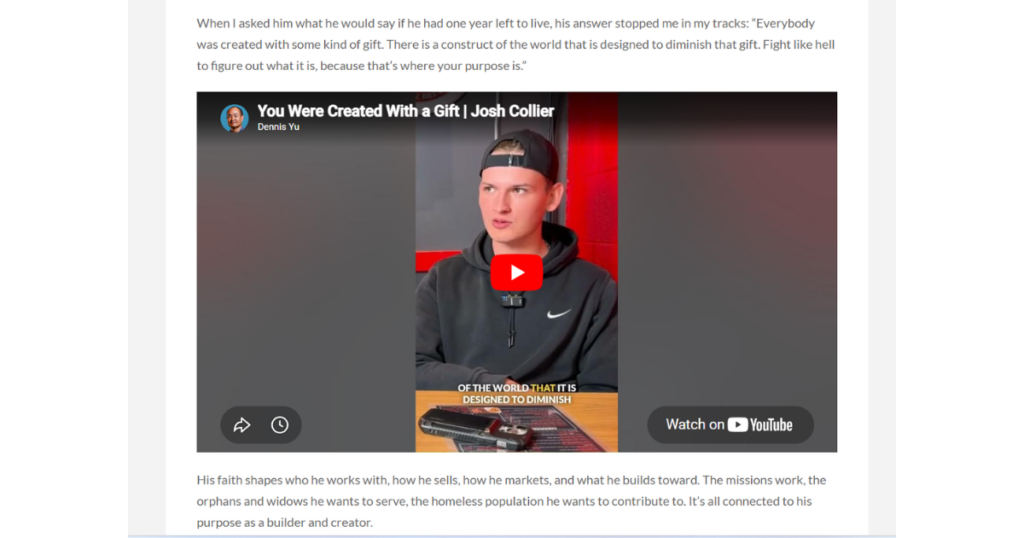
Short 1 is Josh answering what he would say at his own funeral. It’s about purpose, faith, and fighting to find your God-given gift.
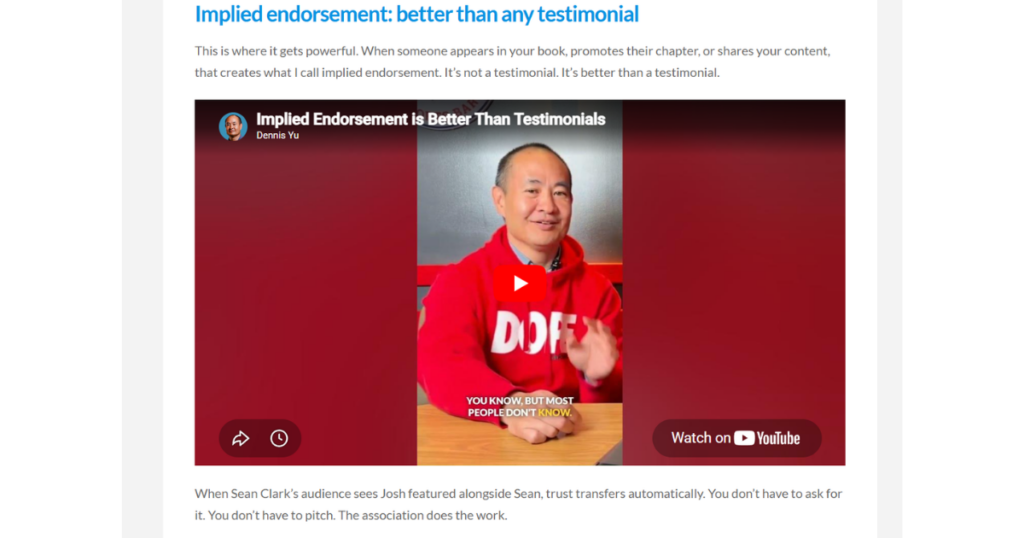
Short 2 is me explaining the implied endorsement strategy and why it’s better than any testimonial.
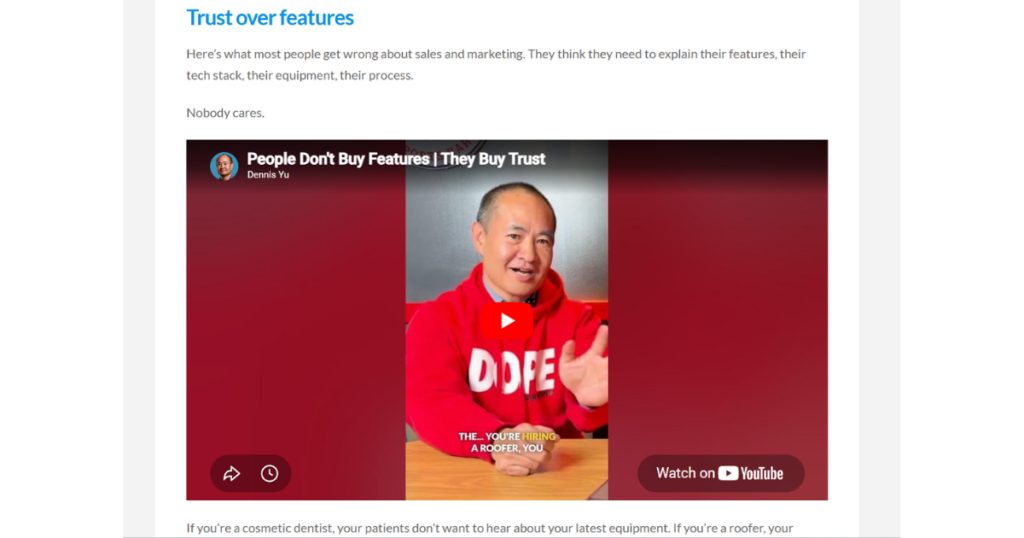
Short 3 is me breaking down why people buy trust, not features, using the roofer example.
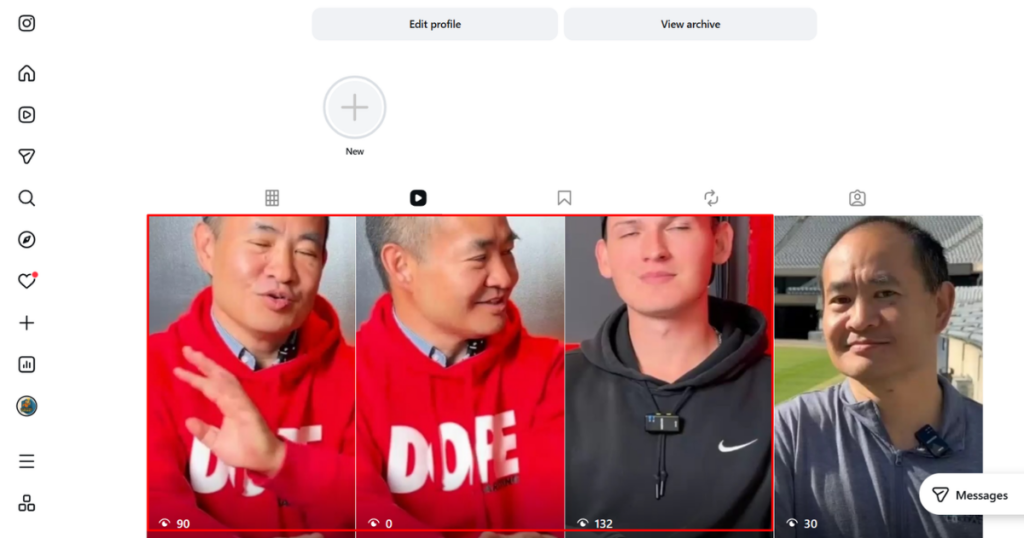
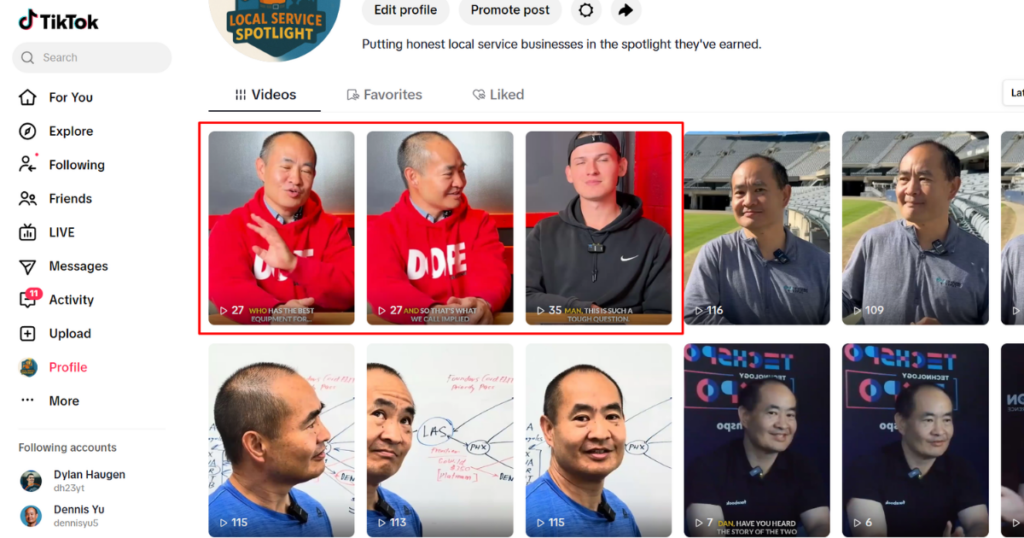
We trimmed each short to make sure it started and ended cleanly with no abrupt cuts. Then we formatted all three in portrait for YouTube Shorts, TikTok, and Reels, scaled the video to fill the frame, and added bold yellow highlight captions.
Each short got its own YouTube title, description, tags, and platform-specific captions for Facebook, LinkedIn, Instagram, TikTok, and X.
We wrote a long-form article
We repurposed the entire conversation into a written article that could live on the blog. Written in first person, it walks through the same ideas from the episode but structured for readers instead of viewers.
We embedded each of the three shorts at the most relevant point in the article so readers who prefer video can watch instead of read. Short 1 sits in the faith-driven entrepreneurship section, Short 2 in the implied endorsement section, and Short 3 in the trust over features section.
The article got its own SEO description, focus keyword, tags, and a short URL for easy sharing.
We created social media captions for everything
Every piece of content got platform-specific captions. The full episode got first-person captions for Facebook, LinkedIn, and X from my perspective. The shorts each got captions tailored to every platform.

We wrote a pinned YouTube comment linking to the article, giving viewers who wanted the full written breakdown a place to go.

Everything came from one conversation
One conversation at a restaurant. One iPhone. Two $49 microphones. No fancy production.
From that, we got a full YouTube episode, three YouTube Shorts with captions, a long-form article with embedded shorts, social media captions for six platforms, SEO optimization across everything, and a pinned comment driving traffic to the article.
Nothing was AI-generated slop. Every piece of content came from a real conversation between two real people. AI just helped us organize, clean up, and distribute it.
Most entrepreneurs record a podcast or a video and then it sits there. Maybe they post it once and move on. That’s leaving massive value on the table.
The real power is in repurposing. One conversation becomes dozens of assets that all link back to each other, building authority, trust, and visibility over time. And with AI handling the cleanup, formatting, and optimization, the whole process takes a fraction of the time it used to.
If you’ve ever recorded a conversation worth sharing, you probably have more content sitting inside it than you realize. You just need to pull it out.
Dennis Yu
Dennis Yu is the CEO of Local Service Spotlight, a platform that amplifies the reputations of contractors and local service businesses using the Content Factory process. He is a former search engine engineer who has spent a billion dollars on Google and Facebook ads for Nike, Quiznos, Ashley Furniture, Red Bull, State Farm, and other brands.
Dennis has achieved 25% of his goal of creating a million digital marketing jobs by partnering with universities, professional organizations, and agencies. Through Local Service Spotlight, he teaches the Dollar a Day strategy and Content Factory training to help local service businesses enhance their existing local reputation and make the phone ring.
Dennis coaches young adult agency owners serving plumbers, AC technicians, landscapers, roofers, electricians, and believes there should be a standard in measuring local marketing efforts, much like doctors and plumbers must be certified.