
 by
by
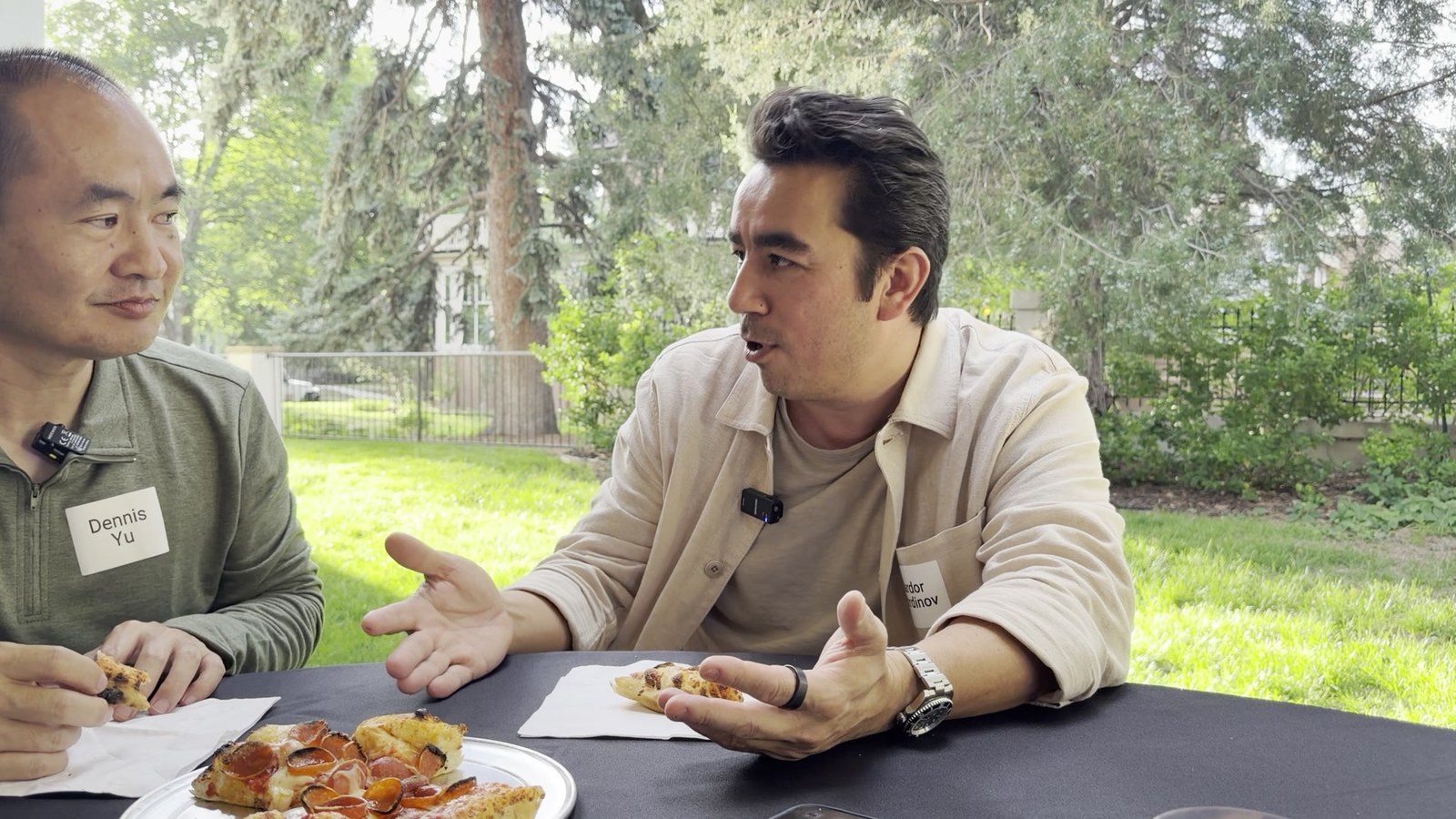
I spend most of my week publishing other people’s ideas. I cut Dennis Yu’s podcasts, turn them into videos, and write the articles that go with them. So I’ve had a front-row seat to a lot of smart people saying smart things.
But watching Sardor Umarzinov build a real, working software platform over a single pizza did something different. It didn’t just sound smart. It made me realize I’d been overcomplicating what it actually takes to build.
Sardor is the founder and CEO of Home Alliance Ecosystem Group. He’s rolled up more than a dozen home service companies, sits on roughly six million customer records, and has vibe coded over 200 products in the last few months. Here’s what stuck with me, from my seat behind the camera.
You don’t need permission to start
Sardor’s first app wasn’t a grand plan. It was a Pac-Man game for his kid. Then a time-management tool. Then a health app pulling data from his Oura Ring and his glucose monitor. Some of it he built between sets at the gym.
That reframed something for me. I used to assume the people building real things had some green light I didn’t have. They don’t. Sardor just started, kept his reps up, and let the projects get more ambitious as he did. If you’re waiting to feel ready, that feeling is the thing standing in your way.
The workflow I’m stealing
Here’s the part I can actually copy tomorrow. Sardor built the whole thing with three tools, live, while we ate:
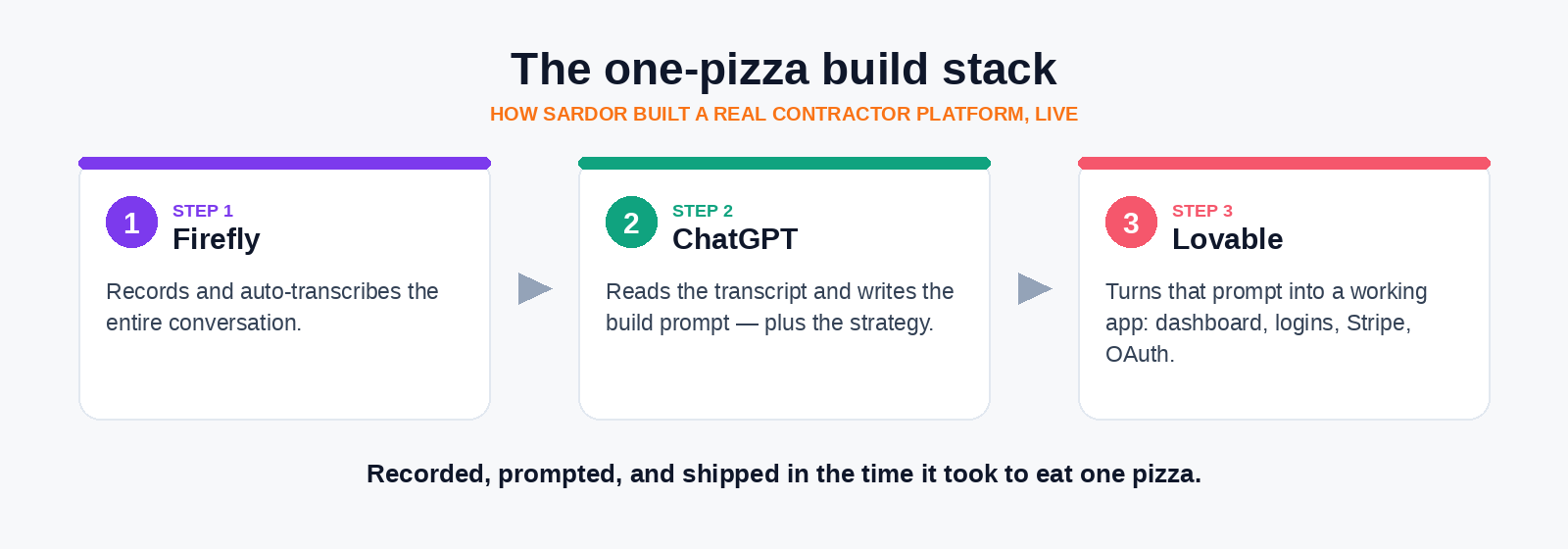
Firefly recorded and transcribed the conversation. He dropped that transcript into ChatGPT, which reasoned through the strategy and wrote the build prompt. It even named the product itself, “the Bloomberg Terminal for home service growth.” Then he pasted that prompt into Lovable, and it started coding the actual app: the dashboard, the logins, Stripe payments, OAuth into Google and Meta.
In a few minutes there was a working dashboard on screen.
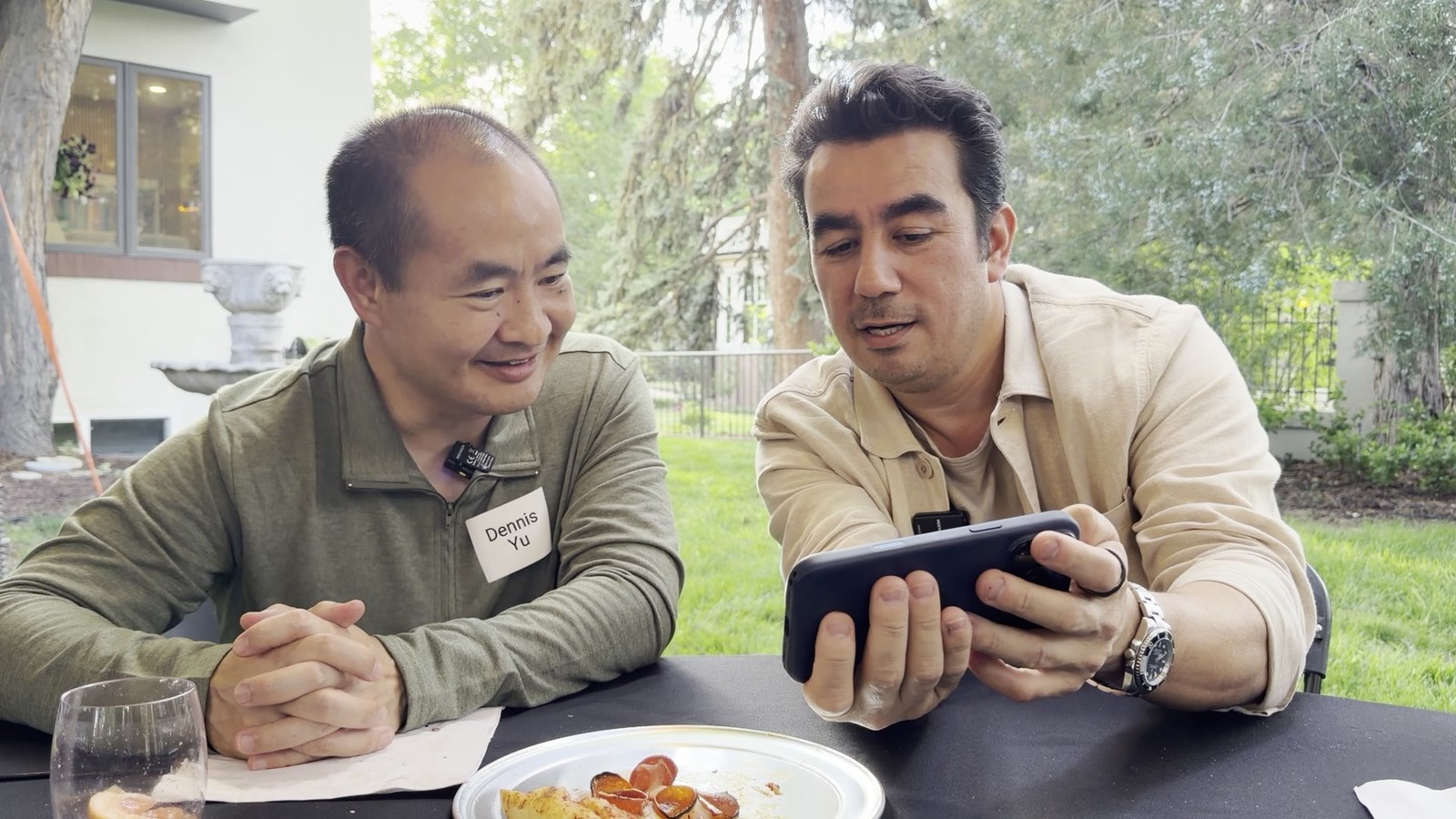
What got me is that none of those tools are secret. I already have all of them. The difference wasn’t access, it was knowing to record the thinking, let one AI turn it into a plan, and let another turn the plan into software.
Start with a problem you actually have
I used to think you needed a big, original idea. Sardor doesn’t work that way. A customer complaint about a do-not-call issue became a TCPA protection product that he now sells to other companies. He builds tools for problems he’s actually living, then sells them to everyone else who has the same problem.
“I love it when you solve one thing and it becomes a product because other companies have the same problem,” Dennis said while we filmed. That’s the whole model. You don’t have to invent a category. You need a real problem and the nerve to build for it.
Measure yourself in tokens, not hours
The line I keep thinking about: if you’re not doing ten times the work you did last year, you’re not using AI correctly. Sardor literally tracks how many tokens his team burns as a metric, and he wants to flip the ratio over time so it’s more tokens and less manual labor.
For someone my age, that’s the opening. I’m not going to beat anyone on years of experience. But I can compete on how well I use these tools, and that gap is mine to close.
What I’m taking away
I walked into that shoot as the guy running the cameras and the edit. I walked out thinking about what I could build myself this week.
That’s the real takeaway, and it’s why I wanted to write this one myself. You don’t need a Silicon Valley team or a decade of experience. Order a pizza, talk your idea through with ChatGPT or Claude, let it write you a prompt, drop it into a builder, and see what exists by the time you’re done eating. I’m going to try it. You should too.
Watch the full episode
Originally published .
Dennis Yu
Dennis Yu is the CEO of Local Service Spotlight, a platform that amplifies the reputations of contractors and local service businesses using the Content Factory process. He is a former search engine engineer who has spent a billion dollars on Google and Facebook ads for Nike, Quiznos, Ashley Furniture, Red Bull, State Farm, and other brands.
Dennis has achieved 25% of his goal of creating a million digital marketing jobs by partnering with universities, professional organizations, and agencies. Through Local Service Spotlight, he teaches the Dollar a Day strategy and Content Factory training to help local service businesses enhance their existing local reputation and make the phone ring.
Dennis coaches young adult agency owners serving plumbers, AC technicians, landscapers, roofers, electricians, and believes there should be a standard in measuring local marketing efforts, much like doctors and plumbers must be certified. He has appeared on 353 podcasts with 619 credited episodes — see the full list of his podcast appearances.