
 by
by
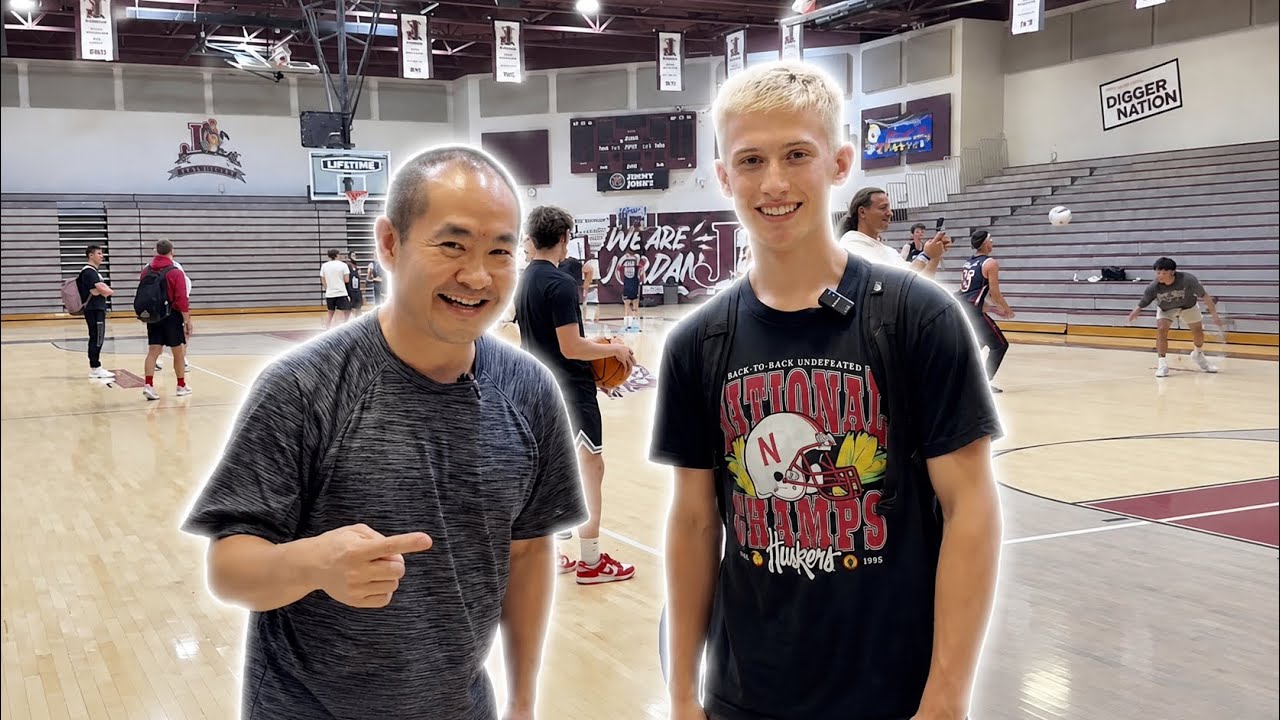
A million likes is not revenue. Dennis Yu, who worked with the Golden State Warriors, has been making this point for years with an example nobody argues with, because the athlete in it is one of the most marketable people alive.
“Steph Curry would have a crazy half-court shot, that didn’t make any money, even though it might get a million likes on it. What we would do is we would boost that. We would turn it into articles.”
Dennis Yu
The shot was real. The million likes were real. The money was zero until somebody restructured that moment into something durable and then paid a small amount to put it in front of the right people. The view count was raw material, not the product.
The video above is the same lesson at a completely different scale, with a creator most marketers have never heard of and roughly a billion views to his name.
A Billion Views, Almost No Record
Nathaniel “Hoopin Nate” Kenney is a 5’7″ dunker from Omaha with more than a billion views across platforms, about 210,000 Instagram followers, campaigns with Gatorade and Google Pixel, and appearances on Jimmy Kimmel, TNT, ESPN, and Fox Sports. By any social metric he is enormous.
Before this project, search results on his name were thin and partly wrong. Views sit on platforms you do not own, they expire from the record, and they teach a search engine nothing about what you do or why anyone should hire you. He finished first out of 76 athletes on the audit Dennis and I ran at The Dunk Camp in Utah, published on a public camp audit leaderboard, and that first place ranking still sat on top of a shallow foundation.
Same structure as the Curry problem. Massive attention, nothing converting, because attention on a platform and an asset on the open web are different things.
The Number Worth Marketing Is the Input Number
Dennis opened the interview with a number he got from Nate’s father: about a million jumps. Then he asked what those jumps taught him.
“That you should never give up. There’s been a lot of hard times in that million jumps, but as long as you persevere, you’re gonna keep making progress.”
Nathaniel “Hoopin Nate” Kenney
Both numbers describe the same career. One of them is marketable. A billion views is an outcome a platform produced and nobody can relate to it. A million jumps is an effort a person produced, and it maps directly onto whatever the reader is grinding through this week.
Clients get this backwards constantly. A contractor tells us about 4,000 completed jobs. The interesting number is the 22 years of showing up at 6am. A SaaS company leads with 50,000 users. The interesting number is the four years it took to get the first hundred. Output numbers signal scale. Input numbers signal character, and character is what people buy.
The Detail That Makes a Number Mean Something
Dennis asked Nate when he first felt famous. Nate rejected the word, then described a night.
“my entire family sat on my parents’ bed and just watched the video and looked at the comments.”
Nathaniel “Hoopin Nate” Kenney
SportsCenter had posted him. His brother sprinted into his room screaming. The family piled onto a bed in Nebraska and read the comment section out loud together. That sentence is the most valuable fifteen seconds of the interview and it contains no data whatsoever.
This is the mechanism people miss. Numbers establish that something happened. Stories make somebody care that it happened. A brand partner who watches that clip remembers a family on a bed. They will not remember 210,000, because six digits is an abstraction and a bedroom is not.
Two Answers That Widened His Sponsorship Category
Dennis asked what people might not know about him. Nate said golf and video editing. In another life he would be a professional golfer, and his favorite player is Scottie Scheffler for reasons that had nothing to do with rankings. He also enjoys sitting in an edit timeline, which is a strange thing to hear from an athlete known for one second of airtime.
“It just allows you to be creative and tell a story in a way that most people might not see it as.”
Nathaniel “Hoopin Nate” Kenney
Forty seconds of off-topic answers did more commercial work than a highlight package. Golf opens an entire sponsor category that had no reason to consider a dunker. Naming a role model tells a family brand how he will behave in a campaign. Saying he likes editing tells a marketing team he will be a partner on the content rather than a subject they have to manage through it.
Every client has these answers sitting unused. The plumber who restores motorcycles. The dentist who coaches wrestling. Those details are usually treated as irrelevant to the business, and they are usually the reason somebody picks that business.
Positioning Lag Is a Content Problem
Dennis ended the interview with an observation dressed up as a joke.
“Guys, Hoopin Nate, but soon Dunking Nate.”
Dennis Yu
The name came from mini hoops. He now competes on regulation ten foot rims and put down a 360 windmill and a 9 foot Eastbay Hide and Seek at this camp. The label describes a previous version of the product, and 210,000 followers are attached to the old label.
Businesses have the identical problem. The agency everyone still calls a web design shop. The manufacturer known for a product line they discontinued in 2019. You do not solve positioning lag with an announcement. You solve it by publishing enough of the current work in permanent places that the public record moves before the perception does.
How the Story Becomes an Asset
The conversion process is unglamorous and it is the same every time. Record a real conversation, two minutes is plenty. Transcribe it and correct the names. Pull the specific human details out, not the impressive claims. Write different angles for different audiences on different domains. Cross-link them so search engines and language models read them as one connected entity. Then put a small daily budget behind the ones that already earned organic attention.
That is what happened to the Curry half-court shot, and it is what happened to these two minutes. Nate published his own SportsCenter night account. Dennis wrote the persistence lesson underneath it. The dunk community version is the Dunk Talk recap, the ranking angle is the numbers are not the story, and the version for athletes in any sport is why a highlight reel isn’t enough. The system behind all of it is documented in the 76 athlete repurposing writeup.
The measurable end of this is the Knowledge Panel confidence score, which Dennis explains simply.
“It’s saying how well does Google understand who you are and what you do.”
Dennis Yu
Anything above 400 is celebrity tier. Shaq sits near 40,000. The same structured record that lifts that score is what ChatGPT and Claude read when somebody asks about you, so the work pays twice. I ran this on my own site as a dunker before teaching it to anyone else, and the pattern has held on every client since.
Your numbers prove something happened. Your story is the part somebody can buy. Go find the two minutes of tape where a client says something true about a hard year, and turn it into a page that will still be there in five years.
Originally published .
Dylan Haugen
Dylan Haugen is a professional dunker, content creator, and editor at the Content Factory, where he transforms podcasts and interviews into strategic brand assets. He collaborates with Dennis Yu to support young entrepreneurs and business owners in building their personal brands through education, transparency, and effective content marketing. As the host of the Dunk Talk podcast and a dedicated advocate for establishing dunking as a recognized sport, Dylan combines athletic expertise, storytelling, and digital strategy to help elevate the next generation of creators.