
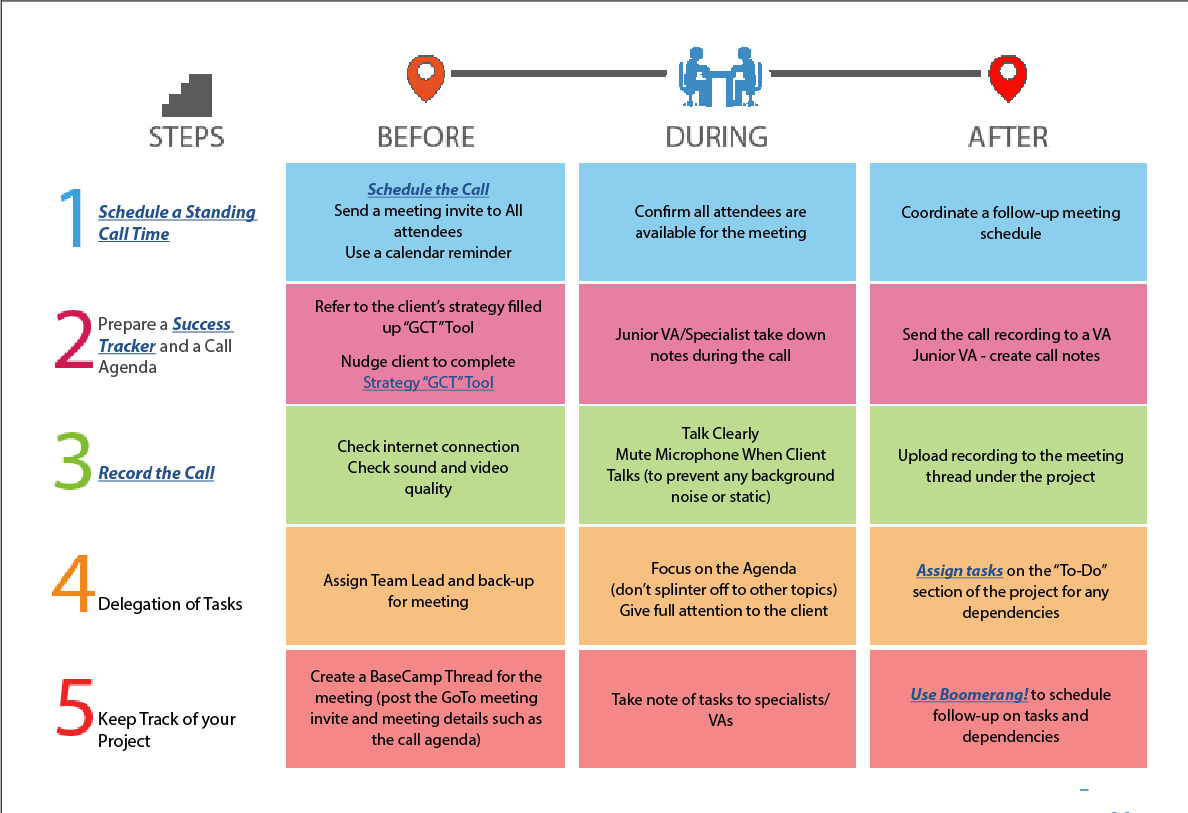
- 1The Five Steps at a Glance
- 2Before the Meeting
- 3During the Meeting
Every meeting has a before, a during, and an after. Miss any of the three and the meeting was just a conversation. This is the complete Meetings Checklist from our course, written out so you can read it in four minutes instead of watching the videos — same system, your preferred format.
We run this checklist on every client call at BlitzMetrics and Local Service Spotlight — the welcome and expectations call that starts client onboarding, the standing weekly call, audits, and podcast recordings. Meetings are not calendar events. They are a process with deliverables on both sides, which is why this checklist is a core module of the Agency Management Course.
The Five Steps at a Glance
| Step | Before | During | After |
|---|---|---|---|
| 1. Schedule a standing call time | Schedule the call, send a meeting invite to all attendees, use a calendar reminder | Confirm all attendees are available | Coordinate the follow-up meeting schedule |
| 2. Prepare a success tracker and call agenda | Review the client’s strategy in the GCT (Goals, Content, Targeting) tool; nudge the client to complete it | A junior VA or specialist takes notes | Send the recording to a VA, who creates the call notes |
| 3. Record the call | Check internet connection, sound, and video quality | Talk clearly; mute your microphone while the client talks | Upload the recording to the meeting thread under the project |
| 4. Delegate tasks | Assign a team lead and a backup for the meeting | Stay on the agenda; give the client full attention | Assign tasks in the project’s to-do section with dependencies |
| 5. Keep track of the project | Create a project thread for the meeting with the invite and agenda | Note which tasks go to which specialists and VAs | Schedule follow-ups on tasks and dependencies so nothing dies quietly |
Before the Meeting
Preparation is the meeting. Schedule a standing time so nobody burns energy on logistics. Send the invite to every attendee with a calendar reminder. Prepare the agenda and review the client’s strategy so the call starts at the real starting line, not with “so, where were we?” Check your connection, sound, and camera. Assign who leads and who backs up. Post the invite and agenda to the project thread so the meeting has a home before it happens.
During the Meeting
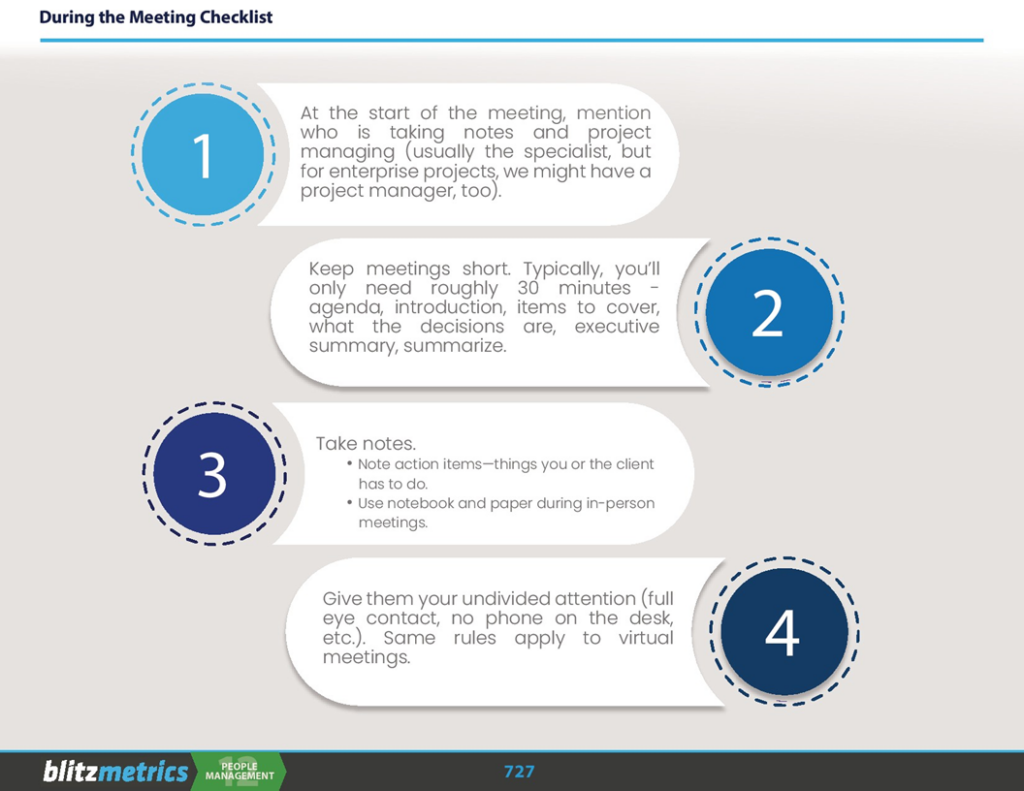
Four rules, in order. First, open by naming who is taking notes and who is project managing — usually the specialist, with a project manager added on enterprise work. Second, keep it short: roughly 30 minutes covers agenda, introductions, the items to cover, the decisions to make, and an executive summary. Third, take notes as action items — things you or the client must do — on paper if you are in person. Fourth, give undivided attention: full eye contact, no phone on the desk, and the same rules apply on Zoom.
After the Meeting
The after column is where agencies win or lose clients. Coordinate the next meeting before momentum fades. Send the recording to a VA and turn it into call notes the same day. Upload the recording to the project thread. Assign every action item in the to-do section with dependencies, and schedule follow-ups so tasks cannot die quietly.
And say thank you — automatically. We built a Calendly workflow for every meeting type we take, each sending a personalized thank-you email one hour after the event ends, linked to a matching page. The complete build is documented, agent decisions and receipts included, in How I Built Thank-You Workflows for Every Calendly Meeting, and the audit version with Zapier is in this earlier build log. See a live example at dennisyu.com/thank-you-podcast.
When You Actually Need a Meeting
Meetings earn their place at specific moments in the client lifecycle: the welcome and expectations call that opens onboarding, the standing weekly call for accountability, structured client calls for decisions, audits and kick-offs, and recorded conversations like podcasts that feed the Content Factory process. If a meeting has no decision to make, no relationship to build, and nothing to record, it should be a message instead.
Frequently Asked Questions
How long should a client meeting be? About 30 minutes: agenda, introductions, items to cover, decisions, and an executive summary. Longer meetings usually mean the before-work was skipped.
What should I do before every client meeting? Send the invite with a reminder, prepare the agenda and success tracker, review the client’s strategy, test your connection and audio, assign a lead and a backup, and post the agenda to the project thread.
What should happen after every meeting? Follow-up meeting on the calendar, recording uploaded and turned into notes, every action item assigned with dependencies, follow-ups scheduled, and a thank-you sent to the attendee — we automate that part with Calendly workflows.
Where do I learn the full system? The Meetings Checklist is one module of the Agency Management Course, which covers the six phases of running an agency, including onboarding and client communication.
The Meetings Checklist is one module. The Agency Management Course covers all six phases — onboarding, communication, delivery, and growth.
See the Agency Management Course →How We Automated the After